
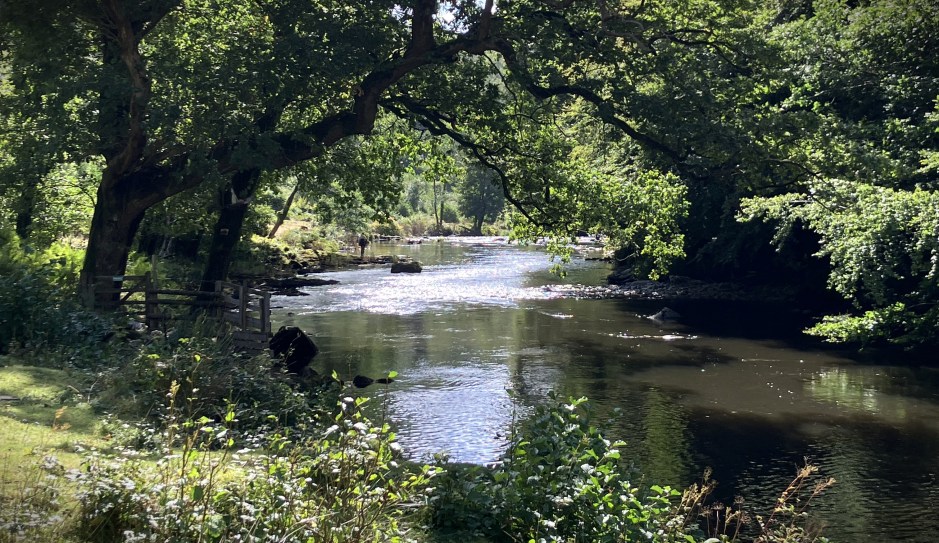
The hot dry weather continued until the end of August when a few millimetres of rain settled the dust. Dartmoor had rain in the first week of September, the run-off was enough to raise the level of the River Walkham an inch but there was not enough water to penetrate the ground.
On the River Tavy a few leaves fluttered in the current, the shedding trees were stressed from the long hot summer. I spent six consecutive days walking the Tavy beats, not fishing, just looking for trout and mapping the clumps of Japanese Knotweed. I resolved to revisit the places that held trout and to take a rod with me !
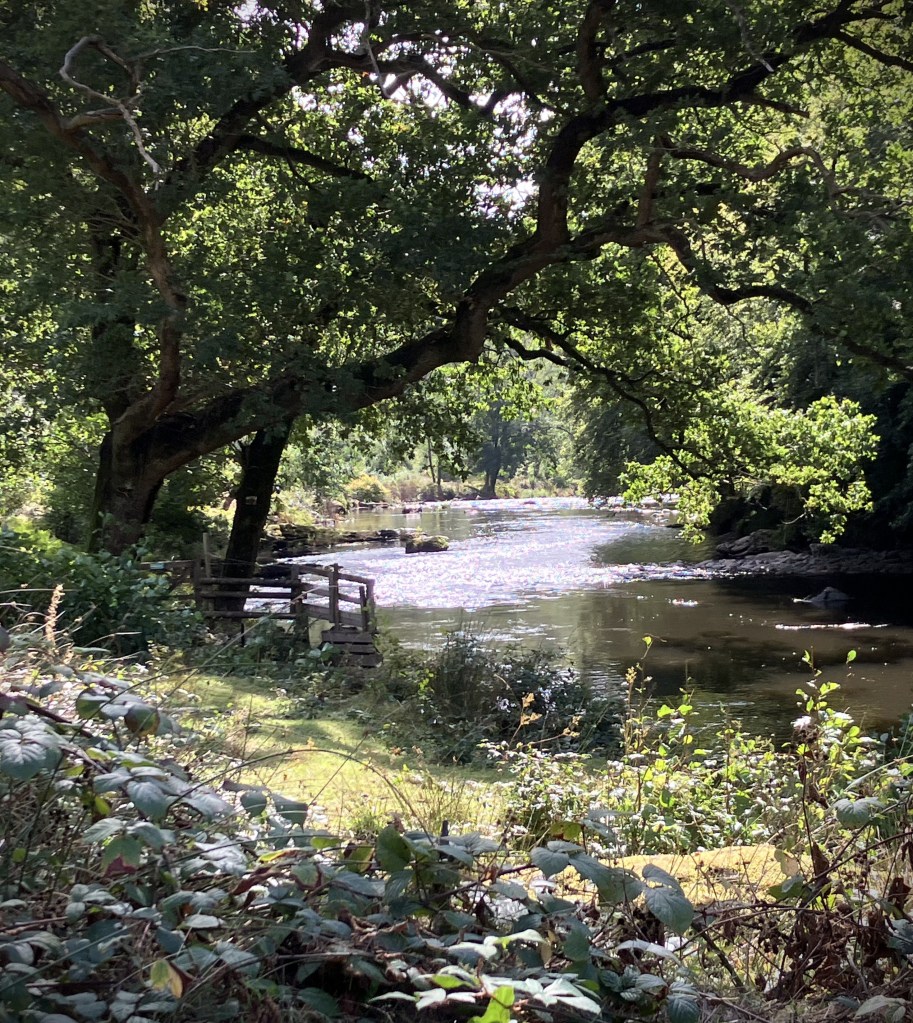
I invited a guest to fish the Tavy, conditions were perfect. The rain stopped just as we arrived at the river and the sun struggled through the overcast. The river had a slightly brownish tint, best bitter rather than lager, but was not cloudy like some beers. Blue winged olives were hatching in good numbers.
The plan was simple, I would assist but not interfere. The light was constantly changing and I was happy to wander around taking photographs. The chosen tactics were beyond my experience. A nymph on the point and a dry fly on the dropper. I use only one fly which minimizes tangles and prevents a hooked fish from snagging the trailing fly.
My guests stealthy approach and gentle casting with a short line resulted in a fish from the first pool. I was happy for them but not overly surprised as that pool usually contains a trout. The fish had taken the small, iron blue dry fly which made me think. The day continued in the same manner, a break for lunch and two lost sea trout in the afternoon to the duo. It was a revelation, I resolved to try it. A great day, the scenery was spectacular, the weather was good and there were fish to be caught. Excellent.
The drive to Sussex was boring. The rain followed me from Devon, blowing east towards the Rother. I waited a couple of days for the river level to drop. During the drive to the river I made plans. I would conduct a two hour experiment using a dry fly on the dropper and a GRHE nymph on the point. I would continue with the setup throughout my brief trip. Rain was forecast.
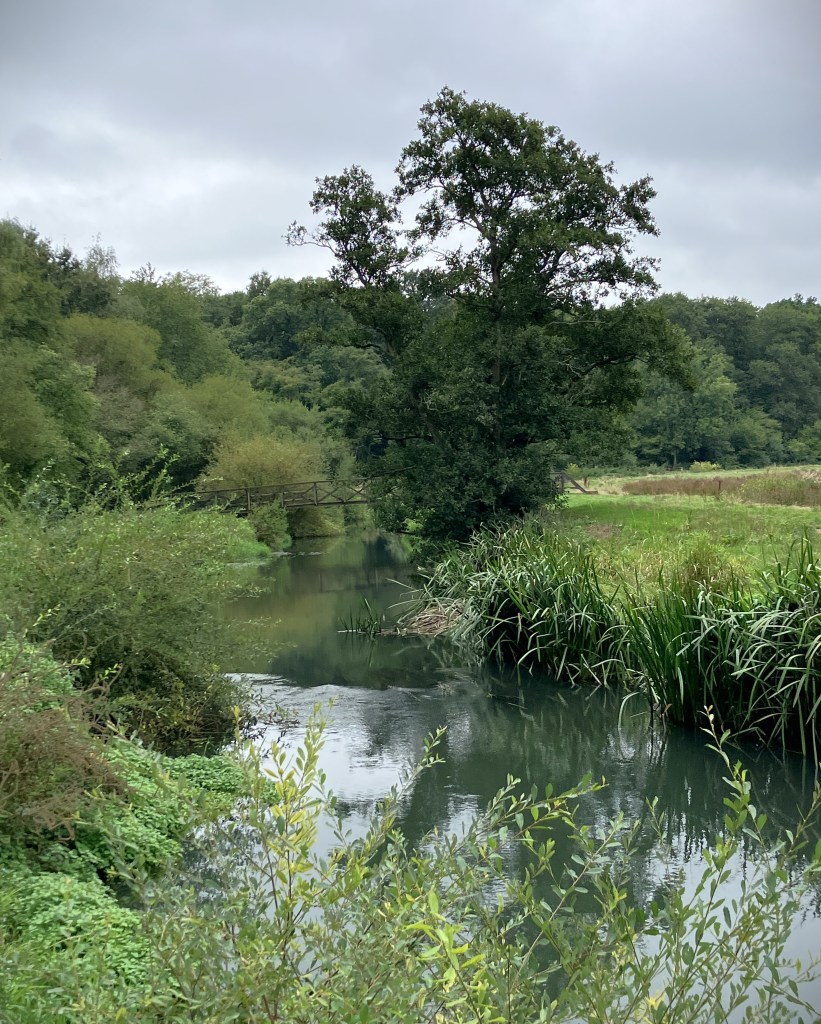
The river was grey, the colour of road run-off, very shallow and slow moving. The air was heavy, it was warm and humid, clouds were building over the South Downs and for once, the weather forecast seemed accurate. There were no flies hatching so I chose a foam bodied black beetle to support the nymph and settled down on the damp grass to practice casting the unfamiliar setup. Slow wide loops and no trick shots. The Sage ESN and Rio #3 combination worked well and I had no tangles.
I saw a trout rise downstream of an alder tree in a small pool, the tail of which was clogged with streamer weed and rushes. A wild fish usually hangs out there. A stealthy approach and a gentle cast across and down failed to produce a take. I rested the fish a few times but after an hour I left the pool and walked further down to a seat. Several toffees rejuvenated me. I tried again for the trout but from the opposite bank. With the sun behind me it was obvious that the pool was a lot shallower than I thought, my earlier efforts had probably lined the fish and driven it into shelter. The experiment had been a partial success, there had been no tangles.
I needed a boost to my confidence, the carp in the farm lake would suffice. The bigger carp were chasing thousands of fry, herding them into the margins. I saw a Kingfisher sitting on a lump of dead weeds. It dived regularly and took away several tiny carp from the shallow water. A group of goldfinches were busy on the thistles. I flicked a popped-up dog biscuit into two feet of water and waited for the rod to bend. It bent four times before I returned to the farm house for a cup of tea.
. . . – – – . . .

