
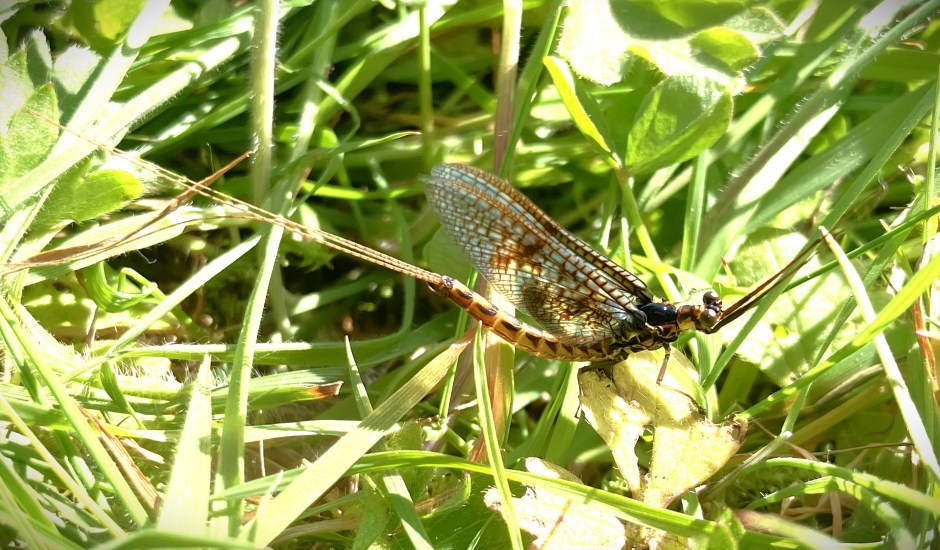
The mayfly have a civilised life cycle, the nymphs make their way to the surface around noon. The duns flutter into the air and head for the nearest vegetation. The date on which the mayfly season starts is largely determined by the length of daylight hours. Other factors play a minor role. My diary entries record mayfly hatching at Little Springs on 30 April or 1 May consistently for over 10 years. The hatches are later on the Rother and last until late June.
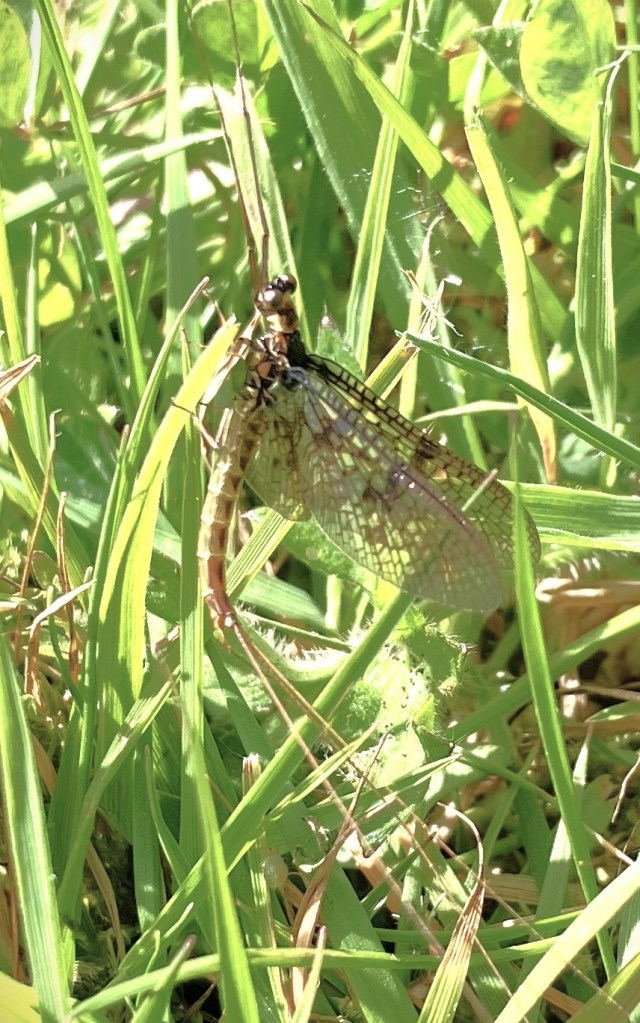
A week earlier my hunt for mayfly had been inconclusive. I thought I had seen a couple of duns but they were too far away to be sure. I arrived at noon and had both lakes to myself. The strong, blustery, west wind made cats paws on the surface and stripped the seeds and pollen from the willow trees. The margins along the east bank were a constantly moving soup of debris, the trout were flashing at ascending nymphs and gulping down emerging mayfly.
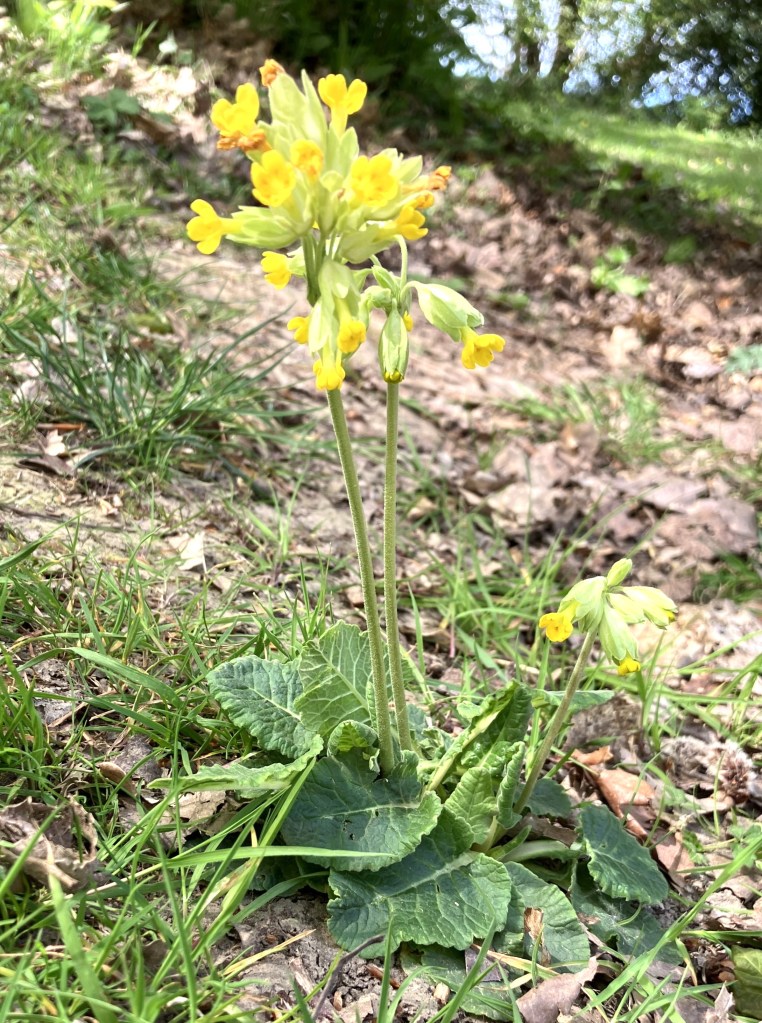
I found a lone cowslip near the fishing hut which reminded me of the title pages of BB’s books. I took it as a good omen. The wind assisted my casting, floating the #3 line high on the forward cast enabled me to reach the middle of the lake, close to the feeding frenzy. For an hour the trout rose to my fly, I hooked four and netted only one. The hook pinged out of the other three as I reached for the landing net. I think the acute angle of the 10′ 6″ rod was too much, I should have extended the telescopic landing net handle.
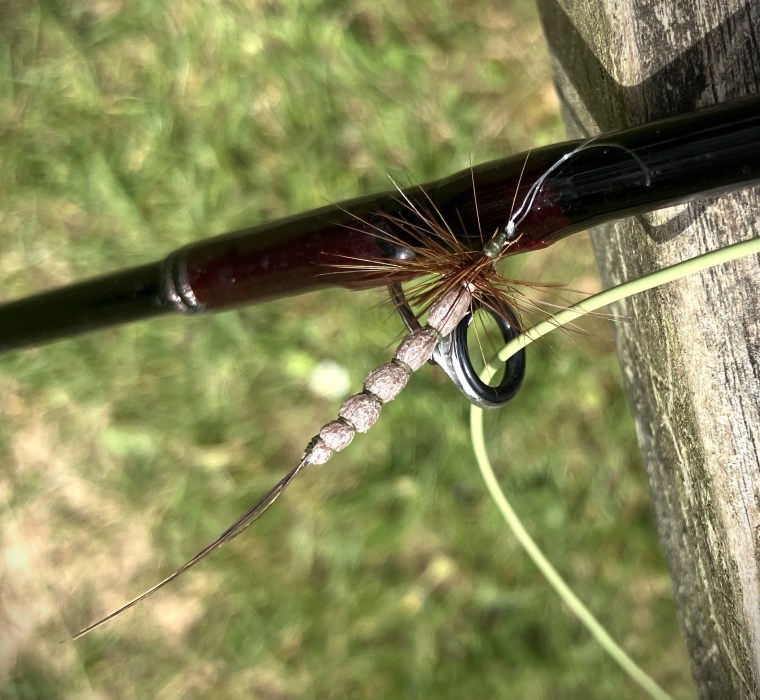
The most successful fly was an extended foam body imitation of a spinner. I spent a while chasing the clouds of spinners to get a closer look until the hatch abruptly ended about 2:00pm. In a couple of weeks the Rother will come to life and I hope to continue fishing the mayfly hatch there.
. . . – – – . . .

