8 September – The Riffle

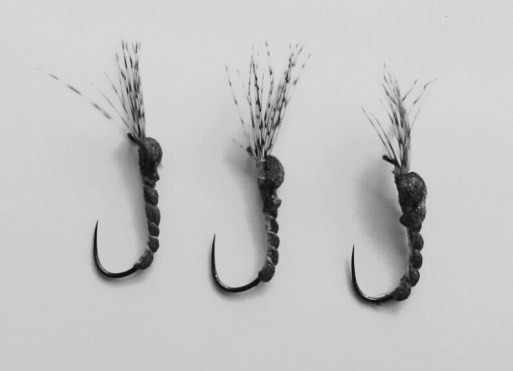
With a West wind and over 70 Fahrenheit it would be a waste of time fishing in the afternoon.  I’d tied a few flies while I was waiting for the sun to drop below the top of the hedge. I used size 18 barbless fine wire hooks which are suitable for both dry flies and nymphs. The fish had been taking small flies just under the surface so I tied some emergers. The flies are semi-buoyant,  they will float if presented gently on a nylon tippet but sink slowly with fluorocarbon. Everybody raves about CDC emergers but I can’t see the point of a fly that is useless when wet. I tied mine with Partridge hackles or a blob of white foam.

When the tippet sinks it is less obvious, the surface film is not disrupted.  No shadows are produced.  Fluorocarbon is slightly thicker than pre-stretched nylon but it’s refractive index is close to that of water. That makes it almost invisible under water.
dsc_1885

I arrived about 4:00pm to find a hint of Autumn along the river. Some of the Alder leaves were yellowing and falling into the water, drifting slowly downstream.  The Balsam was starting to topple over and seed pods were popping as they knocked together in the wind. I’d planned to walk down to the site of the new riffle as I had seen several fish there during my last visit. As I was setting up my rod, a fish rose just upstream of Keeper’s Bridge.  I tied a black spider on a 2.7lb tippet and cast gently. About thirty minutes later another fish rose close to me. At least I hadn’t scared them away. A dry fly skated around and twisted badly. A weighted black spider fished down and across, alongside the streamer weed, was followed but the fish veered away as I lifted off.

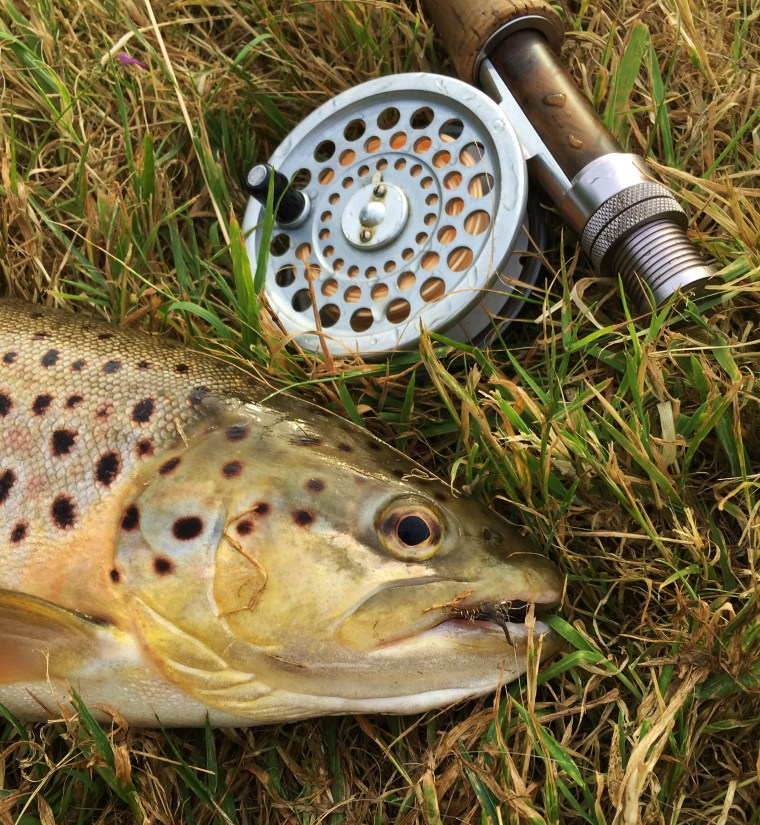
I peered into the water where the fish had swirled, it was still there. It was in about two feet of water just under the rod tip, holding it’s position near a small clump of weed. I flicked the fly under the bridge so that it would have time to sink before I twitched it back past the Trout. As soon as the fly landed it was grabbed by another fish. I lifted gently and after a long tussle the Trout was in the landing net. As I lifted it out of the water I saw a group of about five fish near the net. They had remained in a shoal since being stocked. I released the fish below the bridge and had a toffee to celebrate.
img_1655a

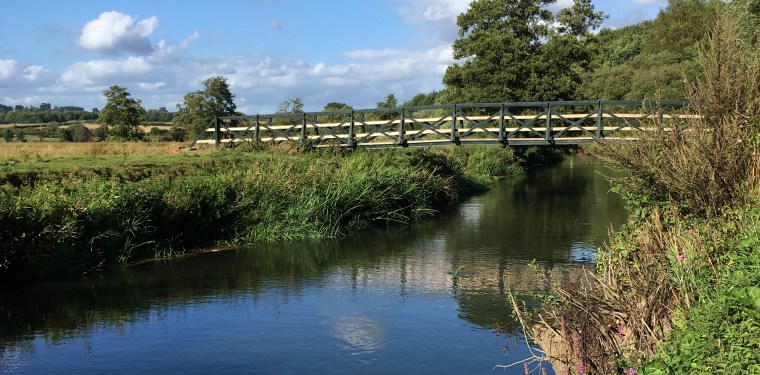
Keeper’s Bridge

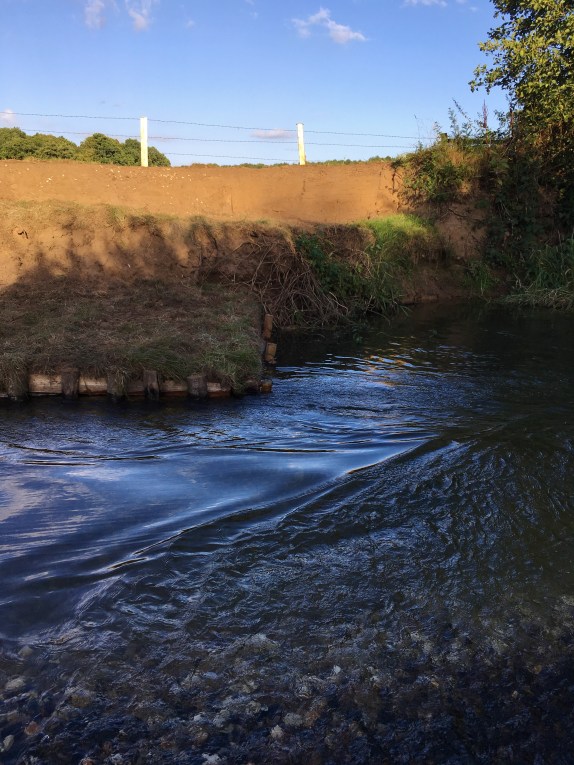
I thought I would rest the fish and walk up to the riffle above the Sandy Pool. The grass had been cut and there were hundreds of young Pheasants  poking about in the stubble.  Many more than last season. The improved riffle looked good. At the tail end of the riffle a small tree had been pushed over to cover the gravel. That would provide shelter for young fish. A croy had been built on the North bank and a deep channel dug to increase the flow. The bank had been graded and fenced.  The biggest improvement was immediately above the ripple.  A tree had been removed and the entire pool opened up. As I was watching a fish rose in the middle of the pool. I searched the pool with a nymph but the Trout was indifferent.
img_1659

As I strolled back to the bridge I saw a deer jumping about in the field occasionally browsing the grass.  Very odd behaviour.  I crept towards it, when it lifted it’s head I stood still. I got quite close but it saw me and bounded away into the tree line.

When I got back to the bridge I put a weighted Amber Nymph on and cast under the rushes on the far bank. The take came immediately but the fish made a long run down under the bridge and broke the tippet on the streamer weed. I fished below the bridge to a rising Trout,  it swirled angrily at the nymph but I couldn’t entice it.

The wind was getting stronger and I needed a pint. The Badgers was very busy with people from the Goodwood Revival.
trout

5 September – Tropical Weather

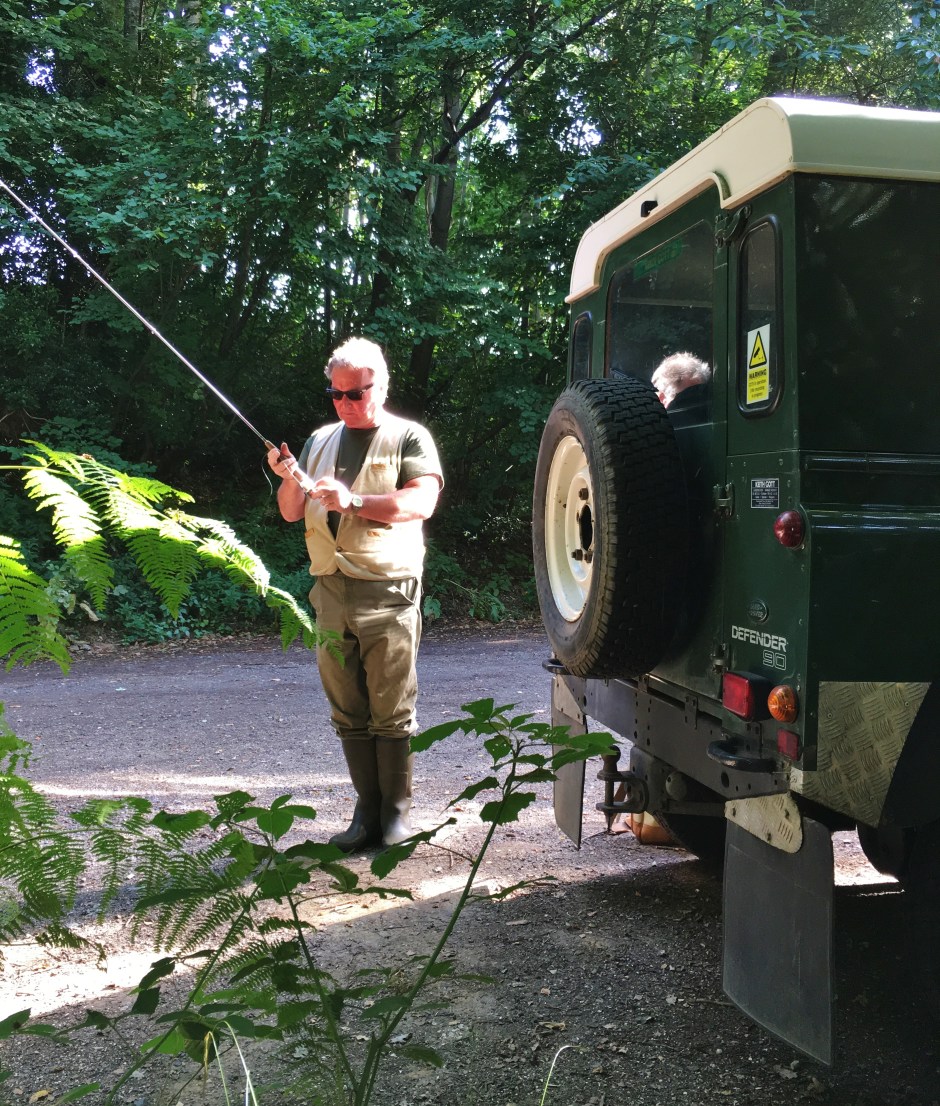
The weather looked good for an evening session.  The light rain had cleared and left behind a muggy, overcast afternoon with a warm southerly breeze. It was over 70 degrees when I left home and the humidity was 100%. As I drove over the bridge at Billingshurst I was pleased to see that the North River was neither high nor coloured.  The Rother would be fine.  I parked the Land Rover under the Hazel tree at Keeper’s Bridge and checked the Beat record book. Not much had been caught over the weekend.  I wandered down to the river and checked the water temperature with my newly acquired thermometer.  It was 62 degrees Fahrenheit. I don’t like the Centigrade scale, it’s too clumsy.  The water was up a few inches and had a green tint but I could still see the ribbons of weed in mid-river.  A fish rose gently and sipped in something so small I couldn’t see it, probably a buzzer.

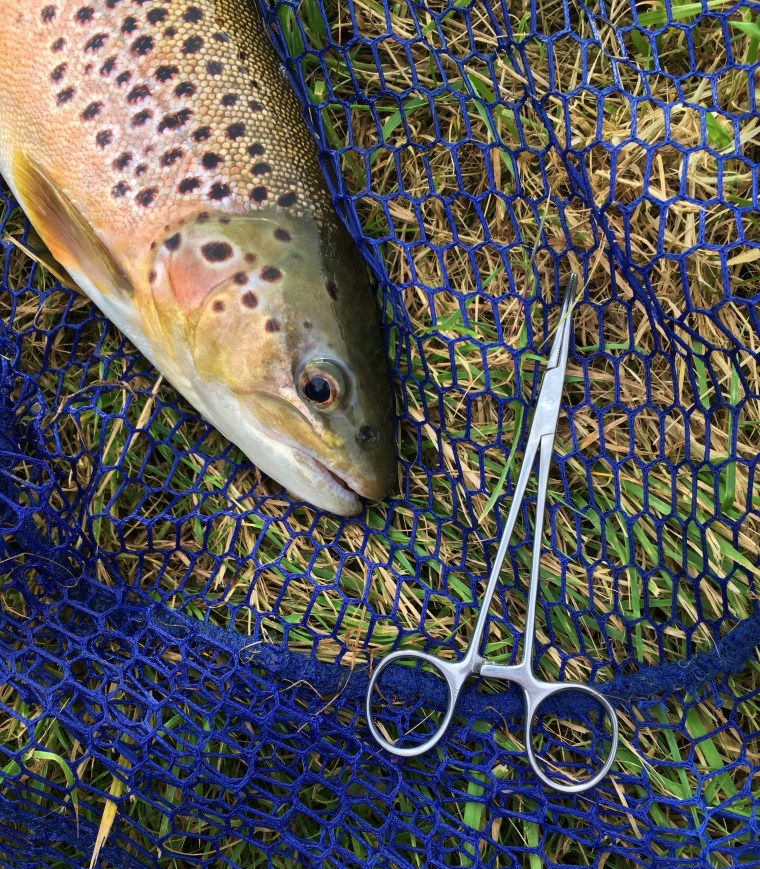
I chose a leaded black spider and crushed the barb with artery forceps, it makes unhooking a fish so much easier. I had a new leader and a tippet of 4.4lb breaking strain Frog Fluorocarbon. I’d been to Albury Game Angling over the weekend and bought some goodies but I handed back the Hardy Duchess 3″ reel that Peter had tried to sell me.  Next season perhaps.

I crept along the bank to a rising fish and carefully worked the cast downstream.  After about thirty minutes of delicate casting a fish took the fly just under the far bank. It was on for a few seconds and then the line fell slack. It looked like quite a nice fish. I thought the fly had pulled free but on checking the hook I saw the point had snapped off.  Another lesson learnt; don’t crush barbs – buy barbless hooks.

IMG_1643

I was confident that I would get a fish or two and I decided to go further downstream to my favourite Alder tree just below the bridge. The pool looked good and a fish rose as I tied on a new fly. I used a lightly weighted black spider with a bushy hackle. The fish rose again, it had taken up station in mid-stream intercepting flies as the current delivered them. After a few casts the fish took the spider just under the surface. It fought hard, I nearly messed things up when the fly line caught on the reel handle. The new tippet material was a success. It is not as brittle as the Orvis fluorocarbon and a third of the price. I returned the fish and it shot off after I poked it with the landing net. A small pan shaped net made it a lot easier to release the fish but I need a longer net handle.

IMG_1650

I made my way down to the bend but just as I was preparing to cast,  Andrew the Keeper arrived in his Land Rover. He said the riffle above the Sandy Pool had been improved and a new riffle would be built near the water pump above Rotherbridge.  The digger was in place and after modifying the banks, 500 tons of gravel would be spread across the river bed.  That is a lot of gravel.

I walked downstream to the site of the new riffle and started working the pool down and across.   Three fish rose repeatedly in the same stretch of water. One Trout followed my fly but sheered away at the last moment.  There were a couple of nips at the fly but I couldn’t connect with the Trout. I walked slowly back upstream casting to several rising fish but they went down as soon as I presented the fly. I need to approach the fish more carefully and measure the first cast accurately. I often overdo it and ‘line’ the fish.

I was hot and tired, the tropical weather had taken its toll on me. A cool pint awaited me at The Badgers. September had started well.

trout

1 September – A Perfect Evening

This month should be excellent for Trout fishing. The weather is kinder to the fish and the evenings are drawing in which means I can get to the pub at a decent time.

After Tuesdays session I came to the conclusion that I should use a smaller fly. A small fly with a sparse hackle and a lighter tippet. I tied some size 20 dry flies this morning and chopped the hackles off the underside. It saves messing about during the frantic evening rise. The weed beds are not too dense this year and I will try a 2.7lb bs tippet. I must remember to gently lift into the fish. The lopsided fly should reduce leader twist. I hope.

DSC_1873

I arrived at Keeper’s Bridge at about 4:00pm and tackled up under the trees.  It was warm with a south-west breeze, perfect conditions.  I sat on the grass and had a few practice casts with a small dry fly. It was fine, the leader didn’t twist and the fly sat in the surface film nicely. I saw a fish rise just downstream of where I was sitting. I crept down the bank and flicked the fly across the current above the rise. The Trout took first time but the hook hold failed and it wriggled away into the weeds.  Another lesson learnt, a size 20 fine wire hook will not hold a 2lb Trout.

IMG_1609.JPG

Plan B. I swapped to a size 16 dry fly but after thirty minutes I hadn’t had a take. Fish were rising but the size of the fly was putting them off. I put on a 4lb leader and tied on a nymph. First cast to a rising fish and I had a savage take from a good fish. It jumped a few times and looked about 3lb. It fought hard and I couldn’t revive it. It was exhausted and I decided to keep it, the first Trout I have taken from the river this season.

IMG_1625.JPG

I walked downstream to the Alder tree and flicked the nymph under the branches. The leader drew away but when I lifted the rod there was no response.  The same thing happened next cast. On the third cast I saw a fish follow but turn away at the last moment.  I swapped the fly for a Neoprene Buzzer and after a few casts, the fish took confidently.  The tippet had sunk and the semi-buoyant fly was a few inches under the surface. As I was taking a photograph of the fish, another Trout took a fly from the surface.

I returned the fish and walked slowly back to the Land Rover. I gave the big Trout to the Landlady at The Badgers,  she seemed genuinely pleased with it. I had a pint of Blonde on the house.

trout