

Last Autumn a syndicate member told me about the monster trout that could be found in the top beat at the start of the season. They were said to be over wintered fish or sea trout.
During the first week of the season I fished the lower beats a few times and caught nothing. I didn’t even get a take but it was good to be on the river again and see what changes the winter rains had made to the pools.
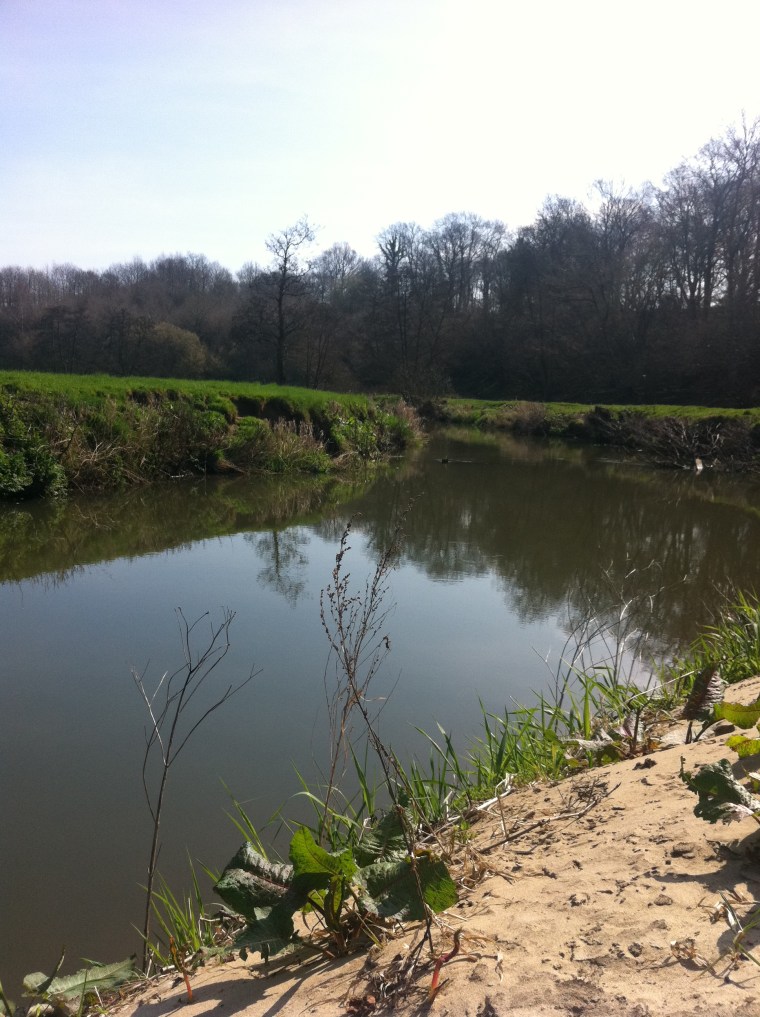
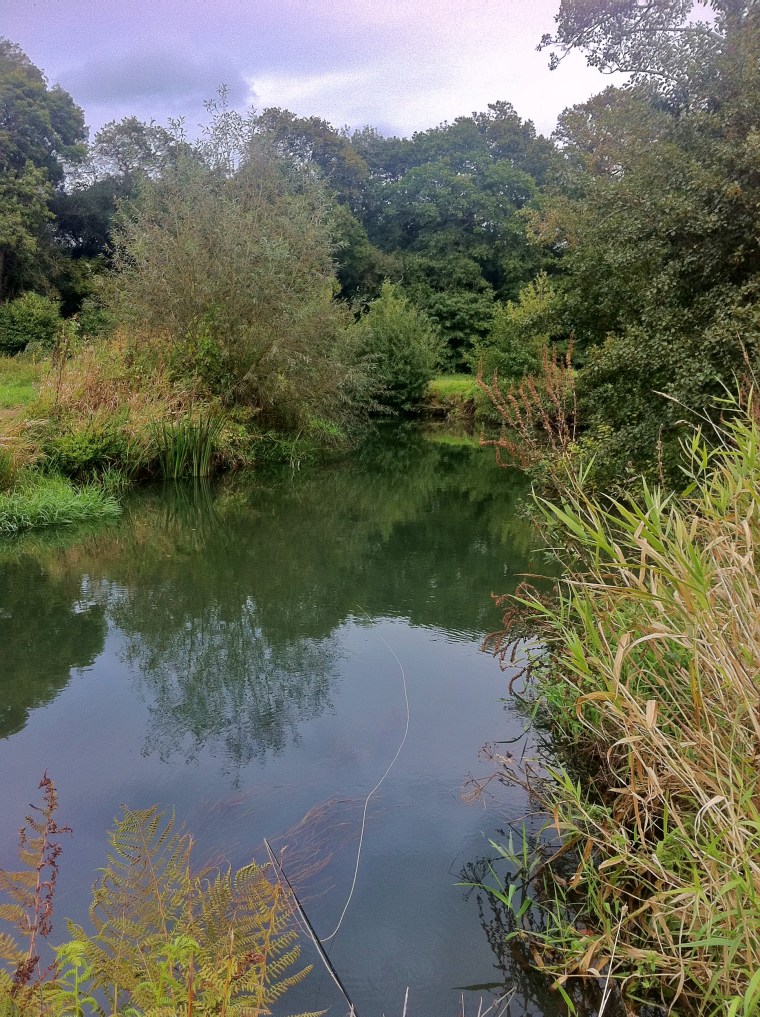
Having had little success I decided to explore the top of the river. Very few members bother with the top beat as it is a long way up a bumpy track, the banks are very high and are covered with mature trees. It’s jungle fishing. I arrived at the river at about 11:00am, there’s no point in getting there too early. Another angler arrived at the same time which I thought was unfortunate as I like the place to myself. We had a chat for a few minutes and then we both walked off. He chose to go upstream and I went downstream.
The sun was burning, the breeze was gentle and from the north, just enough to keep me from sweating. There were a few flies hatching and lots of butterflies about. The nettles were only about 6″ high and the trees were just breaking their buds. Everything in the world looked good.
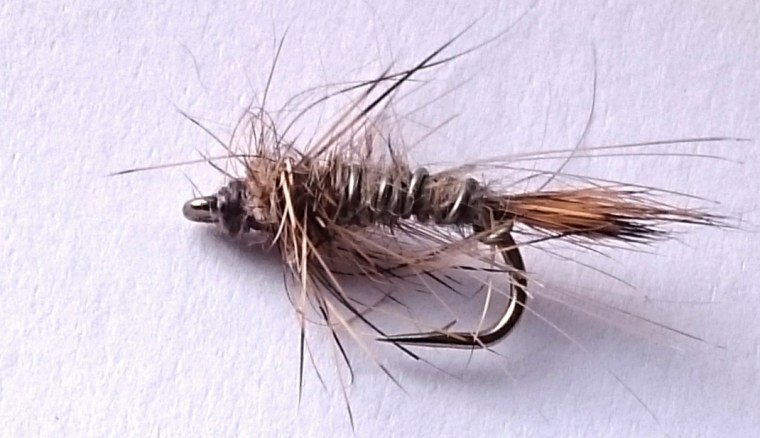
My plan was simple. Get the nymph under as many trees as possible, right in the roots. I had a good supply of leaded nymphs with me as I would obviously lose a few. I thought about using a lighter tippet and a tiny nymph but decided to stick with a size 10 nymph and a 5lb tippet. There was no point in losing a big fish.
I spent about an hour moving from pool to pool, searching under the trees and bushes with a nymph but I had no takes. The advice from the syndicate members is to keep on the move. A few casts in a pool and move on, cover as much water as possible. Lots of people have told me to keep moving but I ignore their advice. In my limited experience it pays to cover every inch of a pool, starting under the near bank and working across the river and down. Most big pools take about an hour to explore thoroughly.
I started fishing a deep run which ended under an Oak tree. I sat in the sun for about thirty minutes trundling the nymph around the pool and into the tree roots, then I lost my first fly. No problem, I tied on another and gave it another fifteen minutes. A ripple was spreading out from my bank but I was sitting back from the edge and I couldn’t quite see what was causing it. I suspected a moorhen. I peered over the edge of the bank into the water and to my surprise saw a monster fish picking up shrimps from the sand bar. It was kicking up quite a bit of sand and through the cloudy water, it looked like a chub. I flicked my nymph past it and drew it carefully towards the fish. It swam off into the main current, not impressed with my efforts to deceive it. It didn’t spook, it just drifted away. I estimated it at about 6lb. I sat and watched. After about ten minutes it came back to the shelf and started feeding again. I cast my nymph, the fish swam away again. A cunning plan was required.
Before the fish returned I cast my nymph onto the shelf and left it there. After five minutes the fish returned. It looked different, somehow smaller and a different shape. It turned sideways on to me and I could see it was a good trout. It was only about a foot away from my nymph so I slowly lifted the rod to induce a take. The fish spooked and shot back into the main current. I moved away from the river and went for a short walk to rest the pool. I was puzzled. When I first saw the fish I was convinced it was a chub, I saw the tell-tale dark line along the trailing edge of it’s tail. The spooked fish was definitely a trout.

It’s gone, there’s nothing there !
I clipped off the nymph and re-tied it. I checked the tippet for grazes and nicks. Let battle commence. I was going to sit by that pool until I caught a fish, the day was young. I started methodically exploring the deep run under my bank, down past the weeds and under the Oak tree. Then I covered the main flow. At one point the leader stopped moving and I lifted the rod expecting the thud of a fish but there was nothing there, the fly must have touched bottom. I lengthened the line a bit and started to explore the shallower, faster water near the far bank. I was distracted by the re-appearance of the monster trout on the sand bar under my bank. I kept still and watched it take a few morsels before swimming away again. I drifted the fly over the sand bar a couple of times but nothing happened.
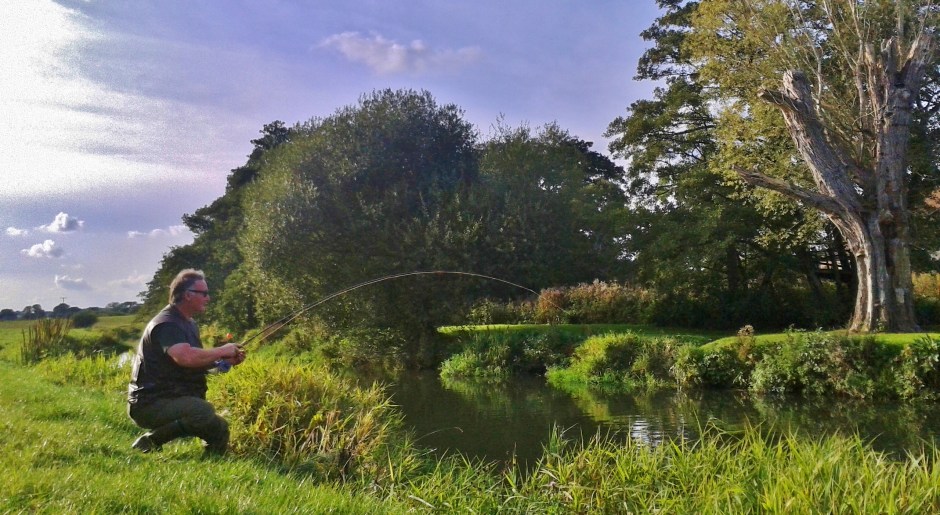
I cast across and down and allowed the line to swing in an arc towards the Oak tree roots, I thought the trout might be cruising up and down the near bank. It wasn’t. I flicked the nymph across to the far bank, mended the line and watched the leader. It stopped moving and I lifted the rod. Everything went solid and I thought I had hooked a tree root. For a few seconds nothing happened. Then the rod bucked and a very heavy fish moved upstream, it stayed deep and charged away taking about 10 yards of line. It felt like a carp. I was thinking Carp ? Chub ? Barbel ? then it shot into the air and was clearly the monster trout. It was not happy and I was out of control. The fly line had developed a bird’s nest on my reel, the net hanging from my waist had snared my left wellington and the fish was heading for the tree roots. Ignore the tangles, ignore the landing net, concentrate on the fish. The monster made a surge from right to left along the middle of the river and to my surprise, under my bank on the sand bar, was another enormous trout feeding on shrimps ! It was not spooked by the splashing of the hooked fish or my crazy antics, I estimated it’s weight at about 6lb.
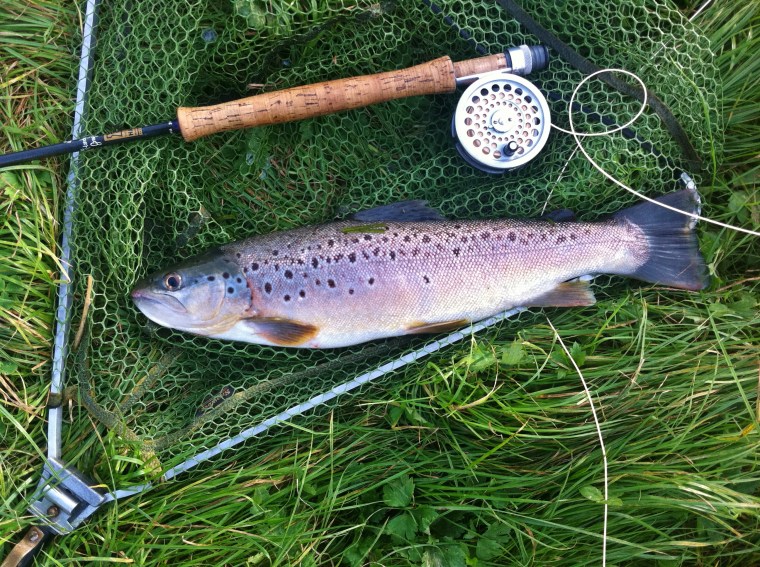
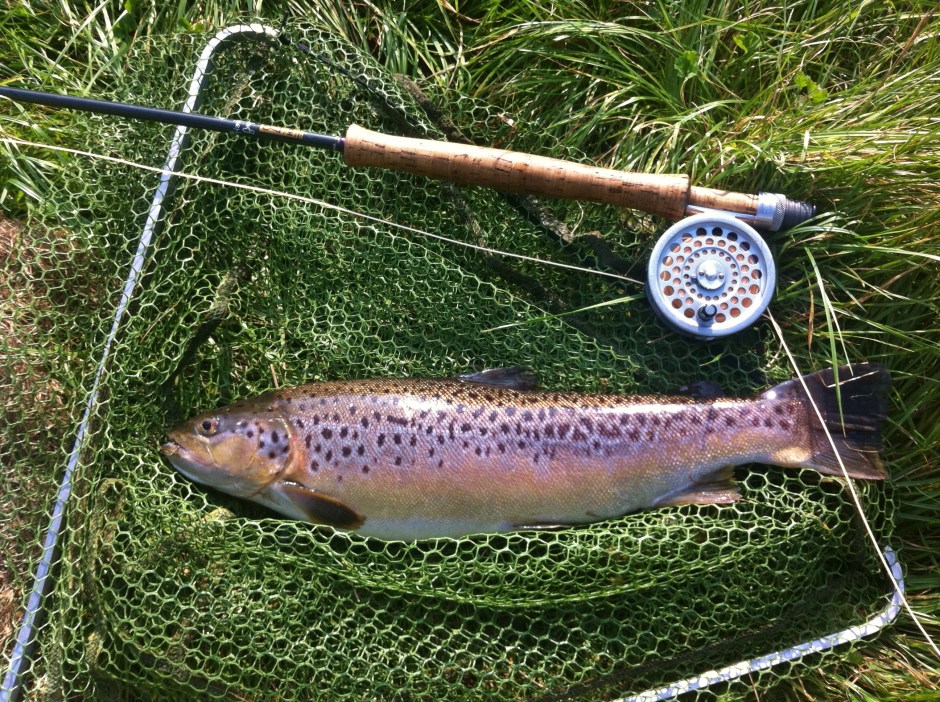
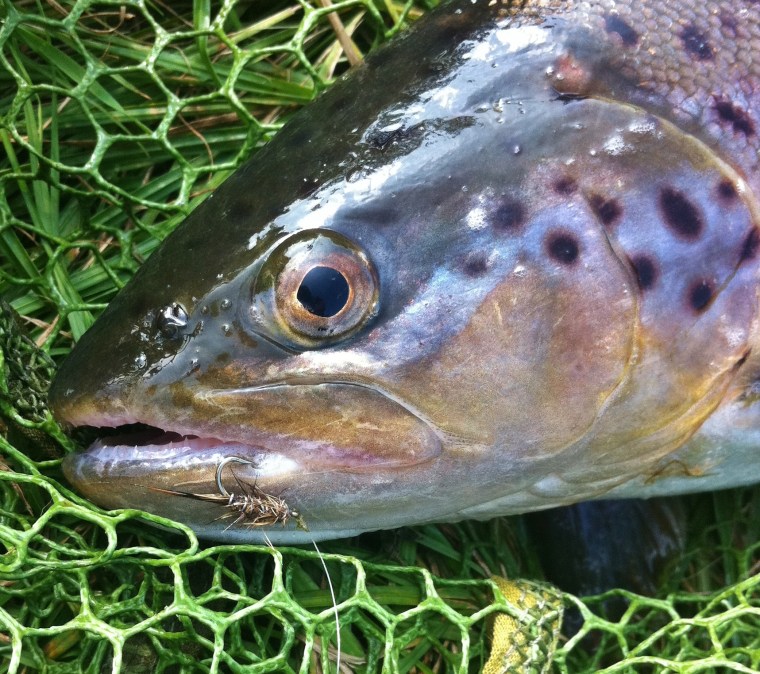
After a considerable time, I managed to get the trout into the landing net, first having removed my foot. It was completely exhausted and bleeding badly so I decided not to return it. It was full of large, dark red shrimps. It weighed 5lb 4oz on the new club scales. It was the smaller of the two trout that I had seen !

I decided to stop fishing. Before I left the pool I had a quick look over the edge and saw a monster chub feeding on the shrimps. That pool holds at least two large fish, a chub and a trout. I will return.
What a fantastic start to the season 🙂
=================================================

 Sussex Trout Fishing ... and Devon