Anticipation

April 3, the start of the new Trout season, is only a few weeks away. I am looking forward to my first trout fishing trip since last November. At the start of last season I had a cunning plan. It worked!  I was surprised because so many of my plans are abandoned at the first set back.

What is the plan for 2016? That is tricky. Last year the plan was inside my head, this year it’s here for people to read. My main objective is to catch a sea trout. Any size will do. They do not enter the river until late summer so I have plenty of time to prepare. It’s a realistic objective as several are caught each season. The bottom beat was electro fished by the EA last year and they caught 10 sea trout, heaviest about 10lb, in a short stretch below a weir. I made a feeble attempt to catch a sea trout last year but this year I must persevere.
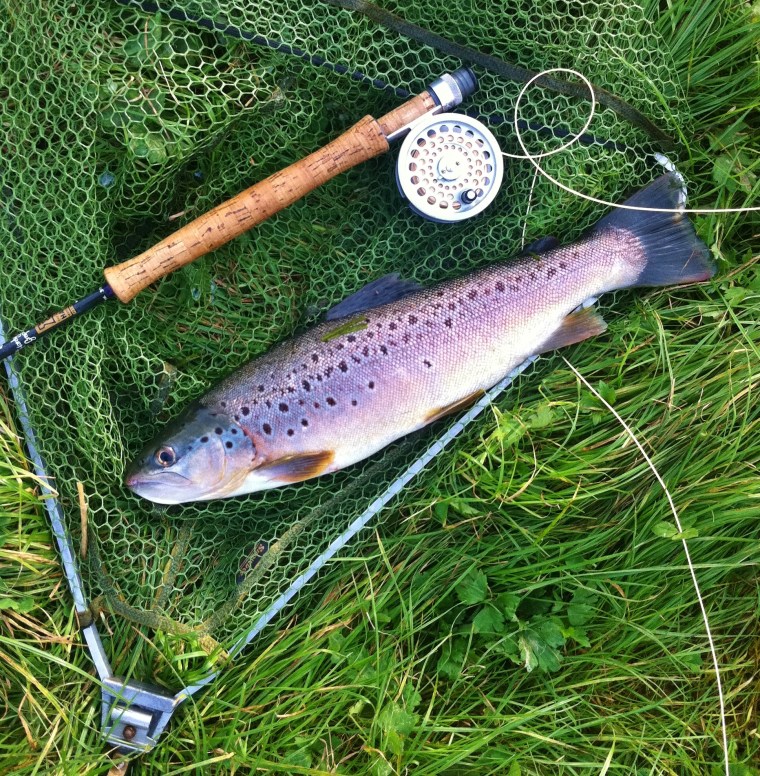
IMG_3151

So what about the early part of the season, prior to the Mayfly? Do I try for another monster trout from the top beat?  Yes, of course. That will be more out of curiosity than anything else. I want to know if last year’s monsters were just a fluke. It is extremely unlikely that I will catch another big brownie but I have to try. I foresee quite a few blank trips in the jungle of the top beat.

I don’t set myself goals for the number or size of trout.  I’ve grown out of that. It’s not about the numbers of fish caught. I’ve lost interest in catching lots of trout.  There is no point to it. I don’t know exactly how many trout I caught last year. Similarly, size is not important. If I wanted to catch a 20lb trout, I could go to Avington.

I must spend more time watching the water and each trip I must have a proper lunch. A restful lunch at the pub or by the river under a suitable tree makes the day complete. I would like to improve my casting and presentation skills. I tend to slap the fly down onto the water, a higher trajectory is required.

Occasionally I will stay on past Opening Time and fish the evening rise.  There is so much more wildlife about and sunset is a great time for photography.

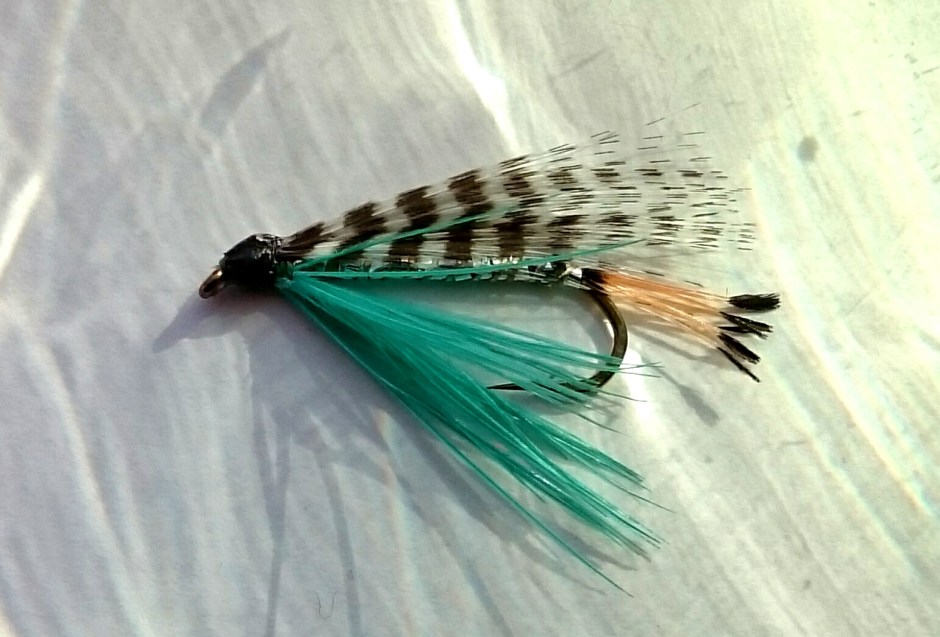
I will write something about each fishing adventure. Even if I don’t catch any trout I will update my Diary. The reel has been serviced, a new line loaded and a few flies tied.

Game on.

==================================================

27 February 2016 – The Bourne

I had accepted an invitation to the Apsley Estate near Hurstbourne Priors, for a guided tour of the Bourne. The invitation was to see the stretch of water described by Harry Plunkett Greene in ‘Where the Bright Waters Meet’. My journey West was uneventful except for the SatNav which proudly declared that I had arrived at my destination while waiting at the traffic lights outside Boots in the centre of Winchester !

It was a cold blustery day which was very appropriate as Harry had repeatedly complained about the North East wind that blows down the Bourne Valley. The Bourne Valley is a beautiful place, not part of the normal world. It is quintessentially English, peaceful and oozing charm. I had entered a time warp and felt privileged to be in such a calming environment.

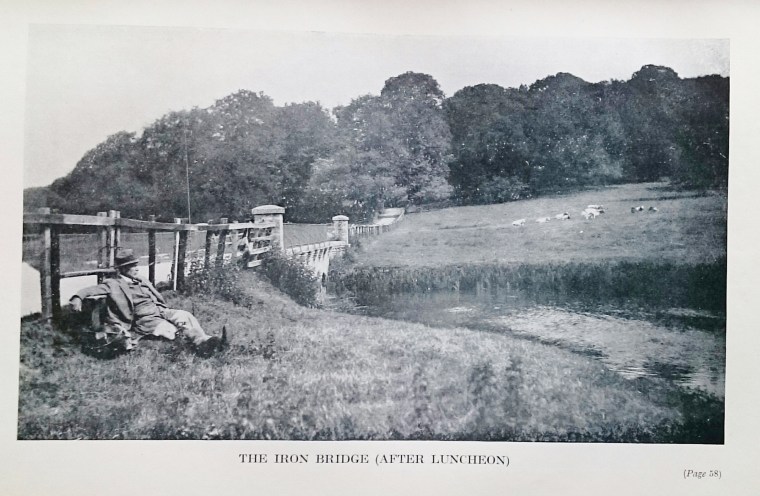
The plan was to visit the places featured in the book and compare the Bourne in 1902 to 2016. The river was in fine, winter condition and I saw several good fish. I walked upstream towards the Iron Bridge where I paused to look over the railings. I can never resist looking over a bridge parapet.

This slideshow requires JavaScript.

The river at the Sawmill was every anglers dream. A large header pool had been built in the 17th century to provide a constant supply of water for the mill. The pool was calm with rising trout and the mill race was a torrent of white water. Both were very therapeutic.

It was icy cold so we adjourned to the pub for a pint and lunch. We finished the tour with a visit to the Bright Waters just below the viaduct. The Bourne had hardly changed, the eastern arm of the river was a little overgrown but otherwise it could have been 1902.

This slideshow requires JavaScript.

On the long journey home, the SatNav refused to talk to me. I think it was sulking because I had taken a short cut. When I arrived home my mind was in a whirl of crystal clear water, rising trout and deep pools. The next time I read his book I will recall my visit and know exactly where Harry was standing and how he felt.

==================================================


Catch and Release

For many years I fished for trout at a local fishery that allows catch and release. It was great fun. There was no pressure to catch a limit. I could stay as long as I liked or until the pub opened. However, the trout had all been caught several times and the fishing was very difficult. At first I had a lot of blank days. One afternoon an angler near me caught about twenty fish to my zero. I wandered along the bank and asked what fly he was using. “Buzzers, too easy” was his somewhat curt reply. I stood at his side and watched. He stood still, silently watching his line. Without comment he slowly lifted into another fish. I hadn’t seen the take. It was a turning point for me. I went home and tied a load of buzzers.

DSC_1395

It took a lot of willpower to fish a static buzzer but I watched the end of the leader like a hawk and soon found myself in ‘catch and release’ mode. Most afternoons I caught about a dozen fish and I explained about the method to anyone who asked me.

Eventually I had a dilemma. Each time a trout was caught it became even more averse to artificial flies. I had to scale down to 1.5lb bs tippet and size 18 buzzers. This was prolonging the fight and the fish had to be nursed for 15-20 minutes before they swam away. On occasions I saw anglers chuck trout back in the water without a glance and quickly recast. The standards had dropped and I’d had enough of that fishery.

I like to eat the occasional trout. My neighbours’ freezers are full and the pub doesn’t want any more of my trout. I don’t want to take several trout home after each trip. Thankfully I have now found a place to fish that allows me to decide whether or not I release fish.

In the first half of the last Century anglers in the UK used to kill everything they caught. Food was scarce and the fish were plentiful. Things have changed. Coarse fisheries now  insist that all fish are returned and most salmon fisheries in the UK are mainly catch and release. Studies on rod caught salmon, using radio tracking devices, show that 100% survival and subsequent spawning is possible with very careful handling. An Irish study of salmon concluded that 98% survival to spawning is possible on fly caught fish but only 55% on lure caught fish. There is 100% mortality of deeply hooked or bleeding fish.

resting

This trout has just been released and is resting on the sand before swimming off into the pool.

A catch and release study on pike, supported by laboratory experiments, suggests that it takes up to six hours for a fish to recover physically if it is kept out of water for  five minutes.  Exposure to air also affects the behavior of the fish.

DSC_1390

I only buy barbless hooks but I have a collection of several thousand flies tied on barbed hooks. Before I use an ‘old’ fly I crush the barb with artery forceps. It’s good to see them swim away.

==================================================
Where the Bright Waters Meet

‘Where the Bright Waters Meet’ – Harry Plunket Greene

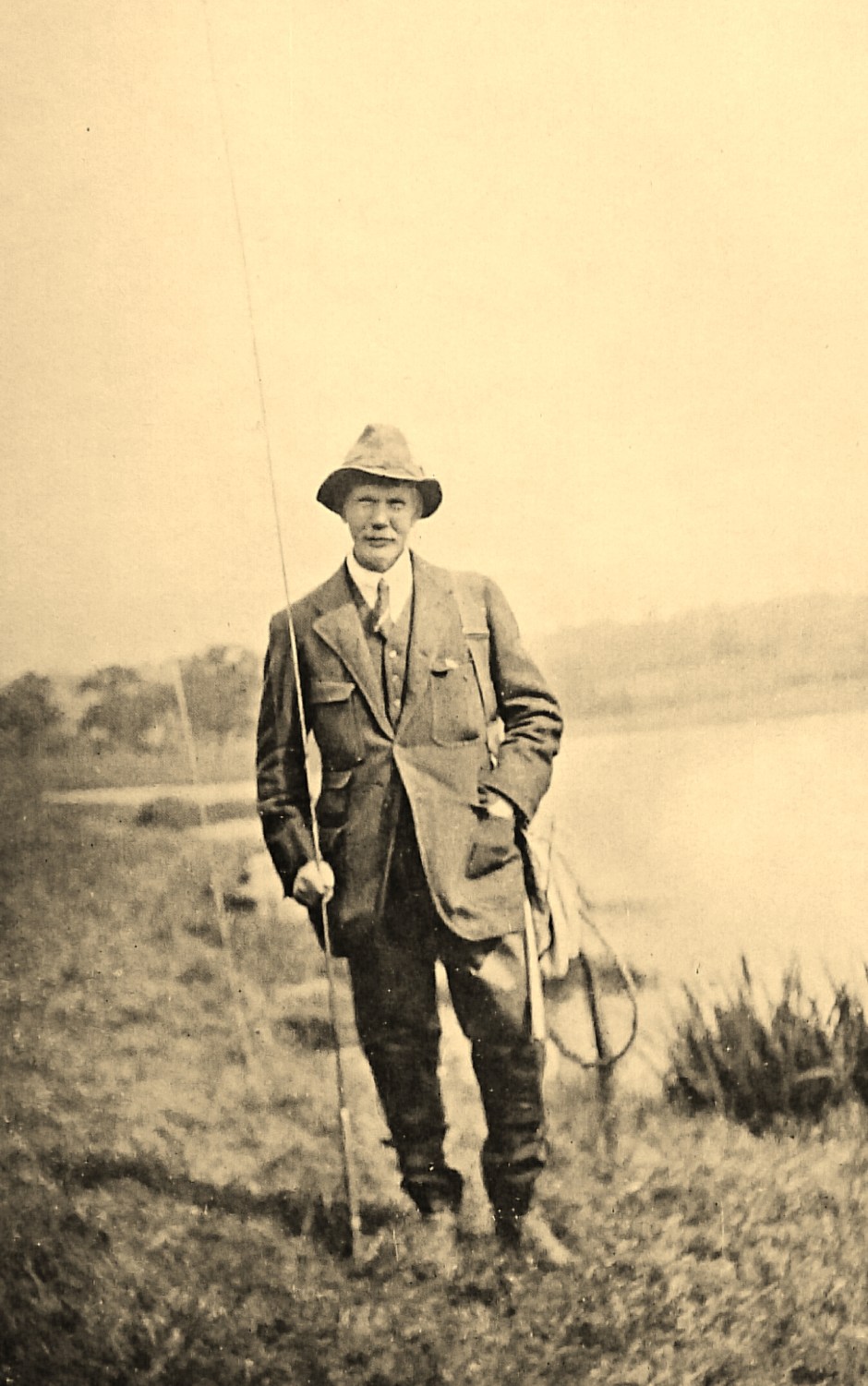
I found this book in my local Oxfam shop several years ago. The black and white photos transported me back a hundred years to a time when gentlemen anglers wore tweed suits and moustaches. I didn’t know the author. Skues and Halford had overshadowed him.

hpgpic001

Harry Plunket Greene was 6’ 4”, handsome and a celebrity singer for over 50 years. He was a key figure in English music, working with the famous English composers. He was born on 24 June 1865 in Ireland. He was a Professor at the Royal Academy of Music and a member of the MCC. He was also a keen fly fisherman.

I have read Where the Bright Waters Meet several times. It describes his fishing experiences between 1902 and 1912 during which time he lived in Hurstbourne Priors and had a rod on the River Bourne. The Bourne is a feeder to the Test. It rises at St Mary Bourne and joins the Test near Whitchurch.

He kept a detailed fishing diary and although the book was not written until 1924, it paints a vivid picture of an idyllic lifestyle beside the river. In the beginning he praises the Bourne, “the finest small trout stream in England“. Three miles of crystal clear, shallow water stuffed with big trout.

DSC_1371

However, between 1902 and 1904 he and the other rods overfished the Bourne. He estimated that 1,000 wild trout were removed from the river in 1904 alone. The river could not sustain that abuse. In 1905 the rods decided to restock the river. They introduced 2000 yearling brown trout, 500 two year olds and 200 Loch Leven browns. That was far too many fish.

They ruined the fishing. The average size of the fish plummeted as they competed for food and starved to death. He wrote that the fish were ‘pitiable’ and that the river ‘can never be the same again’. From 1909 to 1912 he hardly fished the Bourne, he played cricket instead.

DSC_1374

In 1923, just before the book was written, he complained of tarred roads polluting the river, watercress beds abstracting water and that the river was overstocked with non-native fish.

He was correct on all counts. During the 1990s Vitacress Salads Ltd., a large producer of watercress, discovered that the cress washing process released  phenylethylisothiocyanate, a naturally occurring mustard oil. The toxin dispersed the invertebrates and the trout disappeared. The company now recirculates the cress washings and the water is cleaner. In 2007 a survey of the Bourne found good levels of invertebrates and fish.

The old Test trout had been replaced by the ‘yellow bellied’ Kennet fish they had stocked in 1905. He wrote that the true Test trout were short, deep fish with a diminutive head, tremendous shoulders and were bright silver.

Last year the Bourne was described as “unusual among chalk streams in that it holds only wild brown trout and in the 2014 season, several of those caught weighed four pounds or more. Two pound fish are almost commonplace.” The ‘wild’ fish are the offspring of Harry’s stocking and therefore not truly wild Bourne fish.

In the last chapter of his book he wrote “somewhere, deep down, I have a dim hope that one night the fairy godmother will walk along the tarry road . . . the little Bourne will wake and open her eyes and find in her bosom again the exiles that she had thought were gone for good — the silver trout, and the golden gravel, and the shrimp and the duns.”

hpggrave001

Harry Plunkett Greene died on 19th August 1936 and is buried in Hurstbourne Priors Churchyard between the cricket ground and the River Bourne. If he were to return to fish the Bourne, I think he would be pleased to see that the river has regained most of its former glory. His headstone is inscribed . . .

HARRY PLUNKET GREENE

 Singer

 1865 to 1936

==================================================

10 February 2016 – Land Rover Defender

In January Jaguar Land Rover (JLR) stopped production of the Land Rover Defender. After 68 years the last Defender rolled off the production line.

An iconic English vehicle has been terminated by an Indian steel Company. Tata Steel bought both the Jaguar and Land Rover brands in 2008. Since 1948 more than two million Land Rovers have been produced. Defender number 2,000,000 sold at Bonhams for 400k.

The JLR website still praises the qualities of the Defender. The JLR 2015 Annual Report shows that annual retail sales of Defenders went up by 19% compared to 2014, whereas the sales of Jaguar sports cars went down by 4.5%. It was very successful.

Why was the Defender discontinued ? The Defender could never meet the silly environmental and safety regulations imposed by the EU and the USA. The rumours of a replacement Defender have fizzled out.

DSC_0295

I bought my first Land Rover in 1984. I spent very little maintaining it and four years later I sold it at the price I paid. That was cheap motoring.

Until 2016 you either loved the Land Rover Defender or you hated it. However, nostalgia and the lack of an alternative have boosted the prices of used Defenders and the demand can only grow.

Knowing that production was ending, I spent most of 2014 looking for a good ‘un. There were very few that had not been messed about with. Why do people want drug dealer wheels, tractor tyres, winches and enough spot lights to illuminate a night club ?

lr001

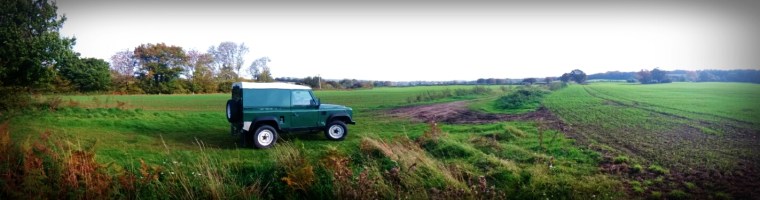
After a lot of searching I found a low mileage, unmolested TDi 90 just a few miles away. Since I bought it, five people have knocked on the front door asking if it is for sale. It’s not. It’s my fishing wagon 🙂

lrlogo

==================================================