2016 Season Summary

I had a very good season on both the river and the lakes. I fished a couple of times a week, visiting different beats as the river conditions changed. The shallow top beats fished well when the water was high or coloured. The deep pools on the lower beats were more productive during the summer. I caught my first fish on 21 April, the Queen’s 90th birthday. It was a small wild trout.

From late April to mid May conditions were often challenging with high, coloured water. I caught a few fish on nymphs. The Mayfly hatch started a little later than last year and there were good hatches of Alder and Olives.

During April I resolved to catch a Sea Trout. The high water during the early summer should have helped them up the river.  It was not to be.  The Environment Agency carried out their annual survey just below Coultershaw Bridge and found nothing. I didn’t hear of any members catching a Sea Trout,  it was a poor year for migratory fish.  There must be an explanation.
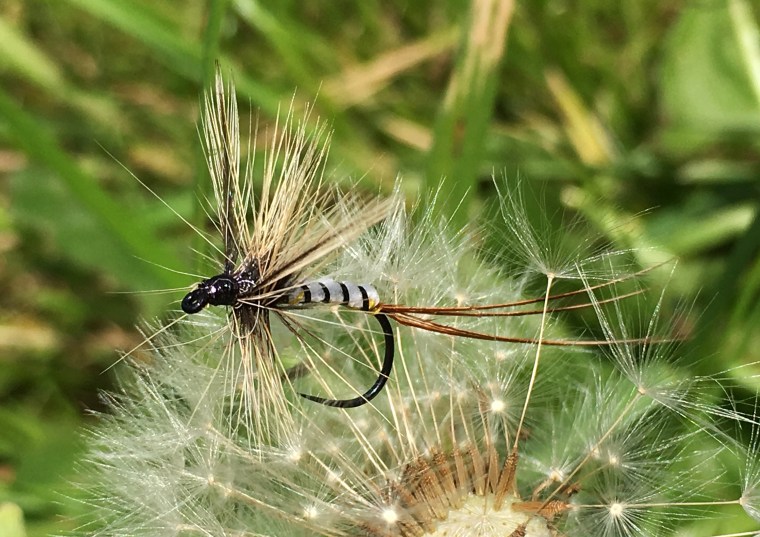
img_0611

The Mayfly hatch was not as prolific as last season. The Mayfly has a two year life cycle and that bodes well for next year.

During June and July I usually sat and watched a stretch of river until a fish revealed itself. Watching the water was also an opportunity to see what flies were hatching. There were plenty of Trout in the river and I often saw a fish rise while setting up my rod. I kept off the skyline and crept towards the fish. I found that presentation was important. A poor cast, a heavy tippet or drag scared away the Trout. I used a landing net with a handle that extended to ten feet. That was essential for both landing the fish and allowing them to recover. I returned all my fish to the river except three which I took home to eat.

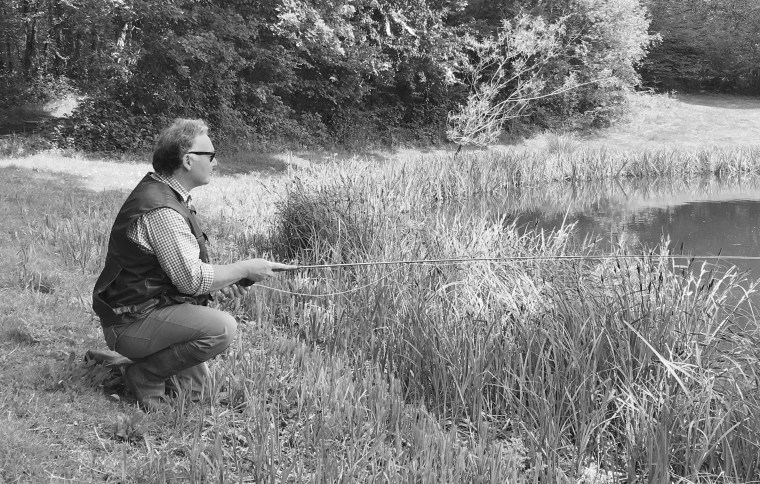
On 9 June I fished the Wey by invitation. I had a long, hot and exhausting day. The fishing was excellent, probably the best Trout fishing I have ever had. It was definitely the high point of the 2016 season.
img_0496a

The fishing on all of the Rother beats was demanding.  Not because of a lack of fish, there were plenty of wild fish and the numbers of stocked fish seemed to increase as the season progressed. The Trout were difficult to tempt. Probably because most were returned, much wiser for their experience.

It was demanding because I had to work hard for each fish. A careless approach,  a botched cast or a dragging fly and the Trout went down into the weeds for an hour. Watching the river and waiting for fish to reveal themselves was the right approach.  Walking about and casting randomly into likely pools was not a success,  particularly during the Summer.

The evening rise was a regular occurrence, fishing in the mid-day sun was not as productive as in recent years. Even during the Mayfly hatch. The old adage about the ‘best’ fly was never as true. My favourites, the GRHE nymph and Black Spider, were my default flies and thus caught most of the Trout. I settled on 4lb bs Stroft for both dry fly and nymph tippets. The knots are more reliable than fluorocarbon and the line is strong enough to bully a two pounder away from the weeds. Most times.

The improvements to the river should help with spawning and it will be interesting to see if the river has more young Trout next season.
n1a

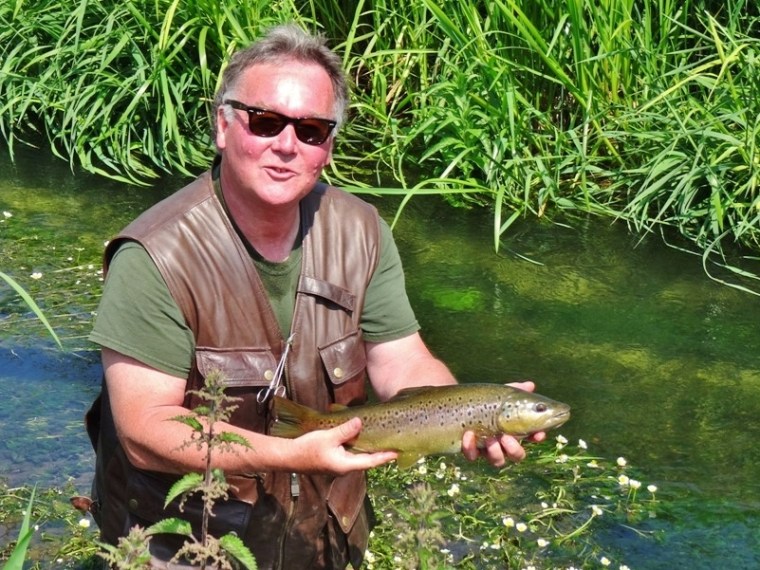
There were no monsters this season. One fish I well remember. The big, wild Brown Trout I caught on an upstream nymph from the upper River Wey. I saw it take in the crystal clear water and it fought like a tiger. I eventually climbed down into the chalk stream to net and release it. My host and namesake was on hand to take the photos.

I maintained my diary throughout the season. It bought a new dimension to fishing. Each trip was a combination of fishing, photography and mental notes about the highlights of the day. Writing made me more observant and it filled the time waiting for a fish to rise. I have made an appointment with Anna at Otter Bookbinding in Midhurst to have my diary bound.

If I had to sum up the season in one word, it would be “demanding”.
trout

24 October – End of the River Season

Monday, probably my last visit to the river this season. It’s Half Term and my diary for the last week of the season is full of Grandchildren and shooting. Pheasants that is, not children.

It was a very cold morning with a strong North East wind and a heavy overcast. The Autumn colours looked a bit tired under the grey sky. A watery sun appeared occasionally but it didn’t warm the air. Where to fish?  I went through the options on the drive to Coultershaw. Rotherbridge seemed to be the best bet. I would fish the pools downstream until I reached the weir. There was always the chance of a fish there. It’s also a nice walk.

By the time I arrived the sun had broken through the overcast and it was bright. The wind was blustery but upstream which helped with presentation and minimized drag. I looked upstream from the middle of the bridge and saw a big Trout in midstream on a patch of sand. I marked it and went back to the Land Rover to set up my rod. I tried the fish above the bridge but to no avail.

img_2076

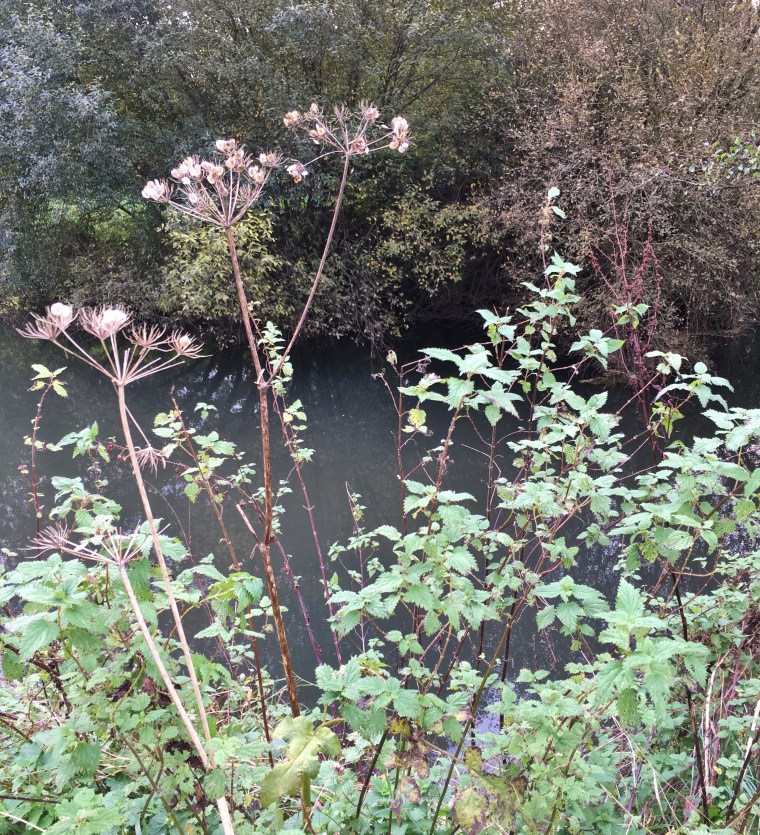
I crossed the bridge and looked under the trees. There was an enormous Trout just under the bank on my side about ten feet away. I could see it’s fins clearly. It was a dark brown colour, almost black. It looked like a Sea Trout about six pounds. I watched it for about five minutes and then got my rod. I could flick a fly over the fish but there was a dead Cow Parsley stem on my left hampering the backcast. I snapped the plant stem with a crack. The fish heard the noise and disappeared. I cursed.

I cast to a smaller fish which took the Black Nymph and charged downstream. I netted and released it without much fuss. I rested the pool for a while and another fish swirled. I cast upstream of the fish and it took confidently but came off after a few seconds. Two casts, two takes. Casting into the jungle of Willow and Alder was a challenge. The fish were feeding under the branches and in the main current where the leaf debris and buzzers were drifting downstream. I had to cast over my left shoulder and curl the leader around an overhanging branch. The fly landed in the branches several times but a twitch of the rod made it plop into the water amongst the fish. I only lost one fly !

My Black Nymph looked a bit tatty after being chewed by two fish so I changed the damaged tippet and the fly. I tied on an unweighted Pheasant Tail nymph and greased the leader. The fish were taking sub-surface and the weighted Black Nymph was sinking too fast.

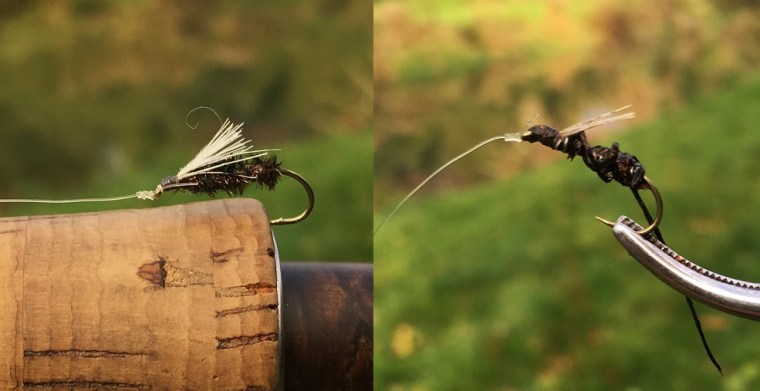
I crossed back over the bridge and saw a fish rise under the big Alder tree. It was moving up and down the main flow, regularly taking buzzers. The next time it rose I presented the fly accurately and the fish was hooked. It fought well and I bullied it over the dying Potamageton fronds into the net. It went quiet after that. The fish were rejecting the Pheasant Tail so I changed to a lightly leaded Coachman. The white wing attracted the Trout’s attention.

img_2089double

Coachman – before and after a Trout

I moved downstream and covered a fish under the far bank. It took the fly and when I got it in the landing net, I saw it was an unusual colour. It also had a curly dorsal fin. I needed to use the artery forceps to remove the hook from the left side of it’s throat. It swam off from the net into the weeds. Two hours later, using a different fly, I hooked and landed the same fish. It didn’t fight much. The colour,  dorsal fin and hook mark were confirmation. Does that count as one fish or two ? On the way back to the Land Rover I looked for the Monster under the tree. It wasn’t there.

The afternoon was a great success. The weather had been kind, I had the river to myself and the fish were free rising. A fitting way to end the season on the river. The lakes are open until the end of November. I will have time for a couple of trips after visiting Wales.

trout


20 October – Black Nymph

I had some tedious chores in the morning, the car had been booked in for it’s MOT. It failed. On the bright side, Postman Pat delivered a vintage Barbour jacket that I found on eBay for only £22. After I had re-waxed it and sewn up a small tear, it looked almost new.

The weather was odd. The North wind was quite warm. The clouds moved across the sky with a purpose. The outlook alternated between sunshine and rain. I got to Keeper’s Bridge and tackled up. While I was filling my pockets with fly boxes and toffees, a large bough fell off a tree in the woods. It crashed down on the path. Without any warning. It was a little worrying and I made a mental note to use the farm track in future. Last week I promised some friends a brace of Trout for their dinner. However, none of the fish I had caught were suitable and the pressure was mounting.

dsc_1918

Black Nymph

I walked down the farm track and stood on the bend waiting for a fish to show itself. I heard a splash from under the Alder tree but dismissed it as falling debris. The wind was quite strong. I heard another splash but I was looking upstream and couldn’t tell what had caused it. I concentrated my gaze on that pool. A fish swirled right under the tree. I walked down to the pool and just as I got there, the fish rose again a bit further upstream. I tied on a Black Nymph and cast upstream of the rise. The fish took the fly on about the third cast. It was a good fish and battled up and down the pool, diving into the weeds a couple of times. It weighed 2lb 4oz and was suitable for a meal.

I rested the pool for twenty minutes as I had seen another fish. The splashing and jumping about had scared the other fish away and I walked upstream to the Sandy Pool. Last Monday I had seen a Trout under an Alder tree below the Sandy Pool. I wondered if it was still there. Brown Trout are quite territorial. I worked the fly towards the tree, extending the line a little on each cast. There was a big swirl, I lifted the rod and a spooked fish leapt out of the water into the tree branches. It crashed back into the water and I assumed that was the end of the matter.

img_1983

I walked upstream and half-heartedly flicked the fly around a couple of pools. I wanted to get back to the spooked fish but I knew better than to rush it. After a while my patience ran out and I crept behind the rushes opposite the tree. The first cast was a fluke. The leader curled under the low hanging branches and the fly landed near the opposite bank. The fish swirled at the fly and then hung in the current just underneath it. The fly drifted downstream, I lifted off and repeated the cast. The Trout took, crashed around under the tree and then  dashed up the river. As usual my landing net had run away and hidden in the grass. I  was lucky to land the fish. It made a nice brace, dinner for two.

img_1976a

The barbless hook had taken a good hold in the Trout’s jaw. I don’t think a barbed hook would have penetrated that well. The hook pattern that I have chosen for this season’s flies is the best that I have ever used. The hooks are made from fine wire and are strong. They have a matt black finish and are very sharp.

I walked downstream, past the bridge, towards another favourite tree. I worked hard to entice a third fish but the wind had grown stronger and it was getting cold. My casting was mechanical and I was losing concentration. Time for the pub. I dropped off the two fish on my way home.

trout

17 October – Little Bognor

There was nearly an inch of rain over the weekend and the river level had risen.  It might encourage the Sea Trout to run up the river but I would have to wait until later in the week to find out. I had been planning to visit the lakes at Little Bognor in November. However, there was no guarantee that the club would extend the fishing season another month.

The early rain had cleared. With a gentle south-westerly breeze the conditions would be ideal. Little Bognor is deep in the woods and sheltered from all but the strongest of winds. The Brown Trout are super fussy and a slight ripple helps to hide the leader. Normally the fish look upon a large or badly presented fly with scorn. A quiet approach and a fine tippet are essential.  Buzzers and tiny nymphs usually tempt the fish. The lakes are spring fed and contain wild Brown Trout.  The wild fish are easily identified and must be returned to the lakes.

As the Land Rover thundered towards Petworth the rain returned. When I got to Fittleworth is was torrential. I swung off the little lane and drove up the muddy track into the woods. I parked under an Oak tree and sat watching the water while I had a sandwich. An acorn fell on the aluminium roof and gave me a shock. Eventually the rain stopped and the sun came out. I tackled up beside the lower lake and walked up the slope to the outflow of the top lake. I stood behind a clump of ferns and looked for rising fish. There were a lot of Roach on the surface sipping buzzers and a few Trout swirling among the floating leaves. I decided to start with a buzzer and cast to a rise near the Willow tree. No response. I persevered with buzzers of different colours and sizes but I couldn’t get a take.

I moved to the other side of the tree behind a chest high, bushy fern. I was well hidden but the line kept snagging on the fern and the Chestnut tree behind me. The chestnuts were thumping on the ground like hand grenades.

img_1965

The fish were rising only a couple of rod lengths out. I flicked a green buzzer to the nearest rise and had a take straight away.  I missed. I cast to another rise and missed the second take. I tried to relax and to delay lifting the rod. After a few more casts the fish moved away into the centre of the lake. I swapped to a dry fly, a size 18 Black Neoprene Spider, which sat in the surface film and remained visible. A Trout moved towards me from the right, head and tailing as it fed on buzzers.  The fly was right along it’s feeding line and the fish rose confidently for it. I knew it was a small Trout and I tried to keep it quiet to avoid frightening the other fish away. It fought well and the lake remained still for a long time after I had netted it.

I crept along the far bank looking for fish but they were wary and stopped rising as soon as I cast. As the sun went down the Roach stopped feeding and everything went dead. I went to the Land Rover contemplating a pint at the Black Horse. A Trout was feeding at the far end of the lower lake and ‘one last cast’ was in order. I watched the fish rise among the leaves, it was moving away from me. I waited until the fish turned and put an Amber Nymph in it’s path. I gave the fly a little tweak and the fish seized it. After a few twists and turns it came off. It was a good time to leave.

trout

13 October – Middle Beats

It was a cold, grey morning with a gusty east wind. Not traditional weather for fly fishing. I wanted to fish a stretch of the river that I wasn’t familiar with. It would be more of a challenge. I decided to fish in the wooded section between Keeper’s Bridge and Ladymead.  I haven’t been there this season and it would be like fishing a different river. I made an early start as the evenings are short and the light goes about 6:00pm.

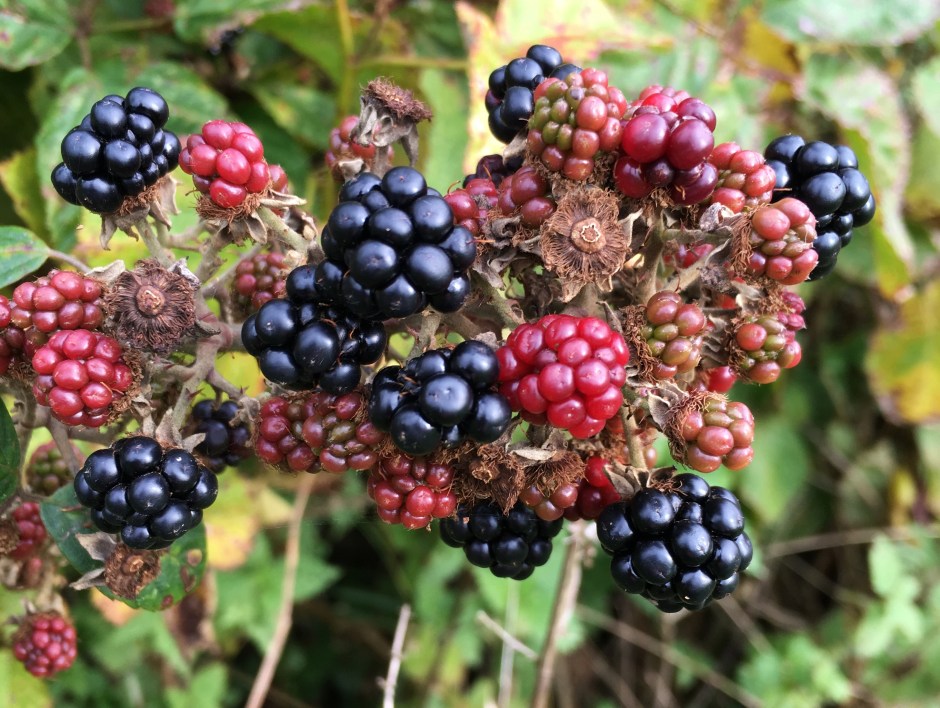
I walked upstream from Keeper’s Bridge. I paused and watched each pool for a few minutes to see if the Trout were rising.  It was about an hour before I reached the footbridge by the abandoned Sussex barn. There’s a Barn Owl’s nest inside the old building. Although I waited in the bushes, the owls didn’t show themselves. I found lots of Blackberries on a south facing hedgerow. They were sweet and not ‘pippy’. I left a few for the birds.

img_1927

As I was admiring the clouds a fish rose in a narrow section of river just below the fallen Oak tree.  It was impossible to cast so I lowered a Black Spider into the water a few times but the Trout had gone. I walked back towards the riffle, casting into the likely looking gaps under the trees.  When I got to the Sandy Pool there were signs of fish moving. I covered every part of the pool with a weighted nymph but I didn’t get a take.

I was contemplating an early visit to the pub when I saw a fish rise in the straight section of river below the pool.  I could see the fish hanging in midstream just under the surface.  I swapped my fly for a weighted Black Spider and crept down the bank until I was opposite the rise. I kept still and watched the river, nothing happened.  I cast the fly across to the far side of the river and watched the leader. It twitched then drew away from me. I lifted into the fish and kept it out of the bushes and weeds. After releasing the fish I  decided to go to the pub as I was convinced that I wouldn’t get another. I picked up my rod and net and started walking but another fish swirled.

img_1952

The fish had torn the fly but I decided to trim the hackles and use it again. It looked like a black nymph, I must tie some like that. First cast there was a flash and a swirl at the fly but the Trout did not take. I rested the fish and tried again but it had gone. I saw a fish rise in the tail of the Sandy Pool but it had also disappeared by the time I got there. I wandered back towards Keeper’s Bridge and stood on the corner waiting for a fish to show itself. The light was fading fast but a couple of fish rose just past the big Alder tree. The trees behind me made it difficult to cast properly but I flicked the fly out just under the branches. It was taken without hesitation. As I was struggling with the landing net another fish splashed downstream from the bridge.

img_1951

The two Trout had torn the fly to pieces. The silk thread was coming undone and it looked a mess. I tied on a new fly and went in search of another fish. I found the fish below the bridge and presented the fly just upstream of it’s position. After a couple of casts the leader tightened and I was into my third fish. I unhooked it and released it from the landing net. I was using a pan-shaped landing net which is not very traditional. However, it is easier to nurse the fish and allow it to swim off from a shallow net. The light had gone, I could no longer see my leader and the fish had stopped rising.

I had thought that I would return home without catching anything but three fish in the last hour was a good result. If I had gone to the pub earlier I would have missed the evening rise. There is no doubt that the hour before darkness is the best time of day.

trout