Leconfield Fly Fishing Club

Except for an invitation to fish the River Wey, my trout fishing in 2016 was solely on club waters. I had nine lakes and over three miles of river to choose from. I didn’t want to fish anywhere else. The club only has about a hundred members,  it’s small and friendly.

Leconfield Estates own much of Petworth and the surrounding area. In fact, 14,000 acres of the surrounding area. Part of Petworth House and deer park are owned by the National Trust. The NT don’t approve of fishing or hunting or shooting. Thankfully, the Manor of Petworth and the Leconfield Estates have been held by Lord Egremont and his ancestors since 1150.

2749

The lakes and river are lightly fished and it’s rare for me to meet another member,  particularly during mid-week.  The river runs through traditional farmland and is sensitively maintained. It rises on a mixture of greensand and chalk, then flows through the South Downs National Park. The river is a designated Site of Nature Conservation Importance because of its value to wildlife. I feel privileged to be able to explore the river and visit the lakes which are in parts of the estate to which the public have no access.

The lakes open in March, it’s a long time to wait. While waiting, I designed and built a new website for the club. Everyone is happy with the design.

This link is the club’s home page https://leconfieldflyfishingclub.com/

trout

9 January – Tying Flies

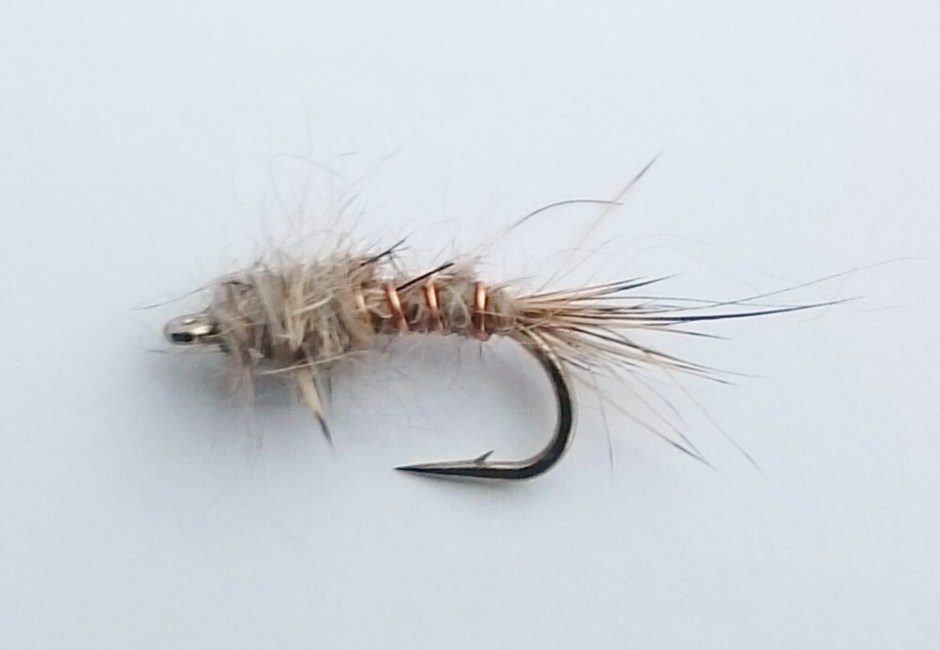
It’s cold, grey and windy. Time to tie some flies for the new season. The lakes open in March. The Gold Ribbed Hare’s Ear (GRHE) nymph and Black Spider are my favourite flies. I use them a lot and they therefore catch the majority of my trout.

Gold Ribbed Hare’s Ear

This fly has a long history. In 1886 Frederic M. Halford published Floating Flies and How to Dress Them. He included the Gold Ribbed Hare’s Ear. In 1910 G. E. M. Skues listed the Hare’s Ear pattern as a wet fly in his classic Minor Tactics of the Chalk Stream. The history of this pattern therefore neatly tracks the Skues – Halford debate.

The modern pattern featuring a gold bead and wide gold ribbing is, in my opinion, a lure not a nymph. I don’t use beads. I use rabbit fur and various wire ribbings for this pattern.  Rabbit fur is plentiful. Lead copper and gold coloured wire are cheap and more durable than tinsel or Lurex. The tail of the fly is made from the coarse guard hair which is pale brown with dark tips. The body is dubbed with a mixture of guard hair and the soft blue under fur. The ribbing sinks into the body which secures it and gives a segmented effect. Lead wire ribbing makes the fly sink and I sometimes add lead wire under the thorax for very deep pools. The thorax is mainly guard hair, loosely dubbed and picked out with a needle. I don’t bother with wing cases. This pattern should look scruffy and is more successful in sizes 12 and 14. I find trout take this fly confidently throughout the season.

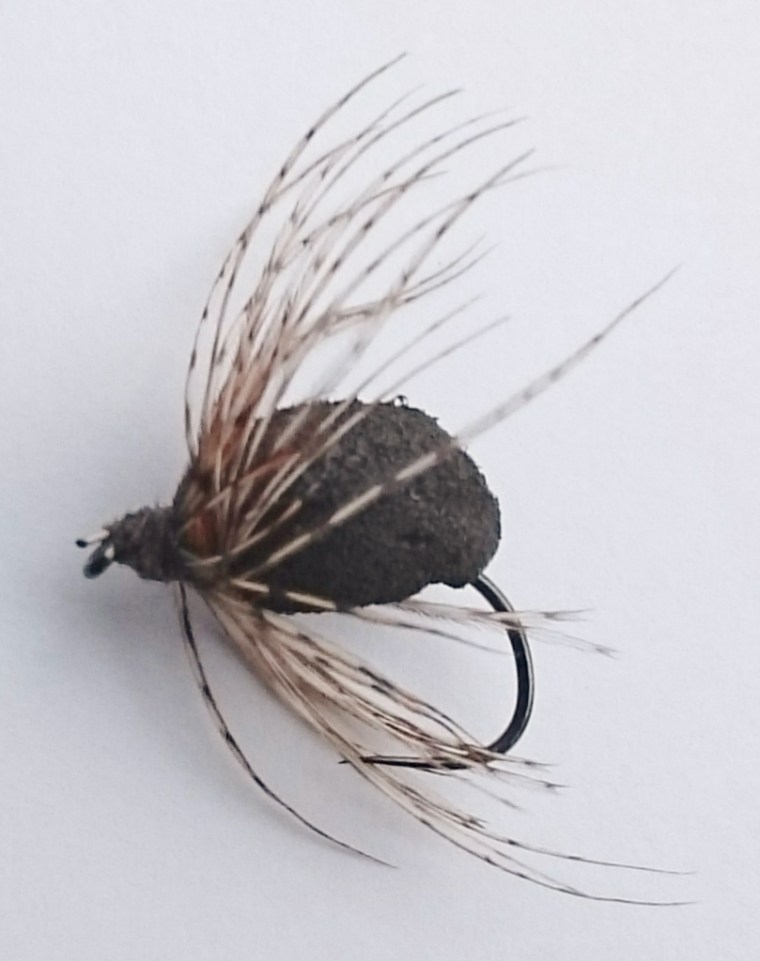
Black Spider

blackspider

This fly has no history, I invented it. The Black Spider is a generic pattern that is a mixture of nymph, emerger and dry fly. It floats indefinitely because it is made with black Neoprene foam. The type of closed-cell foam that wetsuits are made from.

The body is tied in at the bend of the hook over a bed of black silk. It is brought forwards without stretching and is not ribbed. The foam retains its buoyancy and is the shape of a beetle or corixa. A small black hen or Partridge hackle completes the pattern. This pattern floats without dressing and will support a short length of sunken fluorocarbon tippet.  It’s great for educated trout and the takes are usually violent.

Both of these flies are best fished dead drift on the river or stationary on the lakes. I need to tie a few of each size, I tend to lose a lot in the trees.

trout


Daily Prompt: Trout Fishing Diary

dsc_2049

Last week I took my Trout Fishing Diary to the book binders. It’s a long story.

A few years ago, during a fishing holiday on the River Wye, I chatted to Bob Brookes in the bar of the Red Lion at Bredwardine. Bob showed me a leather bound book which contained photographs of huge carp and barbel he’d caught. It was a lovely book, full of memories and Bob was justifiably proud. Fast forward to January 2016. I wanted to keep a diary of my trout fishing and decided to use technology. After several false starts I designed and built a website using WordPress.  Other design tools are available but they are not as good. I kept the diary going throughout the season. The website made it easy to write a short story about each trip and to add a couple of photos.

dsc_2024

During the year I  was worried about the security of my diary and made regular backups. I also thought about printing a copy, just to be on the safe side. I remembered Bob’s beautiful book and thought about having a printed copy professionally bound. I researched different types of book binding, paper and book designs. I decided to keep the design of the book close to that of my website. I sourced high quality paper, edited the text for consistency and printed each page. In my wanderings around the internet I found Otter Bookbinding in Midhurst. I visited their workshop to discuss the binding and left the text block with them. About a week later the book was ready for collection.

It’s the only copy. It’s not for publication.  It’s a permanent record of my online diary that will exist long after I and the website have decayed. It contains 238 pages and about 250 colour photos.

Many thanks to Bob for the inspiration. I will attempt to repeat the process next year.

trout

6 December – Fishing Jackets

Country sports people are very polarised when it comes to clothing. One side of the divide requires high-tech, lightweight, synthetic materials like Gortex.  The other more traditional side wants rugged, natural, low-tech waxed cotton, leather and tweed. Rods and Guns on the big country estates conform to a dress code. If a Gun arrived at a shoot dressed in jeans and a hoody, they would probably not be invited back. Similarly, I would feel out of place if I arrived at the river wearing flip-flops and shorts. I would look like a poacher.

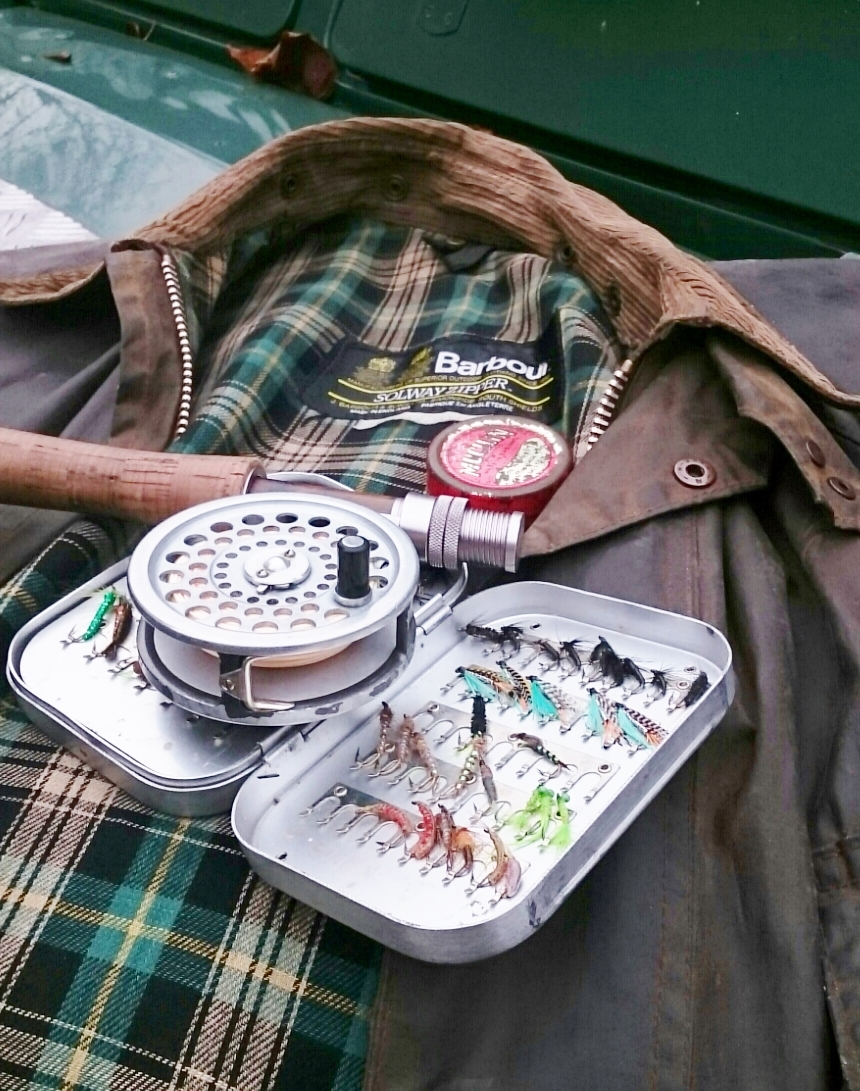
I bought my first Barbour jacket over forty years ago. A Solway Zipper which I still wear. It’s an old friend with frayed cuffs, a few small holes and a belt that shrinks with each passing year. City gents used to arrive at work wearing a Barbour. A fashion statement about the commute from their country house in Clapham. Fashions changed and the economic downturn left people unwilling to pay for top quality, handmade English clothing with heavy brass zips and studs.

dscf1103

Musto jackets are popular. They are well designed and made from machine washable, breathable fabric. They have no soul. The melted chocolate in the pocket washes away. It’s no longer a reminder of a peaceful moment sat watching the river. My Musto Keeper jacket smells of fabric conditioner. The plastic zip broke last week.

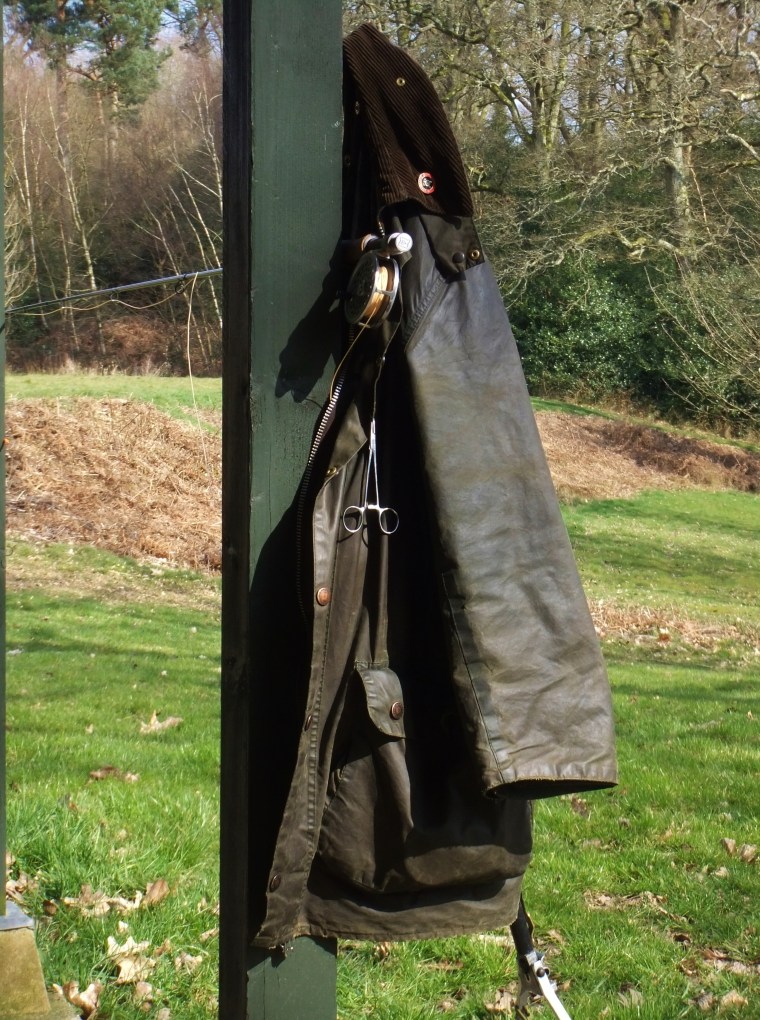
I have four Barbour jackets to choose from, one for each season. They hang in the downstairs cupboard awaiting my departure. They smell of bees wax and muddy water. They are vintage, made in the UK from 6oz heavyweight cotton. A recent addition to my collection came from eBay. It only cost £22 , a tenth of the price of a new jacket. It has a patina and quality that can’t be matched. I might have a look for another, a Christmas present to myself.

trout


3 December – ‘River’

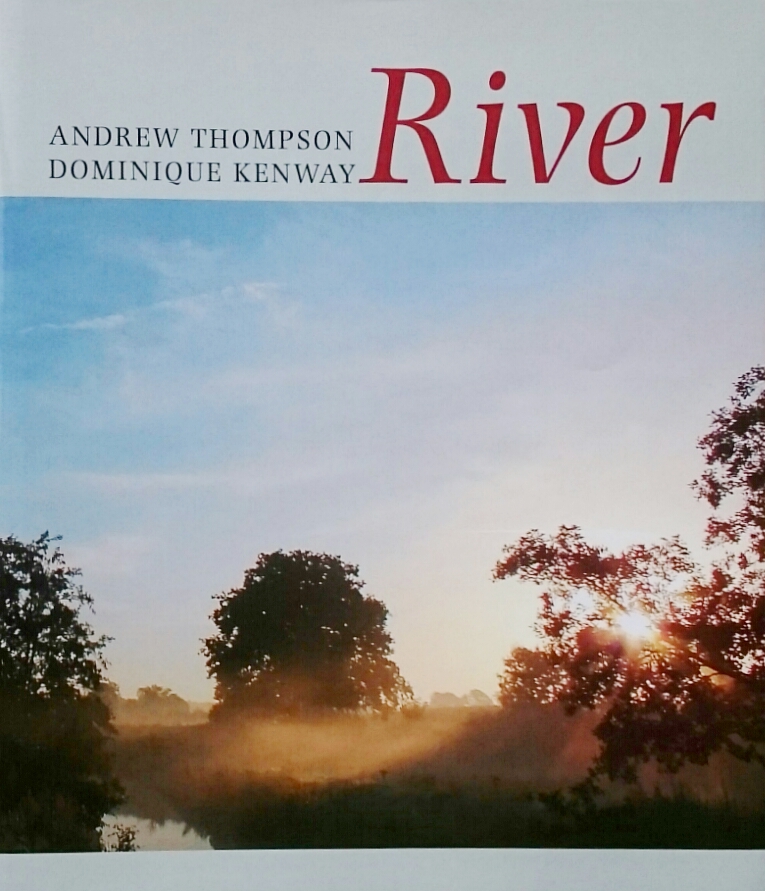
River‘ by Andrew Thompson and Dominique Kenway.

I received an invitation to the launch of this book from one of the authors, Andrew Thompson,  who is the Keeper on the stretch of river where I fish. The trip to Petworth also enabled me to drop off my fishing diary at the book binders. More of that in a later post. Andrew has lived beside and worked on the Rother for many years. He is a Trustee of The Arun and Rother Rivers Trust and a life member of the Hawk and Owl Trust.

Dominique Kenway is an artist who uses the South Downs countryside as a source of inspiration. She selected the poetry and prose to complement Andrew’s photographs.

Max Egremont (Lord Egremont) contributed the Foreword. The Rother runs through his Petworth Estate. He is an author, historian and a Fellow of the Royal Society of Literature.

The launch party was hosted in a converted Sussex barn close to the river, a great location. I chatted to both authors about the design and production of the book. I also discussed the season’s fishing with other members. I had to wait until I got home before I could discover the books contents. It was worth the wait.

river1

River‘ is a book about the beauty of a lowland river and it’s wildlife. The photographs preserve “an astonishing survival of calm and peace“.

Chris Yates wrote the following; “……the wide green fields behind, this part of the Rother must be the most exquisite piece of river fishing I’ve ever seen“. He describes his fishing trips and the wildlife in ‘River Diaries’. I first read Chris’ book in 1997 and formed pictures in my mind of swirling water, streamer weed and overhanging trees. Andrew’s photographs capture the serene and relaxing atmosphere that Yates described. ‘River‘ is not a fishing book. It is about why I go fishing. The unspoilt countryside, wildlife, sunsets and occasionally a Trout. I will keep the book close by and dip into it, accompanied by a glass of single malt. It would make a perfect Christmas present for anyone who loves the Sussex countryside.

The book is hardback, 28 x 24 cm, full colour, printed beautifully by The Lavenham Press, 96 pages, limited to 500 copies. Price £29.50 plus postage and packing.

The book is self-published. You can buy a copy from Andrew at rotherbridge@talktalk.net and from the bookshops in Petworth and Haslemere. 

I highly recommend the book, it will sell out quickly.

trout