10 – 12 June

10 June – River Tamar

Midsummer. A chilly north-west wind hurried the fluffy white clouds across a baby blue sky. I filled my jacket pockets with jelly babies and a small box of nymphs. As I wandered across the field to the big oak tree, a fat brown cormorant the size of a swan flew upstream. The bird glanced back over it’s wing and gave me a dirty look, I was happy to have unsettled it and saved a few trout.

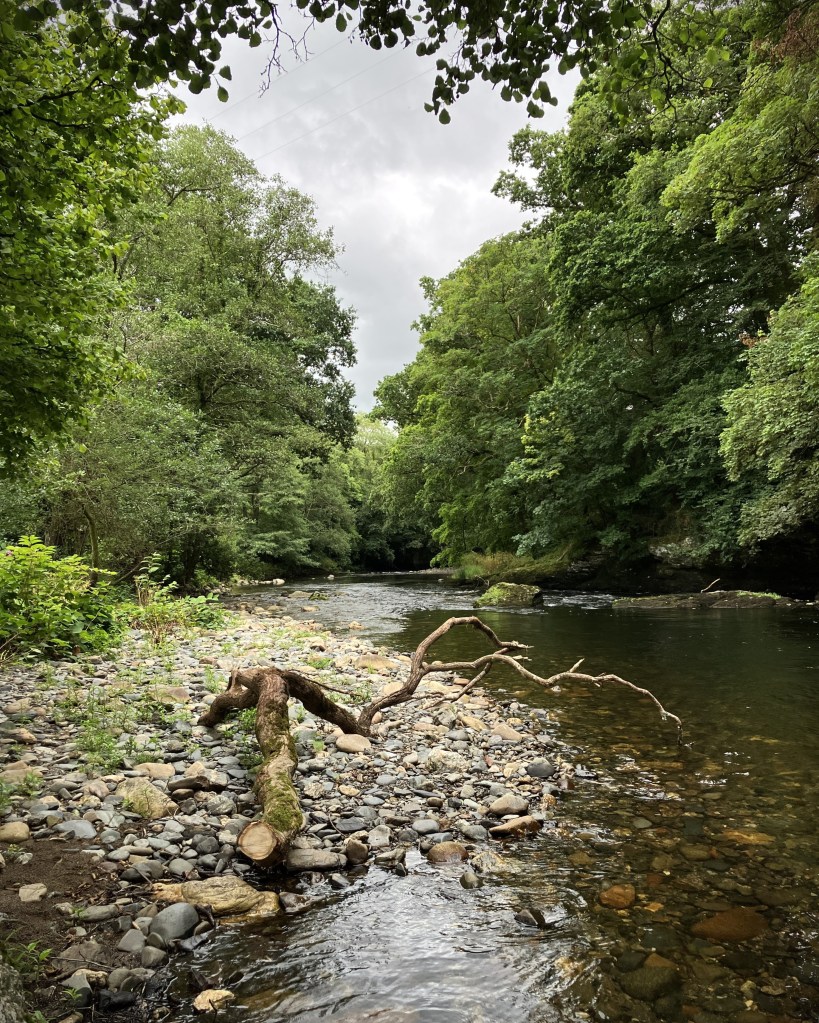
Mayfly were hatching and in the absence of any birds, they fluttered into the trees along both banks. The increasing amount of run off in the Tamar suits these insects. I carefully climbed down the vertical ladder onto the first croy and surveyed the pool. Upstream the stony bottom was covered in green algae. The pool looked perfect with a good flow and a slightly green tint to the water. I worked a nymph around the seams and back eddies gradually lengthening the cast and expecting a solid thump on the rod. After exploring the pool for an hour, I climbed back up the ladder and walked upstream.

I repeated the process at the second croy and the result was the same, no takes. On the walk back across the fields back to the Defender, I concluded that there are very few fish in that stretch of the river. The shallow clear water is ideal for predatory birds and the guano on the branches of the dead trees overhanging the river is evidence of their success.

11 June – River Tavy

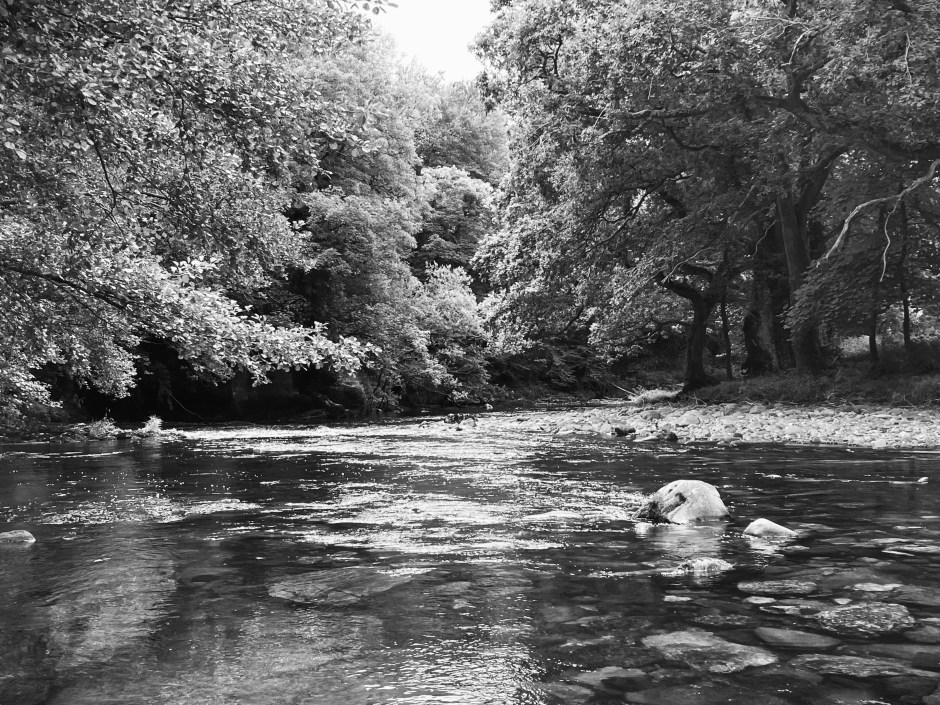
The north-west wind persisted but I was sheltered in the deep valley amongst the trees. I walked upstream to the pool where the dogs bark at me. Two very polite young lads joined me on the beach and we chatted about the river. The dogs charged across the field, barked for a while and then left me in peace having defended their territory. I caught a very silver fish in the tail of the pool. Possibly a smolt. I unhooked it in the water without touching it and it sped away.

I worked my way through head high Japanese Knotweed to the croy near the steps. The river flowed evenly at a good depth and I expected to catch a trout. At the end of a long drift I had a take and coaxed a small brownie towards me. It was a very colourful fish, definitely not a smolt. Two takes, two fish. The Sage ESN is earning it’s keep.

12 June – River Meavy

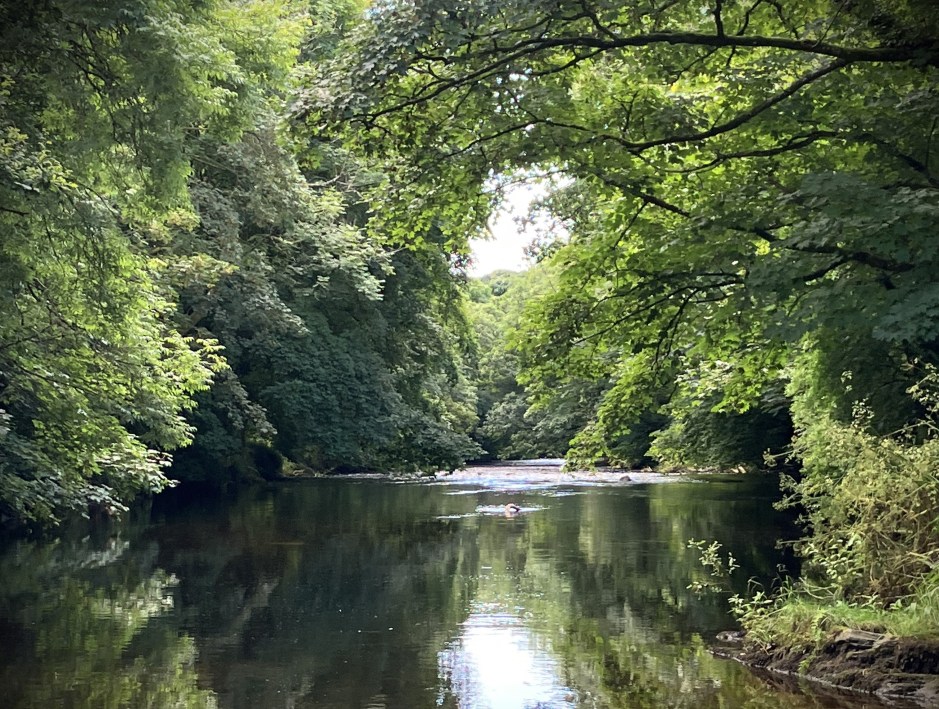
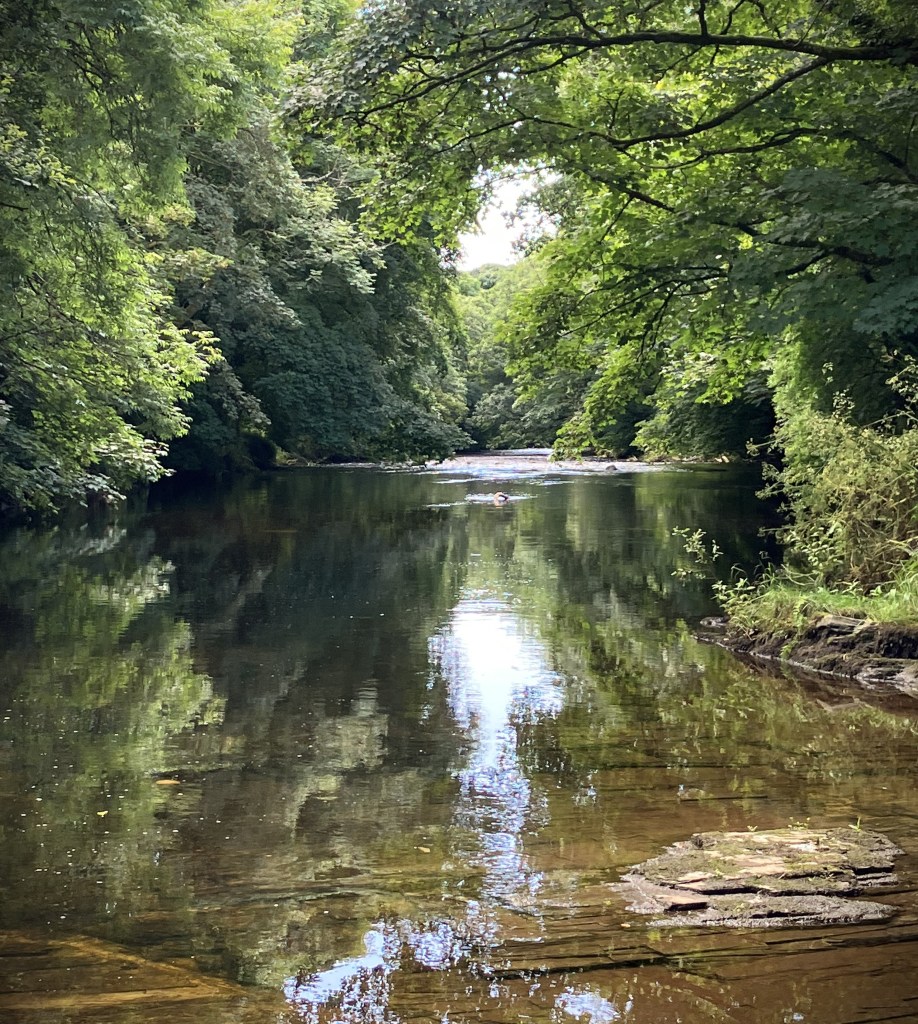
I couldn’t hear the river from the top of the hill and left the rod in the Defender, expecting low water levels. I scrambled down the hill through bracken, gorse and mature trees, taking care not to fall. The river was very low and there was hardly any flow.

I wandered upstream towards the weir. The water level was so low that I was able to walk across the top of the weir on dry stonework. I explored the true left bank downstream and then crossed back to rest on a flat rock. The level of the river rose about four inches and the water became very coloured. South West Water had released compensation water from Burrator, it looked like a summer spate. It’s a pity the flow cannot be maintained all year long.

6 June – River Tavy

6 June 2024, the eightieth anniversary of D-Day. I left the carbon fibre in the rod cupboard and chose a more appropriate rod. My Pezon et Michel was the 23rd rod made on 28 April 1940 at the factory in Amboise. France declared war against Germany on 3 September 1939 and was invaded on 10 May 1940, my rod was therefore made only a few days before the invasion. What were they thinking ?

I waited until early evening before descending the rocky track into the valley. It was humid and warm, olives were hatching and the wagtails were getting fat. I travelled light, just a few nymphs and a box of small dries.

I started at the throat of the pool below the dead tree and worked my way slowly downstream. I concentrated on reading the water, noting the sandy patches, the boulders and crevices in the bedrock. I drifted the weighted fly around a large rock midstream, beside a kink in the main current. A good fish slammed into the nymph and became airborne. I knew instantly that it was a sea trout. I expected it to slip the barbless hook and deprive me of a close encounter. The fight was long, the fast water magnifying the efforts of the fish. I tweaked the hook from the trout’s scissors and it shot away back into the deep water.

I found it hard to focus while working the other pools. I hooked a small trout but it came adrift after a few seconds. A small trout took an olive off the surface under the far bank, that was the only sign of a rise. While working the weighted GRHE I wondered if the trout took it for an olive nymph or a pinhead fry. The profile of the fly could be either.

The traditional method of catching west country sea trout is to fish at night. I don’t fish at night. I don’t fish for sea trout, they have enough problems. So far this season, most of the sea trout have been caught on nymphs during the afternoon.

1 June – Springs

It would be a month before I could fish in Sussex again. I arrived at the lakes at 11:30am, in time for the noon mayfly hatch. I had the lakes to myself and I planned to fish into the evening. The cold north wind sent clouds racing across the South Downs and ruffled the surface of the water. The plan was simple, fish into the wind with a mayfly nymph. The conditions were similar to my last visit but the wind was stronger. Mayfly were hatching and in the absence of any birds, damsel flies were seizing them in mid air. I chose the Sage #3 rather than the Hardy #4 which was not logical but I prefer the action. I promised not to overload it !

At Great Springs the resident grass snake slithered off the bank into the undergrowth, it had detected me from twenty yards away. The trout occasionally swirled on the surface, selecting emerging mayfly from the tree debris being blown across the lake. My mayfly nymph drifted about a foot below the surface, dragged by the arc of the fly line. It was ignored. I had a sharp pluck at a leaded GRHE fished a little deeper but after ninety minutes without a take I moved to Little Springs.

The smaller lake was more sheltered and the mature trees along both banks channelled the wind straight down the centre of the lake. The clouds thinned and the bright sunlight brought on a good hatch of mayfly. Fish began swirling at distance and two big trout patrolled the marginal weeds only a couple of rod lengths away. I started with a nymph but quickly changed to a dry fly. The first fish took an amber mayfly with a partridge hackle. The fly was bedraggled and would no longer float. I only had four French Partridge mayflies in my box. I caught fish on three before the hatch petered out.

Poppies along the headland at Stag Park

I had lunch on a seat beside the lake before returning to Great Springs. A trout took an amber mayfly nymph just under the surface and I decided to stop fishing, five trout was plenty. The original plan, to fish a nymph into the wind, had changed to static dry fly, I probably should have changed tactics sooner. The long rod had performed perfectly, all except two takes had resulted in trout landed.

Another member arrived as I was packing up and had a 3lb 8oz trout from Little Springs. Where was everybody ? It was a beautiful, sunny summers day, the fish were rising and the lakes had never looked better. Strange.

25 May – Bank Holiday

Saturday

After dropping family at Gatwick, I was impatient to get to the water. Crawley and Horsham had changed since I last negotiated the dual carriageways and roundabouts. It was a late start. The river level and colour looked challenging and after thirty minutes of watching the river, I decided that my time would be better spent at the lakes. With limited opportunities to fish at Leconfield, I was not prepared to wait for a possible evening rise. A few mayfly hatched beside an overhanging tree and were picked off by a chaffinch waiting in the lower branches.

At Little Bognor the water was calm and the surface debris was gradually shifting around the lake. Fish were rising everywhere sipping down buzzers, the choice of fly was obvious. I decided to use the Sage ESN 10′ 6″ #3 even though I was surrounded by tip breaking beech and holly trees.

A small fish rolled over close to the bank and attempted to seize my fly but I raised the rod too soon and it swam away unmolested. I resolved to slow down and treat the takes gently. After an hour spent flicking the buzzer to cruising fish without results, I decided to change to a dry fly. The parachute Adams was ignored, the fish spooked and moved along the bank under dense tree cover. I followed.

I changed to a parachute Pheasant Tail and crept to the stone steps on my hands and knees. I concentrated on the tippet but was distracted by a fish swirling further along the bank. As I looked away there was a big splash, I lifted the rod, a long golden flank flashed just under the surface and a big brownie departed for the centre of the lake. The fight was dogged, the fish stayed deep and tested the rod to its limits.

The fly had taken hold in the scissors and was easy to remove. I judged it’s length to be 23″ by the width of my landing net and it’s weight about 4lbs+. It was in good condition and had a very broad tail. The fish shot out of the landing net as soon as I dipped the rim, job done.

A few minutes late I lifted out of a smaller cruising fish. The rise stopped and I left the lakes at 7:00pm. A leisurely glass of wine and some cheese rounded off a very successful evening.

Sunday

Overnight rain raised the level of the river and I chose to fish at Springs. Bank Holiday Sunday afternoon, glorious weather; I expected to meet a few members. I was amazed to find that I had the lakes to myself. Perhaps everyone was watching Ferrari win at Monaco.

The gusty wind veered around from all points of the compass making casting tricky. I used the Hardy 10′ #4 which is better in windy conditions. Trout were leaping vertically, not feeding but trying to dislodge lice. I spent an hour fan casting around the deep water, trying to get a decent drift in the fluky surface ripples. When the wind dropped a few mayfly spinners were dancing and I spent a while taking photos rather than fishing !

I thought that the wind at the top lake would be stronger but from one direction. It was perfect; left to right and slightly towards me. Fish were swirling in the floating tree debris, testing the particles for food and sipping down nymphs. I put a size 10 mayfly nymph on a light tippet and let it drift around under the willow tree on my right. I had a take but the fish slipped the hook after a few seconds. I had another take in open water but lost the fish. I rested the trout and went hunting for mayfly.

The wind had drained me and I left pleased that I had contacted a couple of fish but tired. The hunt for mayfly had been more successful.

20 May – More Rain

Monday – River Plym

Heavy rain was forecast for midweek with a chilly north wind. Bizarre weather for late May. The morning was warm and humid with a gentle south-westerly breeze. I sat and pondered which Beat to fish. After too much pondering I decided that I would visit my favourite Beat on the River Plym. I might not catch anything but the scenery is beautiful.

I concentrated on the flat water immediately above the bridge. The intense sunlight occasionally penetrated the cloud cover and illuminated the deep water behind the large stones and the crevices in the bedrock. There was a lot to aim at. I fished hard, exploring the small pools with sandy bottoms and the darker water where woody debris had collected. The water was crystal clear and there were very few leaves tumbling downstream.

The Sage #3 ESN and the Rio line were a perfect match, it was a joy to flick the size 14 GRHE nymph upstream, looking at the tip of the line for any unnatural movement. The rod was designed for this sort of work. Some would call it Euro-nymphing. I don’t, it’s just fishing. I lengthened the line and covered more holding places before paddling upstream in the margins and repeating the process. After about an hour I was convinced that I had exhausted all possibilities and moved further up the river to a much bigger and deeper pool.

I slid down the huge slate outcrop on my backside, keeping low and using the trees behind me to break up my silhouette. I ran the nymph through the throat of the pool and let it swing around the eddy in the middle of the pool. By extending line and feeding slack into the current I was able to cover the far bank. I snagged the sunken tree about twenty yards away, confirmation that I had presented the fly close to cover. I walked upstream to a rocky beach and ran the nymph along the far bank. My knees took a beating on the granite stones.

I’d had no takes and didn’t see any fish rise but it had been a nice walk through the bluebell woods. Rain threatened as I reached home, thunderstorms and heavy rain are forecast for Tuesday’s visit to the River Tavy.

Tuesday – River Tavy

The heavy rain stopped just after 5:00pm. Homes in Tavistock were flooded while Plymouth bathed in bright sunshine. Unusually, the wind had dumped most of the rain on the northern part of the moor. The moorland streams and the runoff from the main roads, had overwhelmed blocked drains in the town.

On the Lower Beat I wandered both upstream and downstream, the water was rising and leaf debris filled the eddies. The spate peaked as I left the river which dropped overnight, close to it’s normal level. Hopefully, the spring tides and rain will encourage some fish up the rivers.