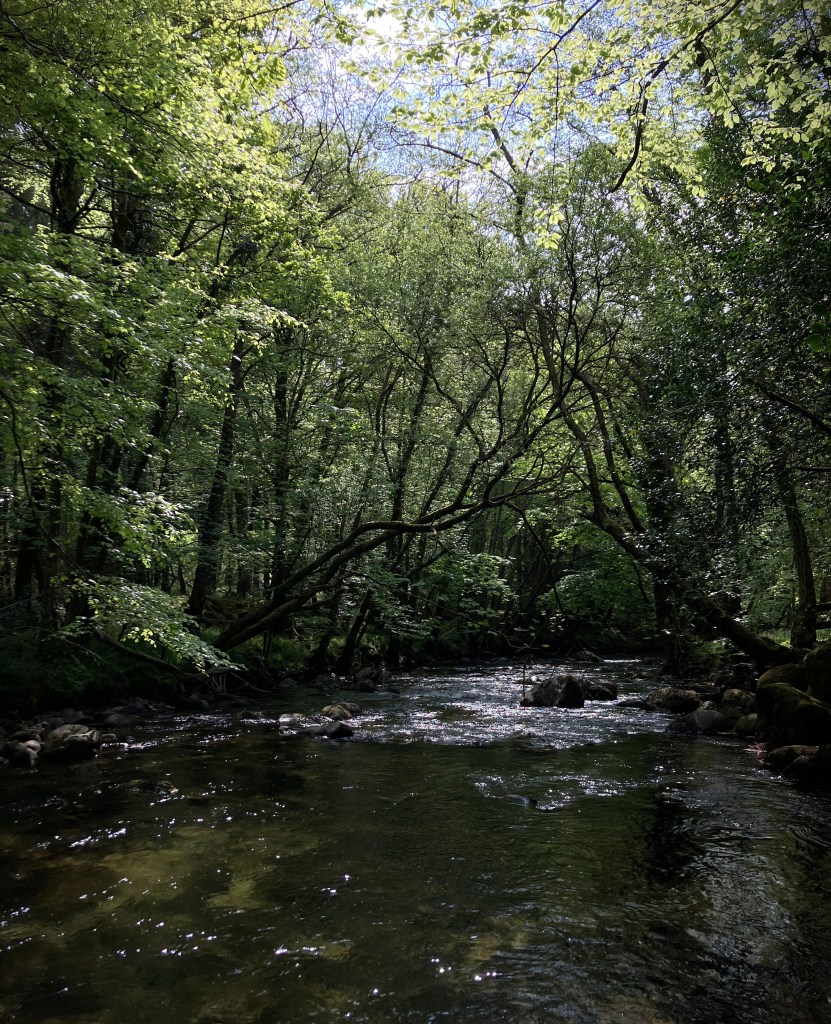
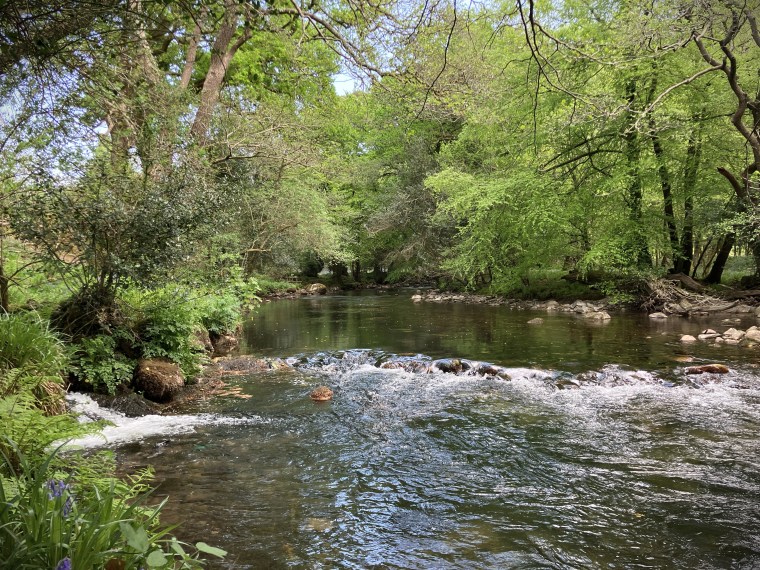
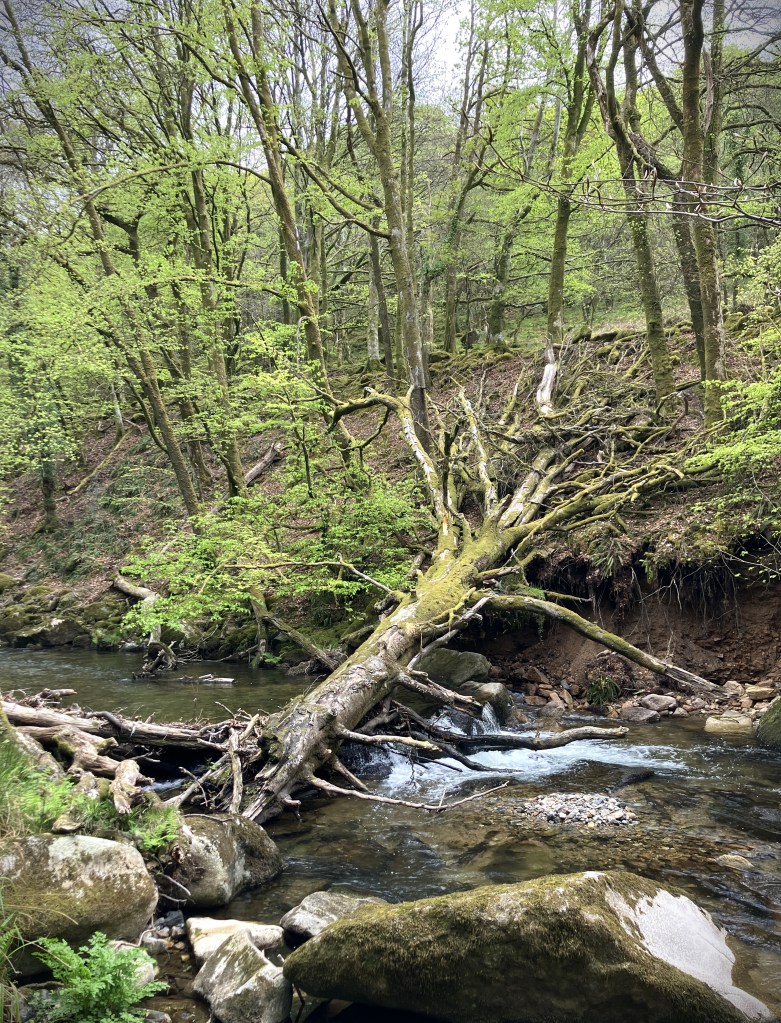
Leconfield – 10 and 11 May

On Friday afternoon I wandered around the farm and found myself watching carp feeding in the margins of the pond. The temptation was too much. I returned to the house, set up a rod and walked back across the fields to find even more carp rooting around in the marginal silt. I tried a black spider which they ignored and a bloodworm imitation, which was also ignored. It was tricky casting in the blustery wind, good practice for the weekend trout fishing.

On Saturday morning, I started at Little Springs, the trout were rising to mayfly all over the lake. I tried dry, emerger and mayfly nymphs but the fish were shy and turned away at the last moment. I caught a very nice roach on a nymph before switching tactics.

At Great Springs I sat on the bench and allowed a deep sunk GRHE nymph to drift into the shade of a willow tree. I had a take and landed a good rainbow about two and a half pounds. An hour later another trout fought long and hard before slipping over the rim of the landing net.

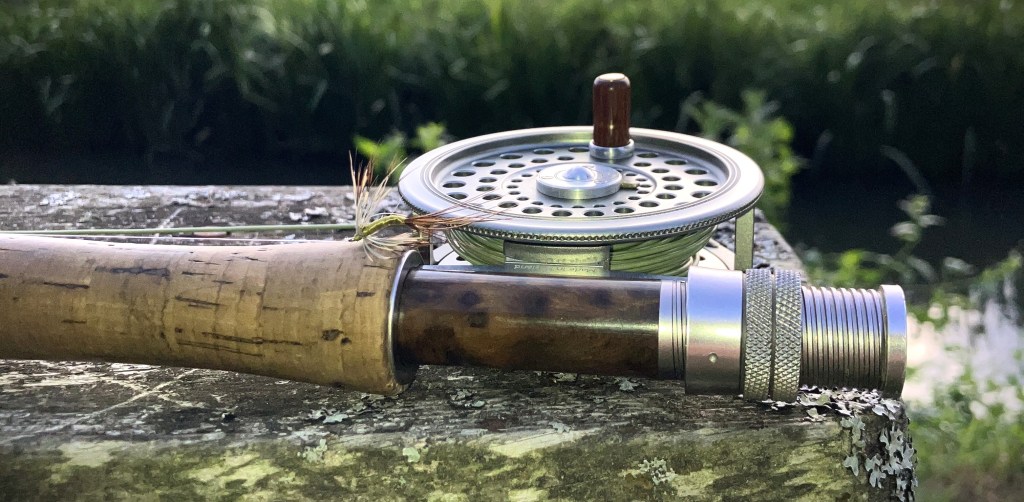
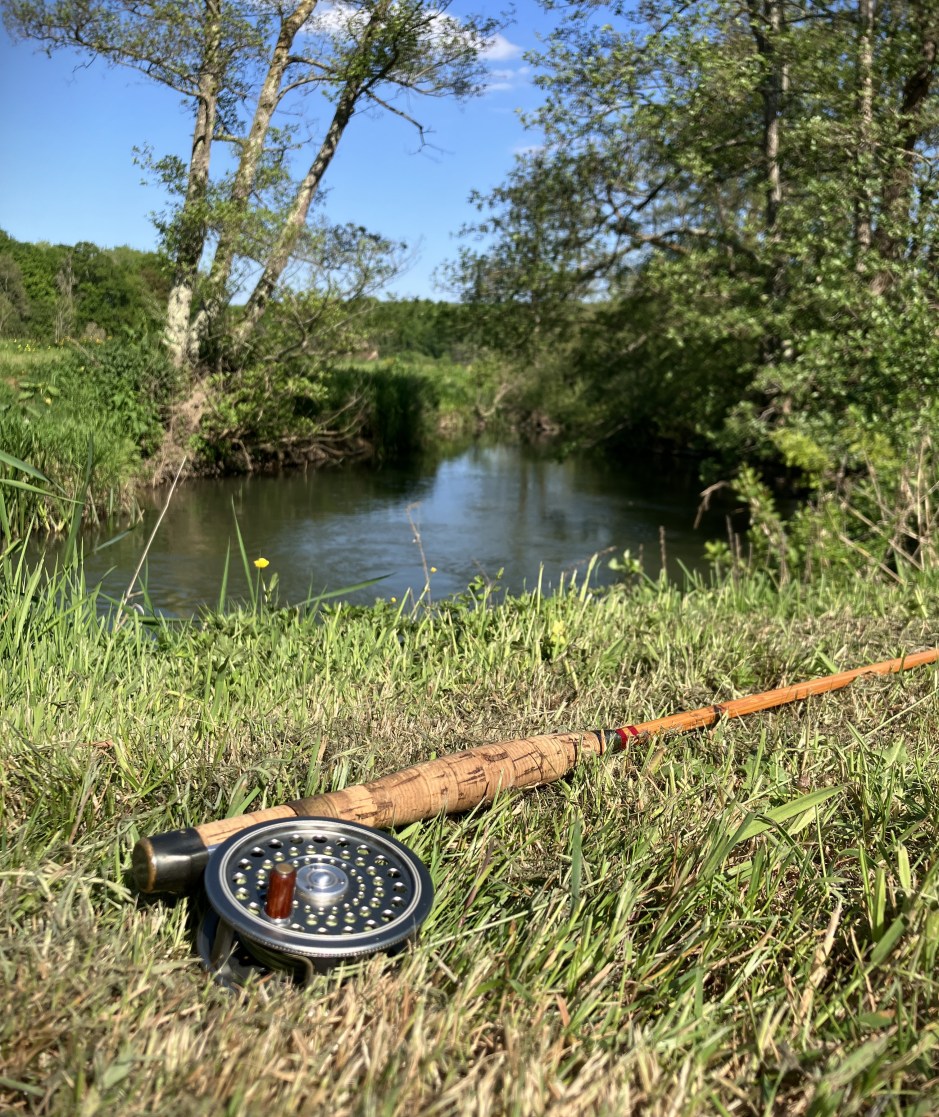
In 1935 Pezon et Michel hired Charles Ritz as a technical consultant. The first split cane fly rods, with Ritz parabolic tapers, were sold in 1938. France declared war against Germany on 3 September 1939 and was invaded on 10 May 1940. Eighty five years later it seemed appropriate to use my restored Pezon et Michel fly rod to catch a trout from the river.

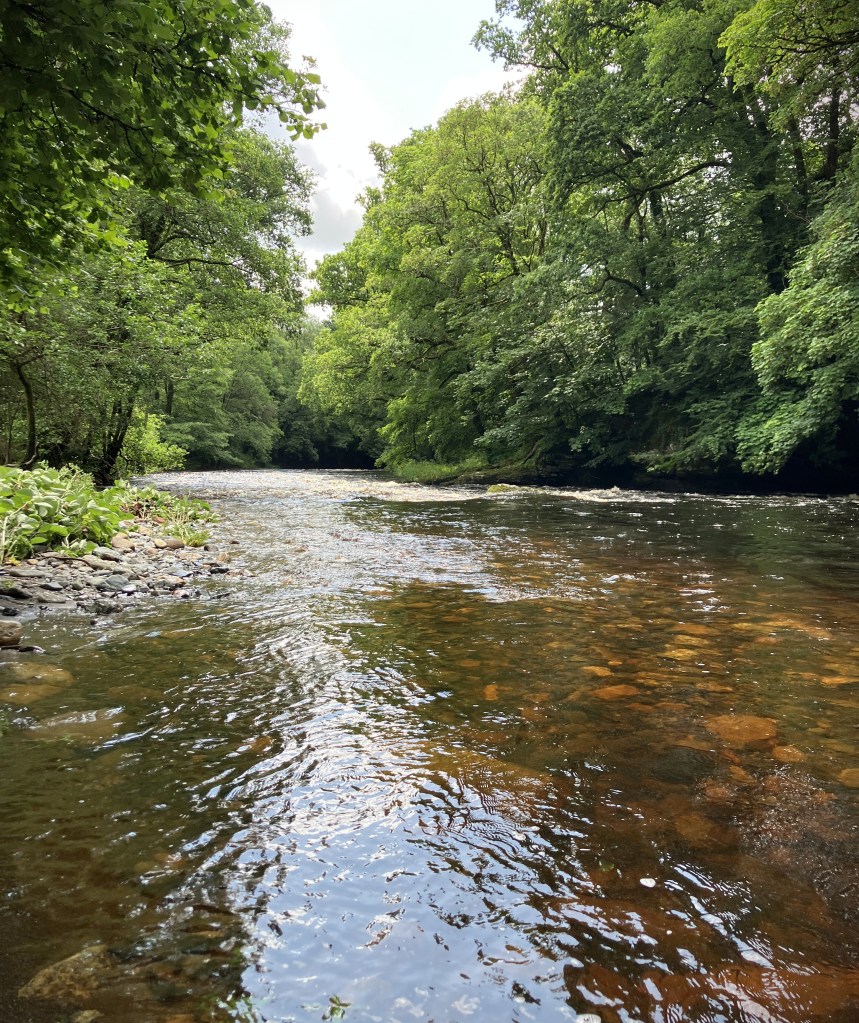
I drove to the river at Rotherbridge. The water had a pronounced green tint, an algal bloom caused by agricultural run-off. It was very hot and bright. I started fishing at Keepers Bridge where there is shade and plenty of alder trees rooted in the river banks providing refuge for the trout. Mayfly and alder flies were hatching but there was no sign of fish.

I walked upstream casting to all the fish holding spots. The old cane rod slowed down my casting arm and the casts became more accurate. I walked as far as the Old Riffle before fatigue and dehydration drove me back to the car.

We met at mid-day on Sunday, a meeting long delayed by Covid, work, family commitments etc. It was extremely hot and dusty. Seeds from the alder trees covered the surface of the water and clung to the tippet knot. I lost a couple of flies targeting a sunken tree trunk before moving slowly downstream.

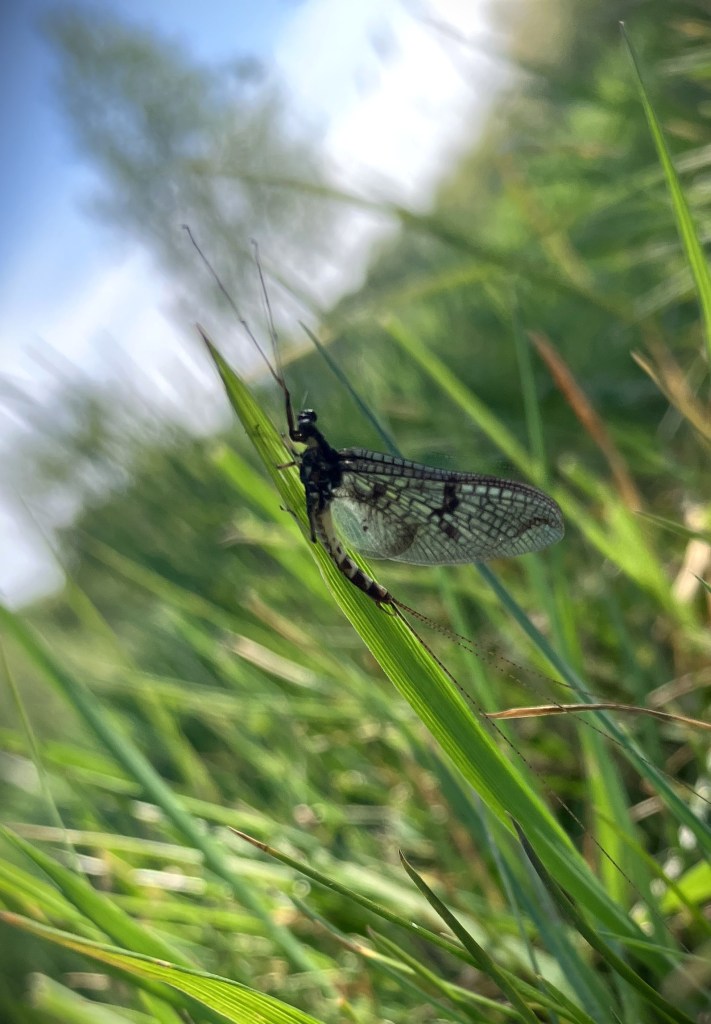
After a four hours of concentration I slumped on the grass in the shade. A trout rose a few feet from me, a splashy feeding rise. I tried everything I knew to tempt the fish but without a response. I sat and watched mayfly spinners rising and falling in the breeze. I left the river earlier than I had planned but was glad to hear that my companion had caught a few during the evening rise.

. . . – – – . . .

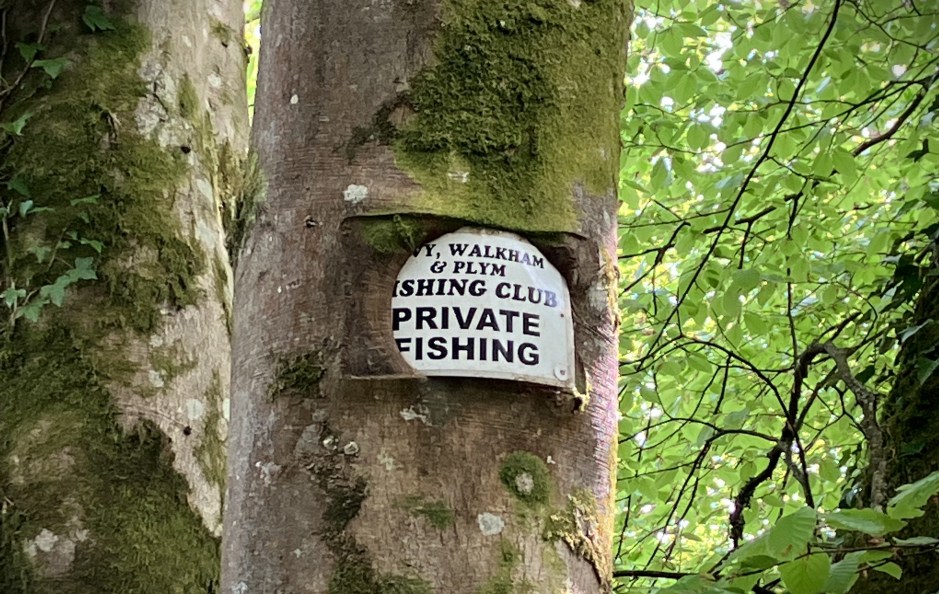
Tavy, Walkham and Plym

I had an idea. I would fish the rivers included in the club’s name, the Tavy Walkham and Plym, in that order.

River Tavy

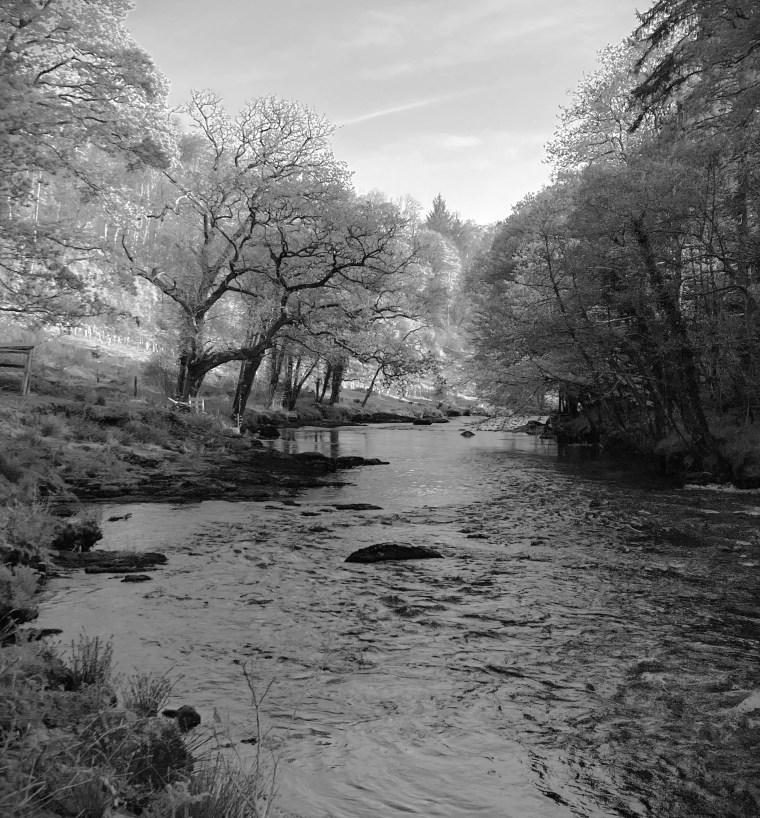
I went to the Tavy late in the afternoon when the shadow thrown by the trees on the west bank, extended right across the river.

I experimented with a very long, fine leader and worked the first pool carefully with a black dry fly. There were only a few upwing flies hatching and no trout rising so I switched to a nymph and started again at the top of the pool. I had a little nip on the fly but failed to connect.

Further downstream I flicked the nymph across the main current to land just behind a boulder. As the fly swung round, through the slack water, there was another nip at the fly. I missed again.

I paddled along a spit of small rocks and let the fly swing slowly round in the glide near the far bank. The line felt heavy and I brought a plump little trout to hand. It flicked itself off the hook as I reached down to release it, job done.

River Walkham

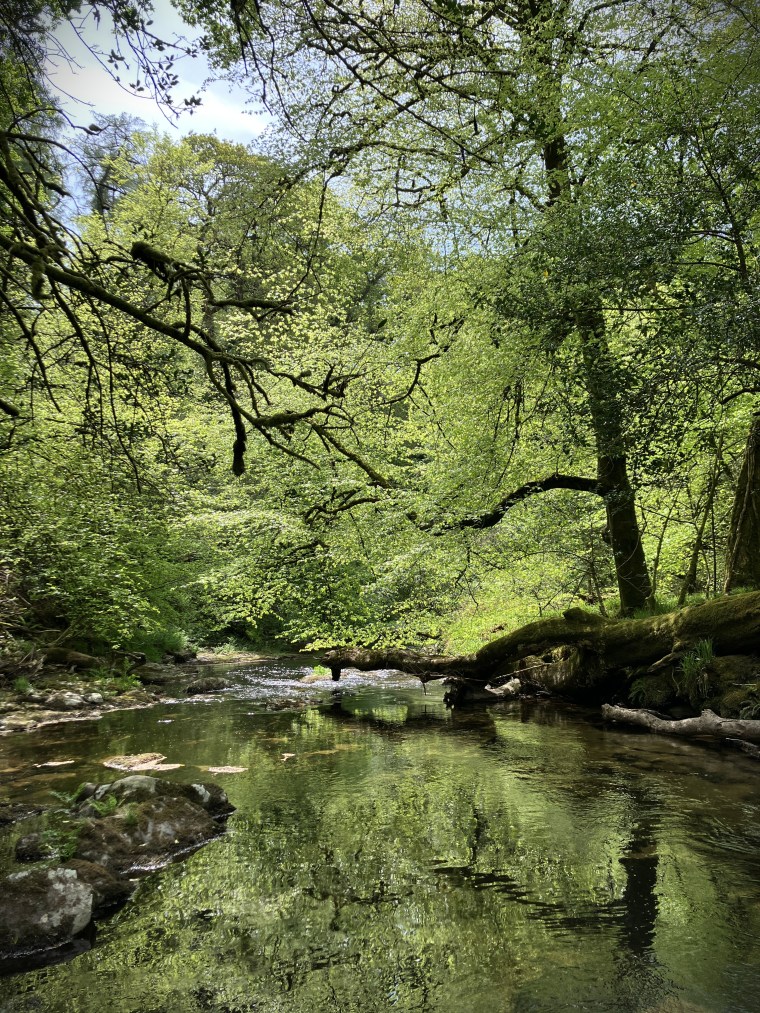
The weather had changed, temperatures in the high twenties were forecast. The sky was devoid of clouds. The deep valley and tall trees along the Walkham would provide shade and the pristine woodland, behind locked gates, was enough to justify my walk with a rod.

At lunchtime it was very hot, nearly thirty degrees. A buzzard mewed until it saw me through the tree canopy, then it floated away. A cuckoo called from high up on the valley side. Clouds of midges buzzed just above the surface of the water. The tall trees provided shade and the downstream breeze helped cool me down. It rippled the water, hiding me from the trout. The trees shed leaf bud scale everywhere which formed orange mats covering the marginal rocks.

Upstream of the weir, in the slack, crystal clear water, trout were rising consistently. I started with a nymph through the deep water beside the rock wall. Upstream, I crawled under the tree canopy and drifted a dry fly along a glide under the far bank. The trout stopped rising.

As I walked downstream, beside the shallow leat, several trout dashed into cover. Very spooky fish, they saw me from twenty yards away. I climbed over fallen trees and weaved the long rod through low hanging branches until the rock face barred my way. The deep pool inspired confidence but there was no response from the trout. It was a long hot walk back to the gate. The padlock-which-doesn’t-work tested my patience. I must put a bottle of SWW emergency water in the Defender.

River Plym

It was bank holiday weekend and the weather was good, not the best conditions for fishing. I started early in the morning, too early for dog walkers. I decided to keep away from the tourist hotspots and to visit a beat that I had never fished. I heard the river crashing through the rocks long before I saw the white water. The level was slightly above normal and the water was crystal clear. The sandy bottom and pebbles shone in the shafts of light piercing the tree canopy. No excuses.

Trout were rising for midges and I chose a small, pale Tups to start with. I flicked it upstream into a glide and after a few casts, a small trout took the fly and escaped before I could get the slack line under control. I worked my way upstream and missed a couple of splashy takes.

I sat in a drainage ditch above a big rock and searched the deep scour with a nymph. A very positive take took me by surprise, the trout took line off the reel and battled in the deep, fast water. I released the fish and it dived back under the rock. We will meet again if it stays put.

I walked upstream until the path was blocked by a fallen tree, deep water and a rock wall. I was tired, hot and dehydrated. Time to wander back to the Defender. The fishing had been challenging. The beauty of dappled sunlight on the water, a nice trout and partial success with a dry fly warranted a celebration cup of tea and a big chunk of fruit cake.

. . . – – – . . .

River Meavy – 25 April

Friday morning, the spaniels, hikers and wetsuit-river-orienteers would be out in force. The car park appeared to be full but I squeezed into the last gap. I had never fished the beat, people and dogs do not mix with fishing. Taking a rod on my walk to identify river restoration sites seemed sensible.

I walked slowly along the rocky footpath among mature beech trees, unnoticed by the walkers and labradors. One old lady hurled abuse at her three out of control dogs. She was only a few yards away but failed to see me.

I found several pools without paw marks in the sand and flicked a nymph upstream gradually extending the line until the fly reached the white water.

Further up the beat the walkers and dogs petered out and I could concentrate on the small, rocky pools. I paddled in the margins as far as the hole in my right wellie would allow. Leaping from a boulder back to the path was a mistake and I crashed backwards into the water. My pockets were all sealed and nothing was lost. The ripstock cotton jacket and trousers would dry out before I got back to the car.

A huge beech tree had fallen across the path and I had to climb up the rocks out of the valley, my wet clothes were a constant reminder not to take any more risks.

I found a long glide below a gentle riffle and crept down to water level. The overhanging hazel bushes grabbed my fly a few times on the back cast but after a short rest, normal service was resumed and I caught a small trout from the head of the pool. That trout was a milestone, my first Devon trout this season and my first from the beat.

I was happy to walk further upstream, continuing to take note of places where gravel could be enhanced and riffles could be built. A young lady with a bright red jacket and two black spaniels was hurling sticks into the best pool and I decided to return to the car. Why do people wear bright red jackets when out walking ?

It had been a successful morning, an evening meal and a glass of wine at the pub finished off a lovely day.

. . . – – – . . .

River Tavy – 22 April

South West Water’s lack of maintenance deprived the village of water over the Easter holiday weekend. On Tuesday the pubs and schools closed and the River Walkham provided buckets of water to flush the loo. Last week’s spate had washed the rivers clean and the conditions were ideal for a visit to the Tavy. The Defender lurched around and scraped the diff on the rocky path down to the river, normal cars won’t make it.

The river was up a few inches but running clear. Blue winged olives were hatching, midges covered the surface of the water and the occasional mayfly struggled into the trees, battling against a stiff upstream breeze.

I started at the top of the beat and worked a wide riffle, confident that I would find a trout or two. The white water, the seams in the bedrock and the slacks produced nothing. My casting was good, the Sage #3 and Rio line worked well together. I moved downstream to the pool below the dead tree and spent an hour watching the water and searching around the boulders that litter the pool. Nothing.

The hatch intensified and I was sure that a trout would take the nymph at any second. I fished a couple of long, wide riffles but the water was a little too fast and I went back upstream to sit beside my favourite pool. I found a large smooth rock to rest my back against and sat in the sun for an hour waiting for a rise. It didn’t happen.

I think I started too early. I should have waited until the evening. I visited Big Pool after packing up, the water looked perfect. When I got back to my cottage the taps were still dry but I had a bottle of wine. Water into wine. Excellent.

. . . – – – . . .

River Tavy – 10 April

It had been the driest March since 1961 and the spate rivers on the western edge of Dartmoor were low. Rain was forecast for the weekend.

I had a plan. Wait until dusk. The sky was blue, the sunlight intense and it was 20 degrees at lunchtime. The trout would not be feeding until the sun was off the water.

I travelled light and spent a long time beside the pool near the top of the beat. I missed the first take because I was looking at a pheasant. I also missed the second. Half way down the pool I changed flies, several times. There was no response. A trout rose and I tempted it with several midge imitations. Nothing. I had left the box of dry flies at home.

I moved downstream and found another trout rising behind a boulder in midstream. I put on a light tippet and immediately lost a nymph on the black weed that covers every submerged rock.

After sitting in the sun for a while, reviewing the evenings proceedings, I walked slowly back up the hill and drove home. Dinner in the pub completed a relaxing day.

The evenings are best, I must remember to take the box of dry flies with me next time.

. . . – – – . . .