30 August – River Plym

The morning was still and overcast, perfect conditions for a couple of hours on a river. I had a bewildering choice of rivers and Beats. Every season I resolve to seek out an unfished Beat on the River Meavy. Unfished because of poor maps and even poorer map reading. I had all day to find the bridge, how hard could it be ? I ditched the map and pointed the Defender across the moor and down into the valley.

Instinct lead me to a muddy layby next to a bridge. I walked up the road and found a farmhouse, the name of which confirmed that I had arrived at my destination. I stood on the bridge and looked downstream. The true right bank was closely fenced and a ‘Private’ notice undermined my intention to walk the Beat.

I abandoned my attempt at fishing the Meavy and switched my thoughts to the River Plym. By chance, as I was driving away I met the landowner who confirmed that I could ignore the sign. However, the moment had passed and I was focused on fishing the River Plym at Bickleigh.

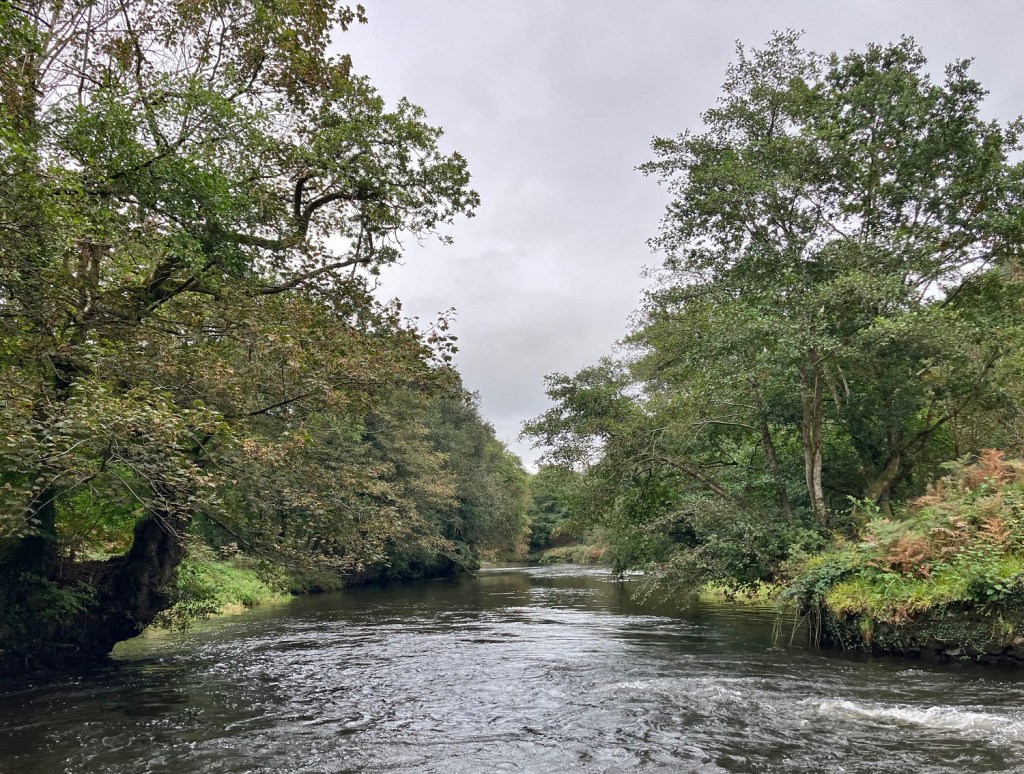
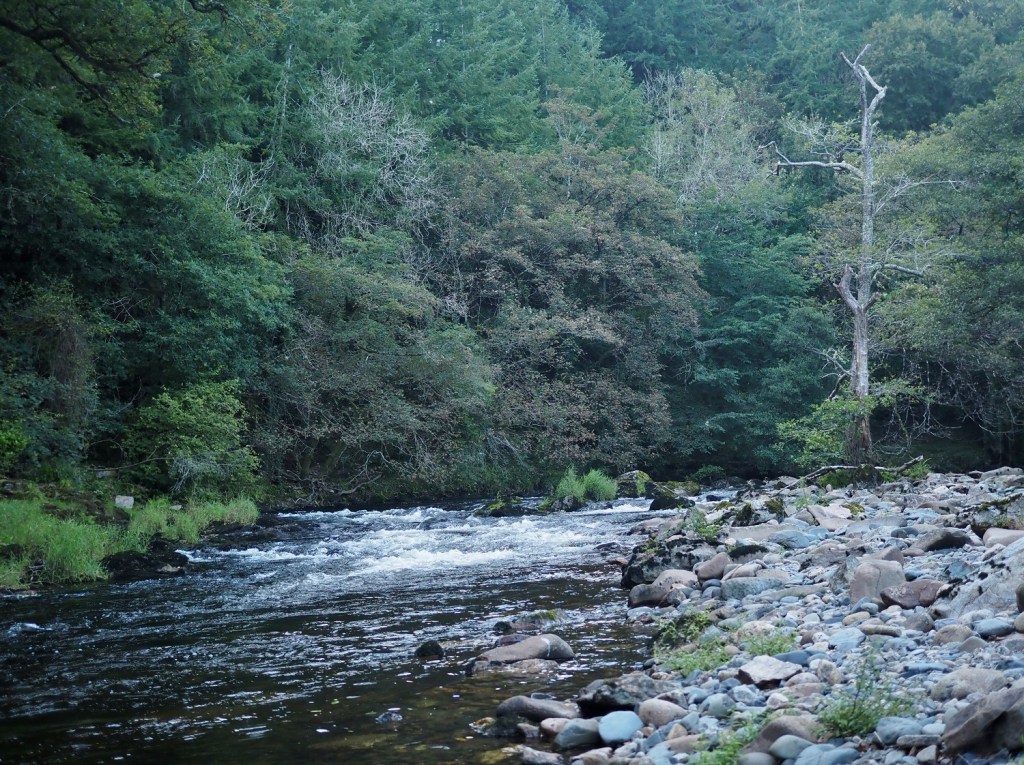
The Plym looked perfect and I knew that I had made the right choice. The water level was up a few inches but the water was not peat stained. The trees and bushes had been washed clean by the unrelenting August rain and there were no footprints or paw prints in the sand. I started at the bridge pool with a heavy nymph, flicking it under the arch and drifting it down and across. The deep pool failed to deliver.

I turned around and gradually extended each cast up the glide, dropping the nymph above rocks, down gullies in the bedrock and across the patches of coarse sand. On previous visits I’d used the glide to zone in, straighten the leader and line, before approaching the first big pool. I’d never had a take there despite carefully working the entire glide. I thought I saw a fish move but it could have been a leaf turning over in the current. After twenty or so casts I was ready to walk upstream. A trout took the fly and raced around the glide. I smiled as I released it in the shallows and chalked it up as a bonus fish.

I had a long chat with a Royal Marine having a brew beside the Commando Pool. How appropriate. We were each encroaching on the others special place. I half heartedly fished the pool down and across, hoping that I would not hook a tree or lose a trout, then left him to swim in the pool and chill out.

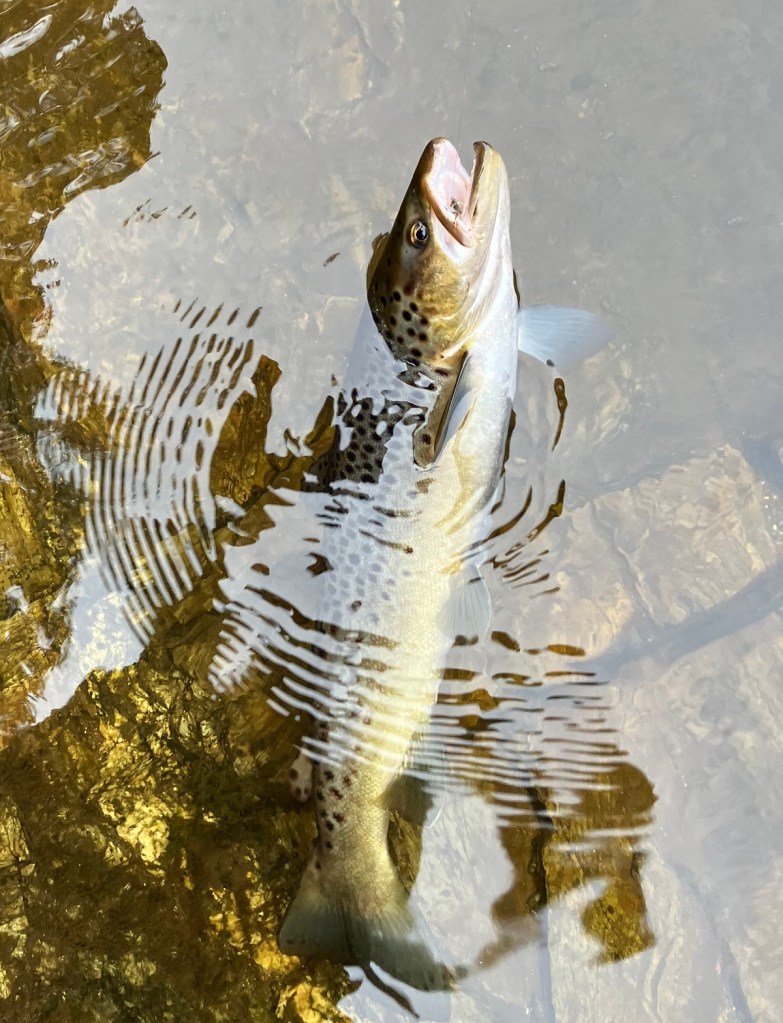
I caught a trout from a deep pool formed by a newly fallen ash tree. As I was about to leave the pool a sixth sense told me that a fish could be holding further downstream, undisturbed by the splashing. A couple of casts later I caught another fish which looked like a sea trout smolt. Magic.

I walked slowly downstream to the bridge and drove back to the cottage, content that I’d found the Meavy Beat and caught a few trout.

24 August – River Plym

The village awoke to the sound of diggers, lorries and shouty workmen. The Government’s fast fibre gigabit target apparently applies to Dartmoor even though the pace of life here is slow. Waking early provided a unique opportunity to fish before the spaniels and bank holiday campers descended upon the moor.

It was cloudy and warm, rain was forecast for early afternoon, perfect conditions for a peaceful walk in the woods. The private, wooded valley ensured that wild swimmers and kids on their summer holiday would not spoil my morning.

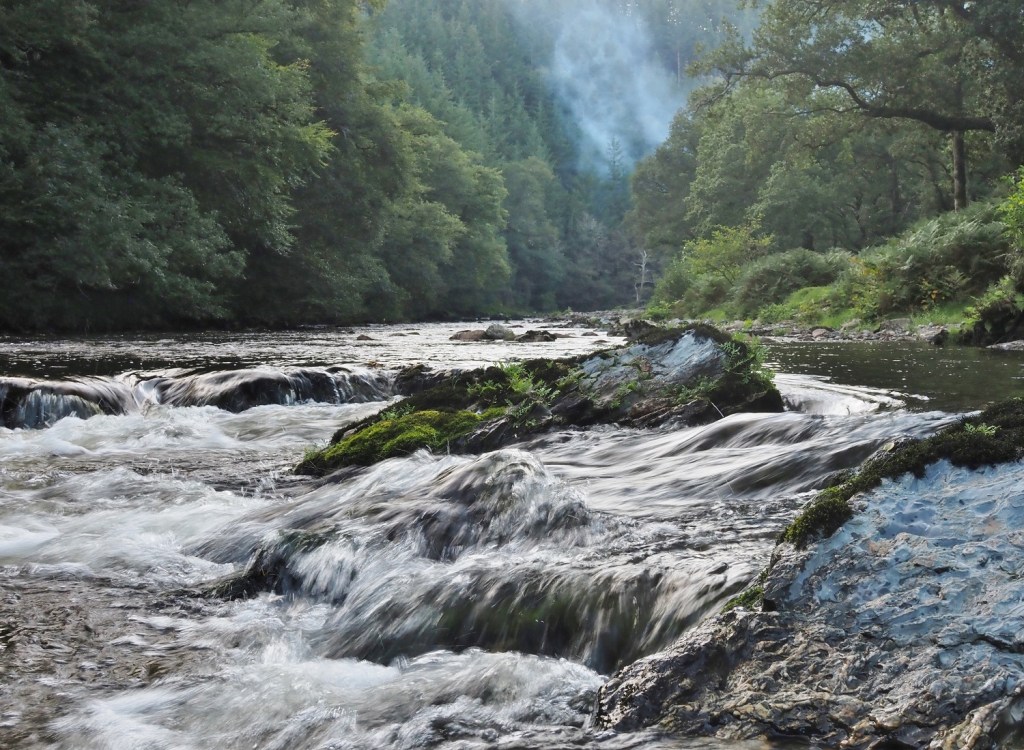
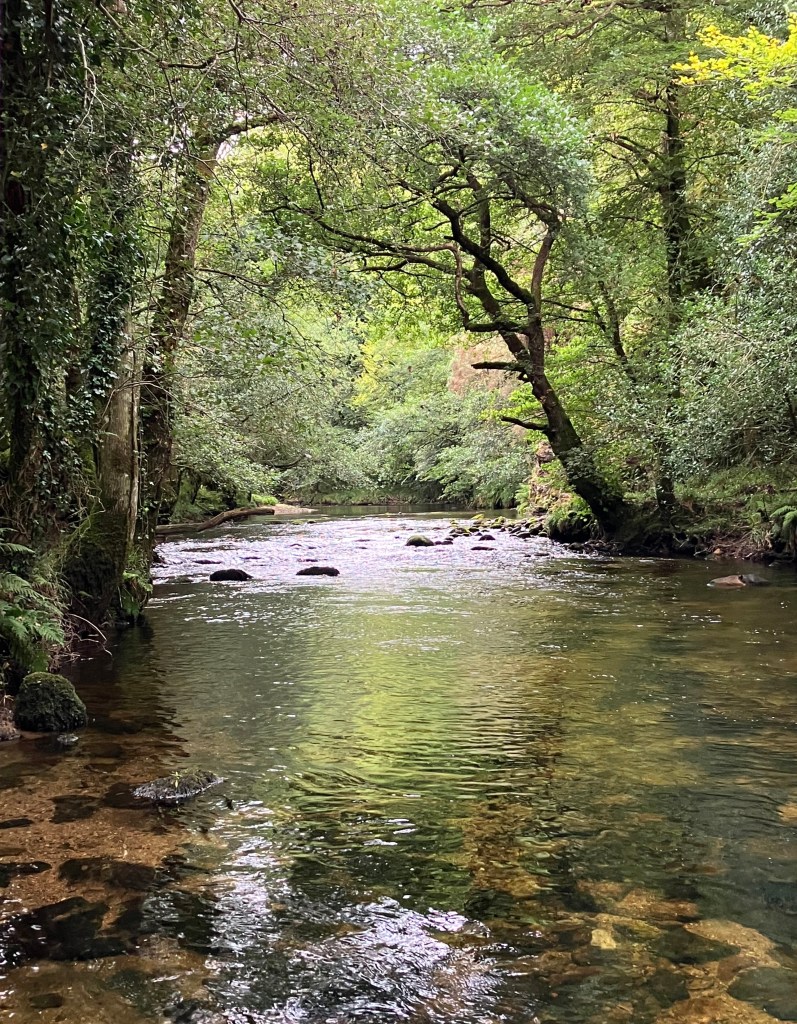
The river drops steeply off the moor through a narrow valley with ancient woodland along both banks. The water winds around granite boulders, over coarse sand and through deep pools most of which hold trout. The mature oaks stand among rocks covered in bright green lichen. The tree canopy, overhanging the river, provides shade and shelter. The air is damp and the path through the woods is covered in last autumns leaves. The dim light, humidity and still air are a perfect environment for ferns, moss and fungi. The trees are dressed in ivy and the saturated moss on the rocks makes it difficult to sit down. It’s a mini, temperate rainforest. This pristine woodland has no litter, no graffiti or vandalism. It’s privately owned and in good hands.

My expectations of fish were low. I knew that I would spend the morning walking slowly, watching the river roar along in the dappled sunlight. The riverscape changed every few minutes as clouds passed over. Shafts of sunlight illuminated the white water and made the wet rocks glow. I started in the pool below the bridge, flicking the weighted nymph upstream under the arches. I saw a fish move and persevered. I bounced the nymph off the stone cutwater into the slack and the little trout obliged. I unhooked it in the shallows and watched it dash away none the worse for meeting me.

I stayed close to the water, clambering around rocks and tree trunks, dangling the nymph into riffles, letting it swing round into the slower water beside the bank. By the time I had reached the end of my walk, a couple more trout had grabbed the fly. I’d had three takes, hooked three fish and landed two and a half. One fell off as I reached out to release it. Does that count ? I was content, I had exceeded my expectations.

When I arrived back at the cottage I had to clamber over a heap of freshly excavated tarmac and a plastic barrier blocking the gate. Fruit cake and tea calmed me down.

16 August – River Tavy

There had been no rain for a couple of days and the river levels had dropped a bit. The river in the village was the colour of Fuller’s London Pride but clearer. There were no fish on the coarse granite sand in the pool below the bridge. It was hot, bright and humid, no need for a jacket.

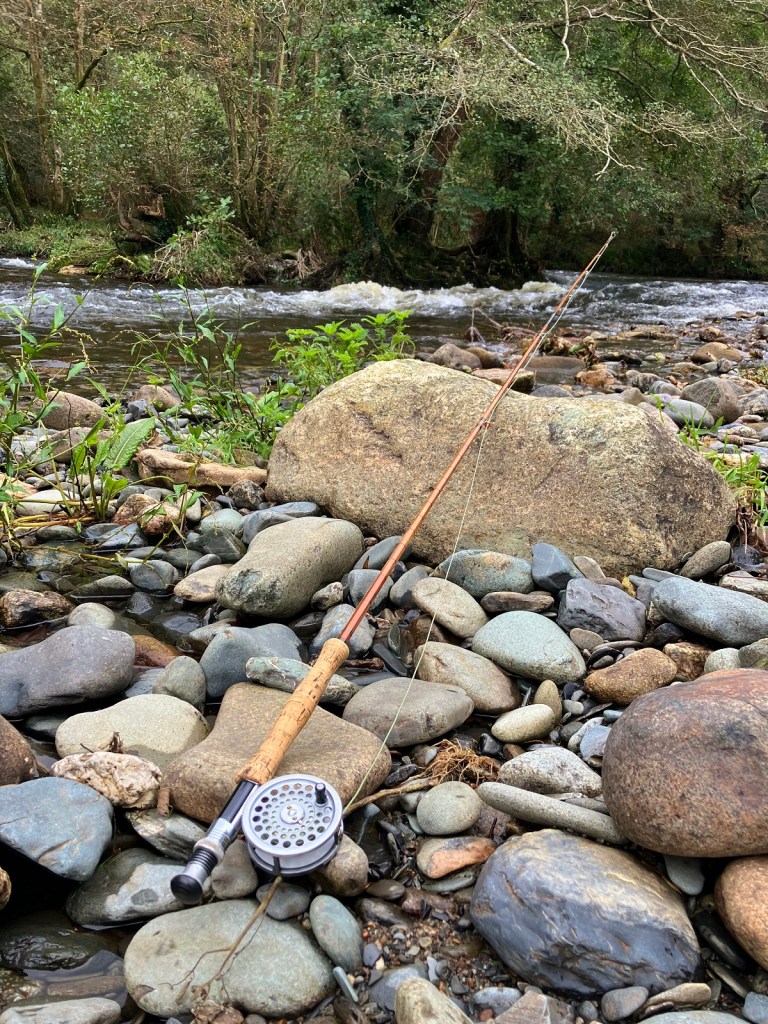
Southwell IV had not seen action for a while, it’s length and compound taper would enable me to reach the pools along the far bank of the Tavy. The slow action finished with a kick which gave me a couple of extra yards.

I walked to the top of the Beat and tied on a Red Tag weighted with lead wire, not a bead. Beads are the Devils work. I remembered the trout below the rock that had grabbed my fly on a previous visit but it had moved on. At the end of the pool I sat and watched the water, waiting for a fish to rise. The small fly was lost in the turbulent water and I changed to a Teal Blue and Silver which would fish higher in the water and be more visible.

Visitors to the river blocked my path downstream. The motley group of cows and heifers were chaperoned by a Hereford bull which was clearly agitated by my presence. The cattle standing in the river looked like a pastoral English country scene by John Constable. Minus the hay wain. I waited until the cattle had finished drinking and had wandered back into the middle of the field, before wading to the next pool.

I found a couple of fish rising along the centre channel over a sandy riverbed. They were dashing about taking hatching midges. I clambered around a rock outcrop and flicked out a buzzer. There was no response, my rock climbing had put them down.

The long, wide glide looked like it would hold several trout. An old salmon croy pushed the water into the centre channel which was only a couple of feet deep. The bottom had been washed clean and the fissures in the bedrock provided shelter, a perfect holding place. I changed to a GRHE nymph and cast beyond the last rock in the croy. I was not concentrating and the take surprised me. The line curled away, the rod banged over and the trout was gone. It was a good fish and I felt bad about such a stupid mistake. Hours of fruitless effort had lulled me into zombie mode. I had messed up the only take of the afternoon. I will start with a GRHE and pay more attention next time.

23 July – Little Bognor

The temperature in the Mediterranean reached the mid forties and wild fires burnt in Greece. It wasn’t that hot in Cornwall and for two days, we enjoyed the sun and the views of Talland Bay from our hotel terraces. The calm blue sea looked inviting, perhaps I’ll take a bass rod on our next visit.

After a long, boring drive back to Surrey, I watched the rain hammer down and the level of the garden pond rise. There would be no point in fishing the river. I postponed my visit to Petworth until Sunday when the hot sunny weather resumed.

I stopped at Stag Park to admire the landscape and the wild flowers. The fields had been sown with clover and the pink sheen extended to the near horizon, only interrupted by strips of cover crop. The scent from the lime trees around Little Springs was strong and the flowers were covered with bees and wasps.

The surface of the lakes was ruffled by a strong southerly breeze. No fish moved. The water temperature had remained high despite the heavy rain and the trout were inactive. I drove to Little Bognor where the springs cooled the lakes and the mature trees kept the sun off the water for most of the day.

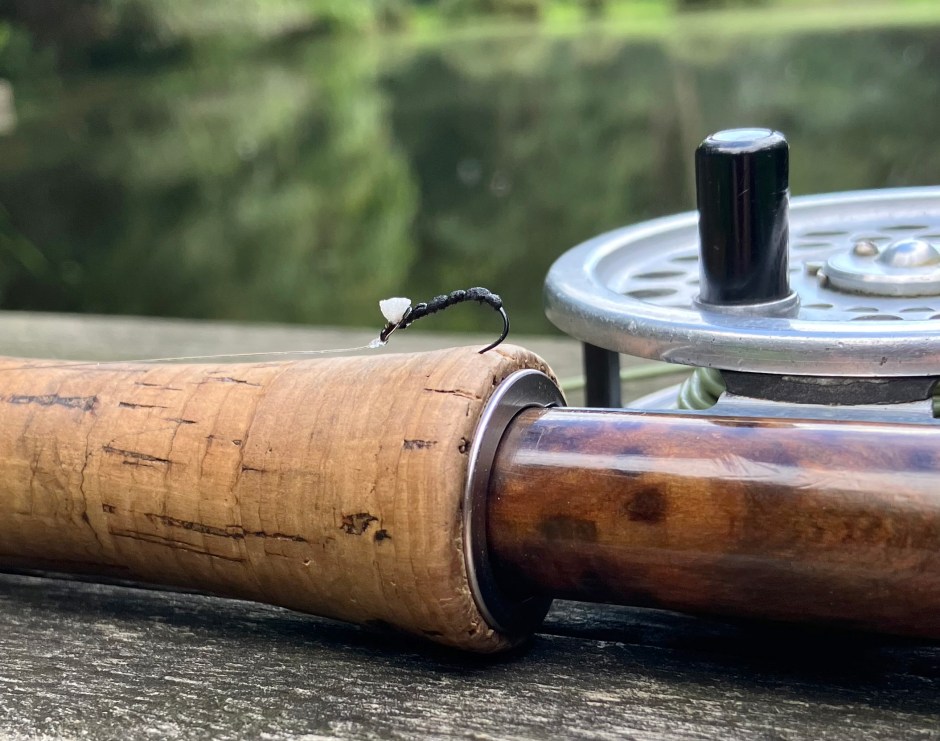
Trout were rising repeatedly all over the lower lake. I looked for a black buzzer in my fly box and realised that I had forgotten to replace those lost on previous visits. I only had three, one of which had been chewed. I lost another in the brambles at the waters edge. After an hour, carefully presenting the black buzzer to cruising trout, I thought a change of colour was needed. Thirty minutes later, having tried green and red, I decided to revert to black. I flicked the black buzzer into the margin and a trout rose vertically from the depths to grab the fly. I lifted the fly out of it’s gaping mouth and laughed at my poor timing.

I moved along the bank, under the beech trees and sat on the damp moss near the waters edge. A fish rose to my right, behind a tree trunk. A tricky cast and a twitch of the leader, induced the trout to take and I gently lifted the rod to connect. The fish fought well in the cool water and swam out of the landing net after a short rest.

Rising fish had moved from under the trees to the the centre of the lake. I hid behind a bunch of ferns on the south bank and presented the buzzer to a series of rising fish. The trout moved away clearly unimpressed. The fish were chasing buzzers as they struggled to break through the surface film. I changed to a size 14 dry fly with a foam body. A trout swirled to drown the fly and took it sub-surface. Trout number two also left the landing net in good health.

I must tie a few black buzzers before my next visit to the lakes.

17 July – River Tavy

Two days of torrential rain, some of which came under my backdoor, brought the river in the village up a foot. The river thundered through the arches of the ancient bridge washing all the little trout downstream. I watched an optimistic angler casting a long line down and across the bridge pool. He was overcasting, any fresh salmon and sea trout were lying under the big tree in slacker water under his feet.

The river dropped overnight but more heavy rain was forecast for the following day. The choice of Beats was bewildering, given the height and colour of the water I needed a good mix of riffles and pools.

I chose the Tavy. The shallower, faster rivers could wait a couple of days. As I walked to the top of the Beat I looked down through the trees at the foaming, peaty water fifty feet below. I immediately thought that my choice of river was flawed but as I walked further upstream the pools became longer and the riffles slower. A couple of sofa Labradors raced across the fields to bark at me nervously, a dirty look sent them back to their cottage.

The balsam had been flattened by the spate and the rocks had been washed clean. The peat stained water was clean and lots of upwing flies were hatching. Everything looked perfect. As I prepared to cast, I dropped the fly into a back eddy behind an armchair sized rock and a solid wrench on the rod caught me by surprise. I kept a shortish line and worked the pool down and across for about fifty yards. I had a tap on the rod and then a few steps later, hooked into a small trout which released itself. That process was repeated until I found myself back at the Defender.

I’d had a relaxing walk beside the river, heard a buzzard, seen a dipper and sat on a flat rock next to fresh otter spraint. The fields, trees and riverscape had been washed clean and it was a privilege to be alone in such unspoilt countryside.