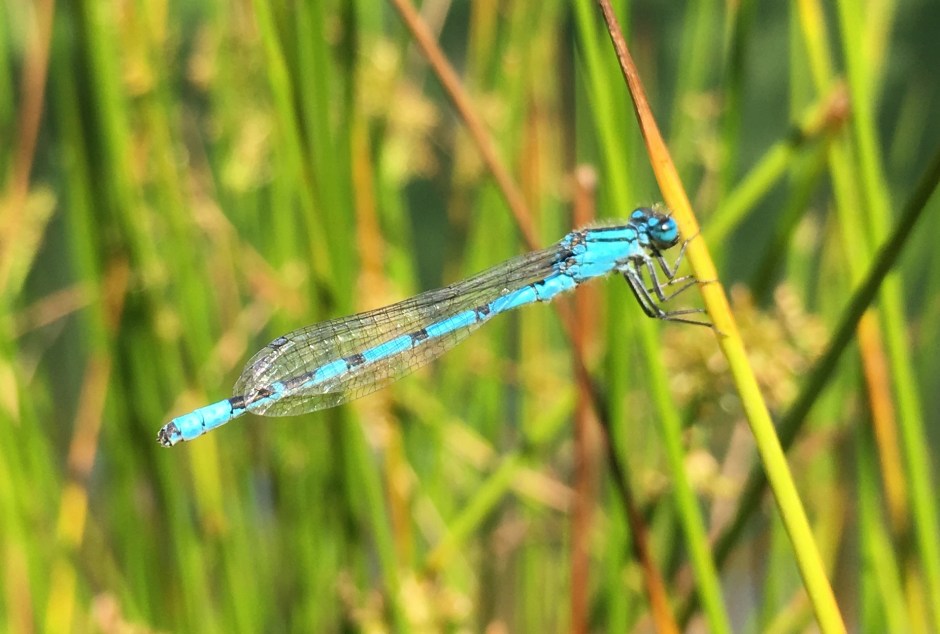
19 June – Late Evening

During the four days since my last visit to the river the weather had been very hot and humid. Most days exceeded 30 degrees and it had sapped my energy. The temperature of the lakes had reached 24 degrees, dangerously high for rainbow trout. The fish had disappeared into the deepest part of the lakes trying to find cooler water.
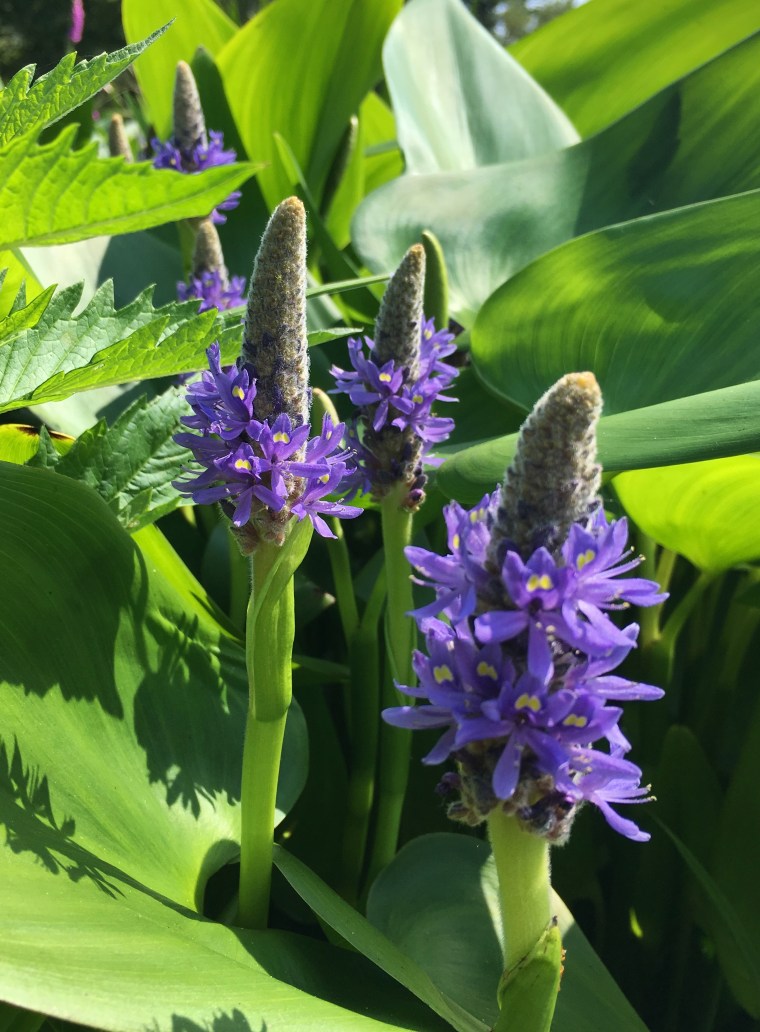
IMG_4362

In the evening I went to Great Springs for a meeting. Club business was conducted, cool beer and nibbles were consumed. It was 7:45pm before I set up my rod and wandered down the farm track to Keeper’s Bridge. Another member was casting to a frequently rising fish under the big Alder tree. The casts were accurate but the trout was not impressed. I went upstream towards Perryfields Barn, pausing at the holes in the tree line to look for rising fish. Just below the old riffle I saw a fish rise and sat down behind the nettles to select a fly and sort out my casting angle.

I tied on an Adams as there were loads of midges hatching. There were also plenty of horse flies dropping out of the trees and trying to eat me. I put a short line along the grass to get the distance and casting angle then flicked it up into the Alder tree above me. It took a while to untangle everything but the fish kept rising. On the second attempt the cast was perfect, the fly settled on the water just above the fish which immediately rose and took it. The fish was a small chub that fought like a trout.
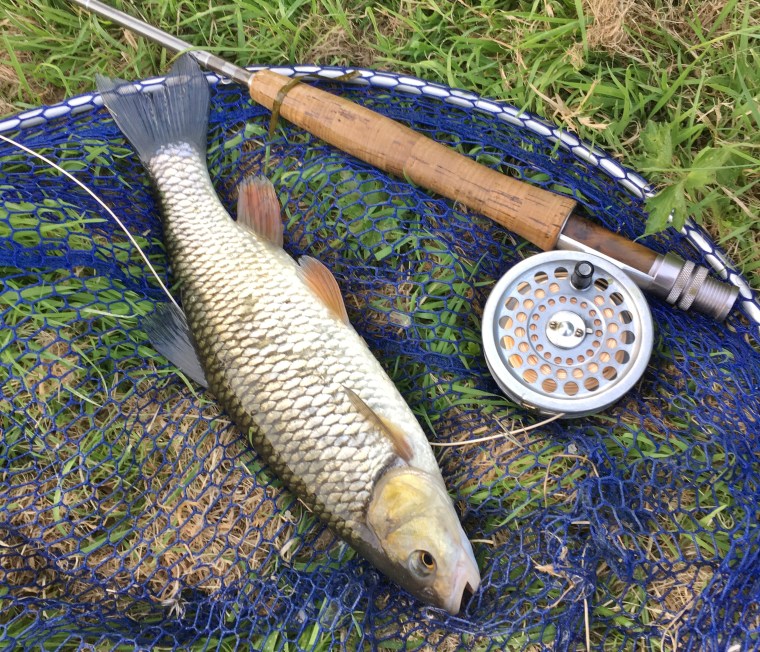
IMG_4419

I returned the chub downstream because another fish was rising at the end of the pool. By the time I got back to the second fish it had disappeared so I moved further upstream. I wanted to fish the big, wide pool with the sunken tree. When I arrived at the pool there was no sign of a trout so I sat on the grass and preened the Adams which was slimy from the encounter with the chub. I dried the hackle and stretched the tippet. A fish rose at the bottom of the pool, near a large bush. I lengthened the line and flicked it towards the river. It hung from the top of the Alder tree on my left. I had repeated the earlier amateurish mistake.

It took a while to untangle the mess as the fly line had caught in a particularly nasty clump of Alder catkins. By good fortune, during the interlude, the rising fish had moved up the pool and was rising opposite me. I checked the Alder tree and the electric fence, then flicked the fly towards the rise. The Adams landed perfectly and was immediately grabbed by the trout. The fish fought in exactly the same way as the previous trout from that pool. Lots of splashing followed by circuits of the pool then a couple of long deep runs upstream. Spooky, I wondered if it was the same fish.
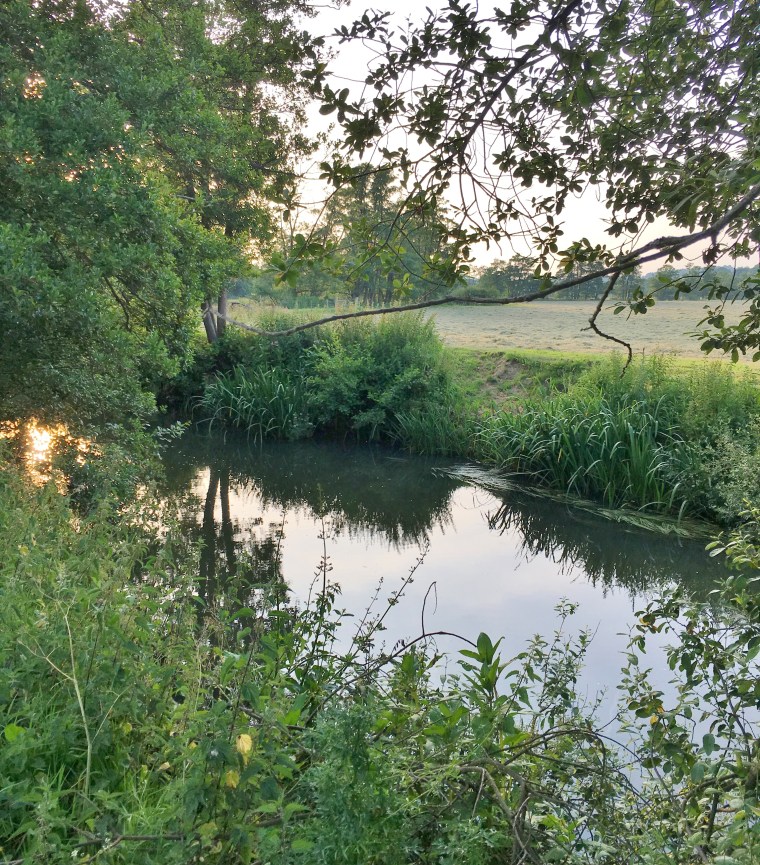
IMG_4420

The horse flies were attacking in squadrons so I walked quickly back to the open stretch of river below the Sandy Pool. I sat on the grass for a few minutes and eventually a small fish rose in the tail of the pool below a fallen tree branch. As I was approaching that rise a bigger fish rose about ten yards further downstream. I sat behind a gap in the bushes and watched the fish. It was feeding confidently. I got the landing net ready and flicked a Mayfly towards the trout. I had seen a few hatching. To my surprise there was no response. I rested the fish and it rose again upstream, a big splashy rise. While I was deciding what to do there was a tremendous, thumping swirl downstream, to my right. I was convinced the fish would take but after trying several different patterns there was no response. It was either a sea trout or one of the recently stocked monsters. I left at 9:15pm and drove home with the windows and vents open, it was still hot. I will return to that pool. Soon.

trout


14 June – Evening at Taylors Bridge

It was incredibly hot. The wind was kind, from the north west and with a slight chill. I discussed the previous week’s catch returns over a cool glass of beer and decided to fish the top beats. The middle beat had been recently fished and the river at Rotherbridge looked completely lifeless. The fish were probably all hiding in the tree roots. I signed in at Taylors Bridge about 5:00pm and leant over the rail of the bridge searching for any fishy signs. There were none. The deep pool at Ladymead seemed the best bet. I sat on the grass under the Lime tree with the breeze at my back and patiently waited for a fish to show. I was patient for about fifteen minutes. The water looked cool and the shadow of the trees might be hiding a trout. As there were no fish rising I worked a GRHE nymph through the run just under my feet. Then I tested the slack between the lock pillars. I gradually extended the search into the main pool, just beyond the sand bank. I kept my fly line over the sand bar and with an eighteen foot leader, dragged the nymph up the far slope of sand. Nothing. I extended my cast into the Lime tree behind me and lost the fly. I decided to leave the pool until later.

IMG_4302

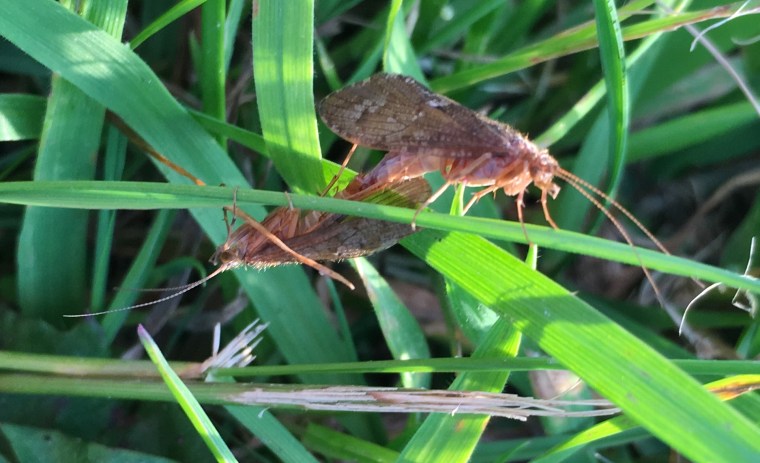
Great Red Sedge

As I walked downstream I saw female Mayfly spinners occasionally dipping into the water to lay their eggs. The air was thick with midges, damsel flies and terrestrials but strangely there were no birds. Perhaps they had gone to find a roost. I crossed the bridge and walked down the south bank, there were no cows to distract me on that side of the river. I walked down to the pool below the willow tree island and saw several small fish rising. One was very close under the bank. I lowered a parachute mayfly over the fish, it rose and snapped at the fly but missed. All the fish stopped rising.

I walked slowly back to the bridge looking upstream for rising fish. There was a big splash under an Oak tree but the cast was tricky and I put the fish down. I searched the shallow pool which is usually guaranteed to produce a fish but the prolonged hot weather had made it uncomfortable for the trout. As I walked upstream I saw a Barn Owl drifting across the water meadow, it settled in a big Oak. Too far away for a portrait.

I got to the bridge and heard a rise in the pool below, near an overhanging branch. I crept into position and saw two good fish circling around and sipping in flies. I lowered a parachute Mayfly onto the surface and waited. A fish rose, inspected it closely and went down. I swapped to a smaller pattern. The fish looked carefully at the fly but decided not to take. My next fly was an Adams, a sure thing for fussy trout in the evening. That was an improvement but it was rejected by both fish. I tried a Neoprene black buzzer but that was completely ignored. In desperation I tried a large Royal Coachman. That bought a response but I could see the trout’s displeasure at such an obvious fake.

IMG_4182

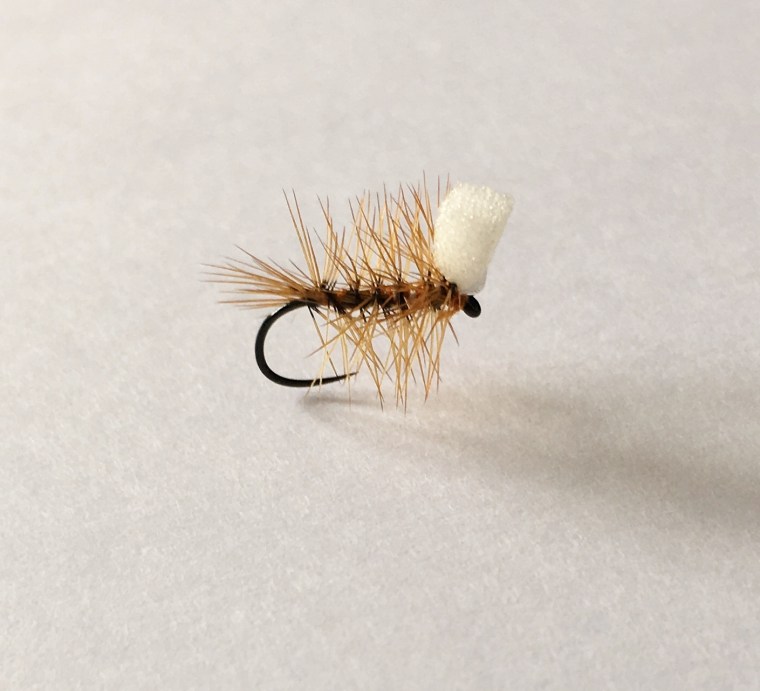
My last chance was the ginger dry fly with the palmered hackle. I tied on a size 14, left the foam untrimmed and lowered it into position. The biggest fish rose, saw the fly and took it confidently. It was about 2lb. I released it and the trout dived back under the tree branch. I’ll catch it’s partner another day. I left at about 9:15pm and smiled all the way home. Very fussy trout.

trout


9 June – Day Five

My fifth consecutive day trout fishing.

I’d glued a new copolymer leader on the end of my fly line. A drop from a fresh tube of superglue had set rock hard in two seconds. I liked the transparent leader, much better than the dyed Platil leaders. The taper was very steep which would help turnover.

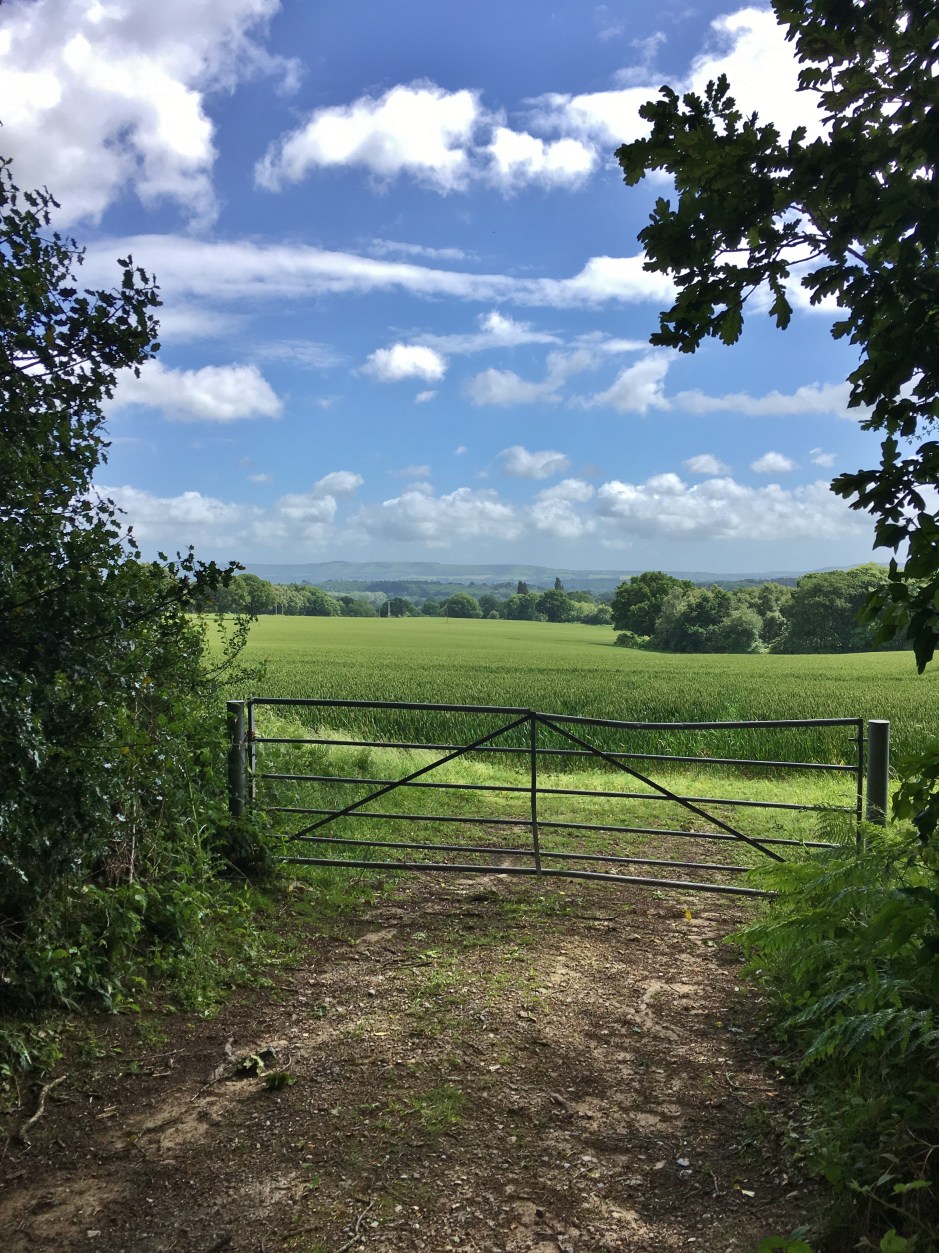
I drove to Petworth but turned off the main road just before the town and went along the country lanes to Little Bognor. The view across the fields to the South Downs was spectacular.

IMG_4204

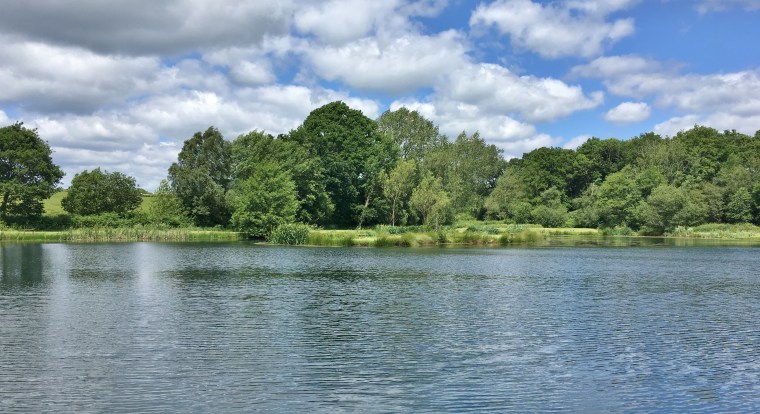
From Little Bognor I went to Rotherbridge, the river had risen slightly because of the overnight rain. I didn’t see any sea trout. Next stop was Jacksons and then Luffs and Figgs. I didn’t fancy any of those locations, the water in the lakes was too coloured. As usual I ended up at Great Springs. Both lakes looked good, the top lake was ruffled by a westerly breeze but the water was clear. I decided to fish with an extra long tippet. Nine feet of tippet on the end of nine feet of leader would avoid scaring the trout with the fly line.

I used my long rod, the novelty of the little rod had worn off, it had been hard work. I sat on the bench looking over Great Springs and started with a weighted GRHE nymph. I had a take, close to the wall on my right. The fish was lightly hooked and came off after a few seconds. After thirty minutes I decided to move and reeled in the line. The inevitable happened, a fish charged at the fly a few yards from the bank. A couple of quick casts into the swirling water were fruitless.

IMG_4213b

I walked around Little Springs and had a few casts but the fish were not rising. I went back to the bench by the top lake, the water was calm and the fish had started to feed. I put on a black Neoprene buzzer with a sparse badger hackle and fished it downwind just under the surface. I had to tweak the line to sink the tippet. I had another take but again the fish came adrift. The small barbless hooks do not hold as well as the larger sizes. As the wind dropped and the light faded I had a take at long range and this time the trout found the back of the landing net. Initially the fish had not reacted but in the deep water near the wall, it burst into life with several long, deep runs. It only weighed 1lb 2ozs and had taken the fly so far down all I could see was the tippet disappearing into its gut.

As I left Great Springs the sun was low over Midhurst and the rolling hills of the South Downs looked beautiful in the misty sunset. I stood and watched the sheep grazing.

Timeless.

trout

8 June – Little Bognor

The river level hadn’t dropped since yesterday. I visited Little Bognor, then checked the river and ended up at Great Springs. I was tired of fishing in high winds so after a cup of tea and a chat I went back to Little Bognor. The lakes are deep in a valley and are surrounded by mature Chestnut and Oak trees. There was an occasional gust of wind but for most of the time the water was still. Both lakes were covered in leaves, twigs and petals. There were lots of terrestrial flies falling into the lakes from the trees. The trout were rising and splashing, mainly in the shallows by the inlet stream.

I had seen this before at Little Springs. The feeding fish head-and-tailed, like Dolphins. The fish that crashed out of the water and splashed back with a slap were reacting to the high water temperature. I ignored the splashes and concentrated on the feeding trout. I used the #2 weight rod, I hoped that the slow action would improve presentation.

IMG_4182

I started with a suspender buzzer but had no takes. A dry Pheasant Tail was ignored, the trout could see the leader. There was so much debris on the water that it was difficult for me to see the fly. I thought that it would help the fish find the fly if it was sub-surface. I tied on a size 14 ginger buzzer with a palmered hackle and a tag of foam to keep it afloat. It was ignored, the tippet sunk but the tag was too big. I trimmed it but that didn’t help. I cut the tag back so that it looked like the breather filaments on a buzzer. The fly sunk very slowly, the leader twitching occasionally to mark it’s progress. I cast into the ripples from a rising fish several times and eventually the leader drew away slowly and I lifted into a small brownie. It was a wild fish so I slipped the barbless hook out and returned it quickly.

A fish rose under the willow tree, just next to a sparse lily bed. It was only ten feet from the bank. I flicked a side cast under a branch to my right without snagging anything and popped the fly in exactly the right place. The trout took and dashed around in the lilies but freed itself.

I moved around to the opposite bank with the intention of fishing across the weeds but the back cast was restricted and the weed bed denser than I had expected. There was no way I could drag a trout through it with a short floppy rod.

The evening was warm and still. Midges started hatching all over the lake and the trout responded. I had two takes and each time I lifted the rod very slowly, just taking up the slack. I played the fish gently and coaxed them into the landing net. Then everything went downhill. I lost a couple of flies in trees, tangled the fly line and knotted the leader. Time to leave.

The #2 weight rod was not helpful when I was hiding behind the marginal ferns. It couldn’t handle a long leader and it’s too slow for fancy casting. On balance, I prefer my ten foot, tip action #4 weight.

trout

7 June – Great Springs

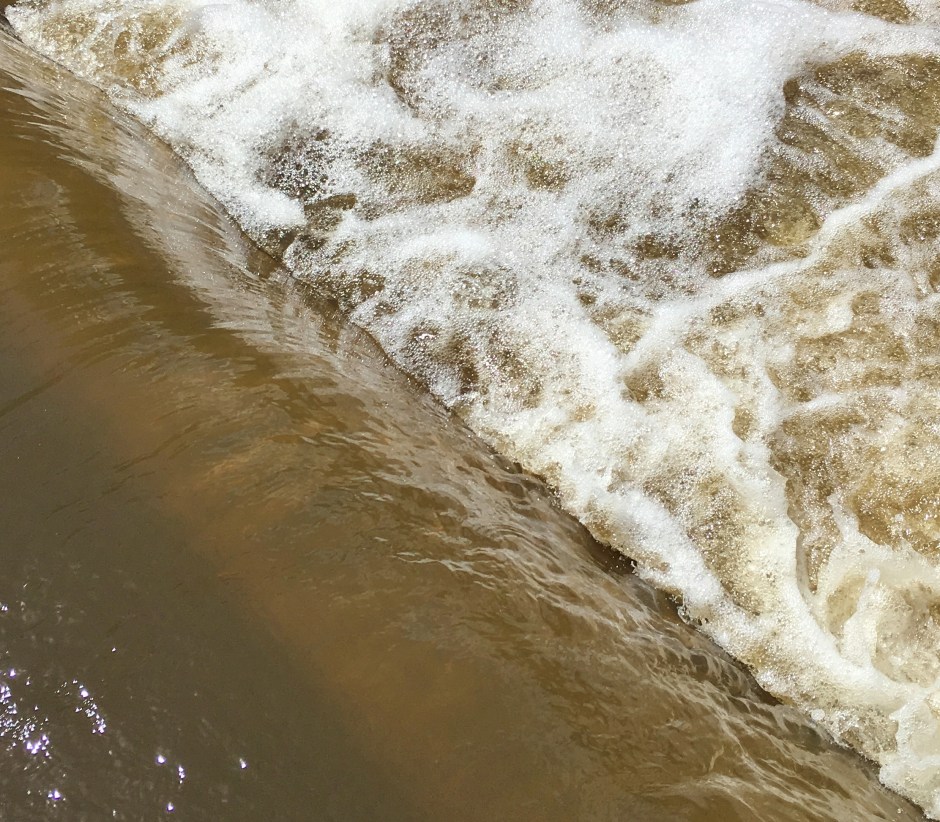
I went to the river to see the effect of the recent rain. The water was roaring over the weir sill and was unfishable. It won’t be back to normal until next week. I checked the other beats and saw an enormous, black cormorant flap it’s way down the straight at Keeper’s Bridge. I thought the trout would be safe in the murky water, perhaps not.

IMG_4167

I checked the lakes then drove to Great Springs for a cup of tea in the sunshine. The wind had swung round to westerly overnight but hadn’t lost it’s strength. It was blowing debris off the trees and a few trout were rising to terrestrial flies. I started on the point with my #2 weight rod and had a take second cast on a GRHE nymph. The fish got off, a long range release. Never mind, it boosted my confidence. There were fish taking.

Half an hour later I was losing faith so I moved to the platform near the hut. I had another take but I was too slow, I told myself it was probably a roach. I sat on the oak bench and used the wind to drift the nymph round, Arthur Cove style. I had a take, quite deep, but again the fish escaped. There were lots of fish cruising, including the giant blue trout, none of them were interested in my fly. I think the fly line was scaring them, it was bright sunshine and crystal clear blue water. A longer leader might have helped. Difficult with a short floppy rod.

I had to leave early but it had been a relaxing couple of hours in beautiful surroundings and sunshine.

trout