7 August – Little Bognor

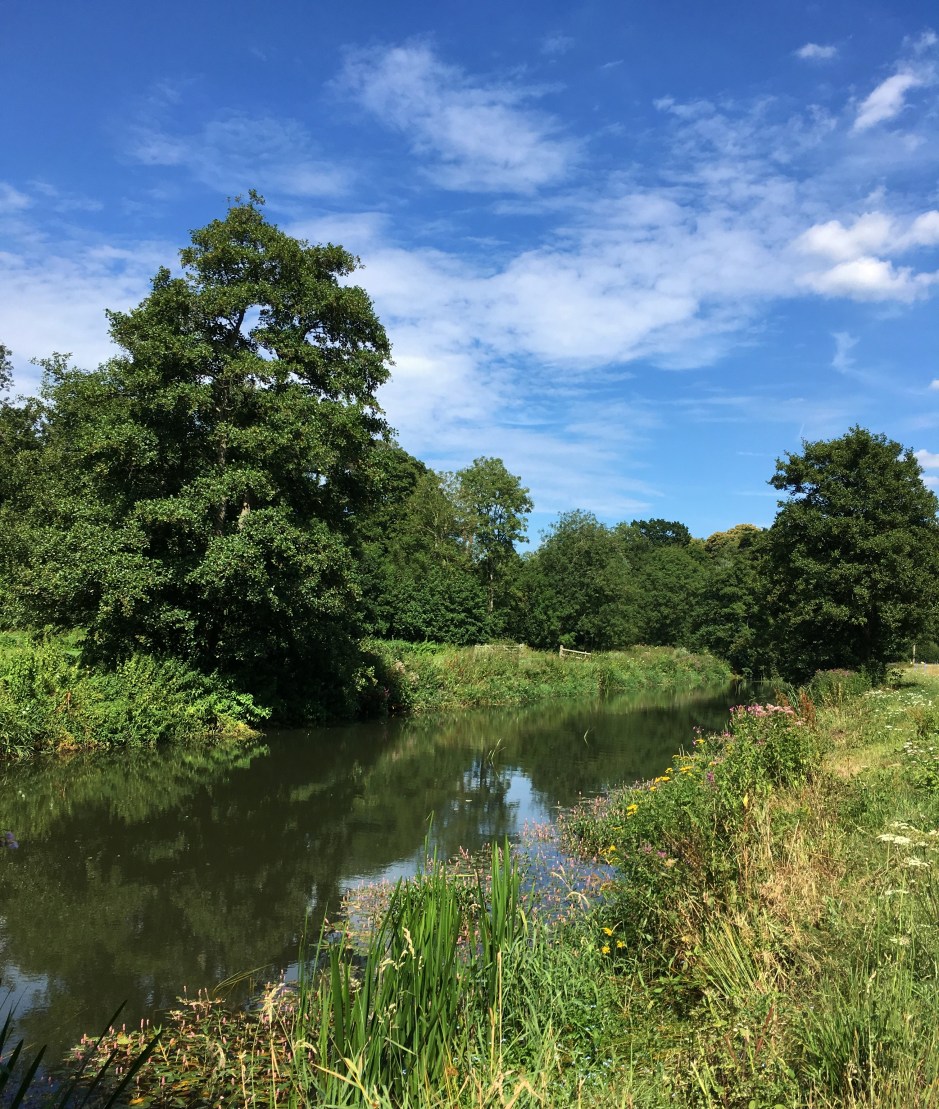
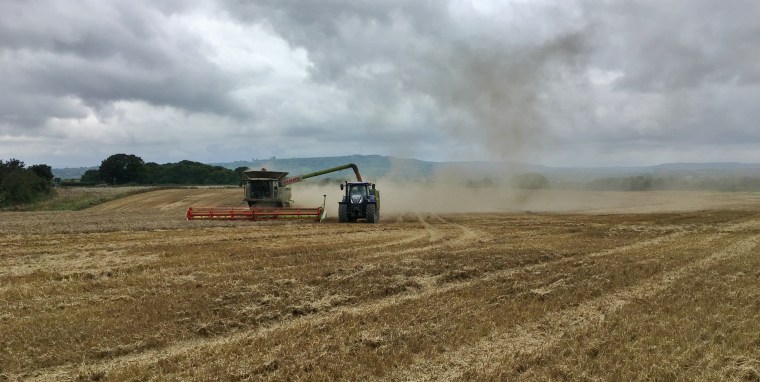
Lasts weeks wind and rain had kept me away from the river. I’d monitored the water level every day hoping for a significant drop but it rose quickly and fell slowly. Before our regular Monday meeting to discuss the catch returns, I had a look at the river at Rotherbridge. It was high and coloured as I expected. I visited Great Springs a week ago to prove to myself that Trout could be caught despite the high water temperature. I was inclined to repeat the experiment at Luffs, a lake I haven’t fished much. It is open to the south westerly wind and drains a short valley that is mainly moorland. When I got to Luffs I walked along the bank looking for signs of fish in the shallows. A huge wasps nest made me turn back towards the Estate road. A young cormorant was fishing and did not react to my waving arms and shouting. I couldn’t find anything to throw at it. The combination of the wretched bird and the wasps spoilt my plans. I decided to fish at Little Bognor. As I drove away from Luffs the contractors were busy with a huge combine and a fleet of mega tractors cutting the wheat.
IMG_5241

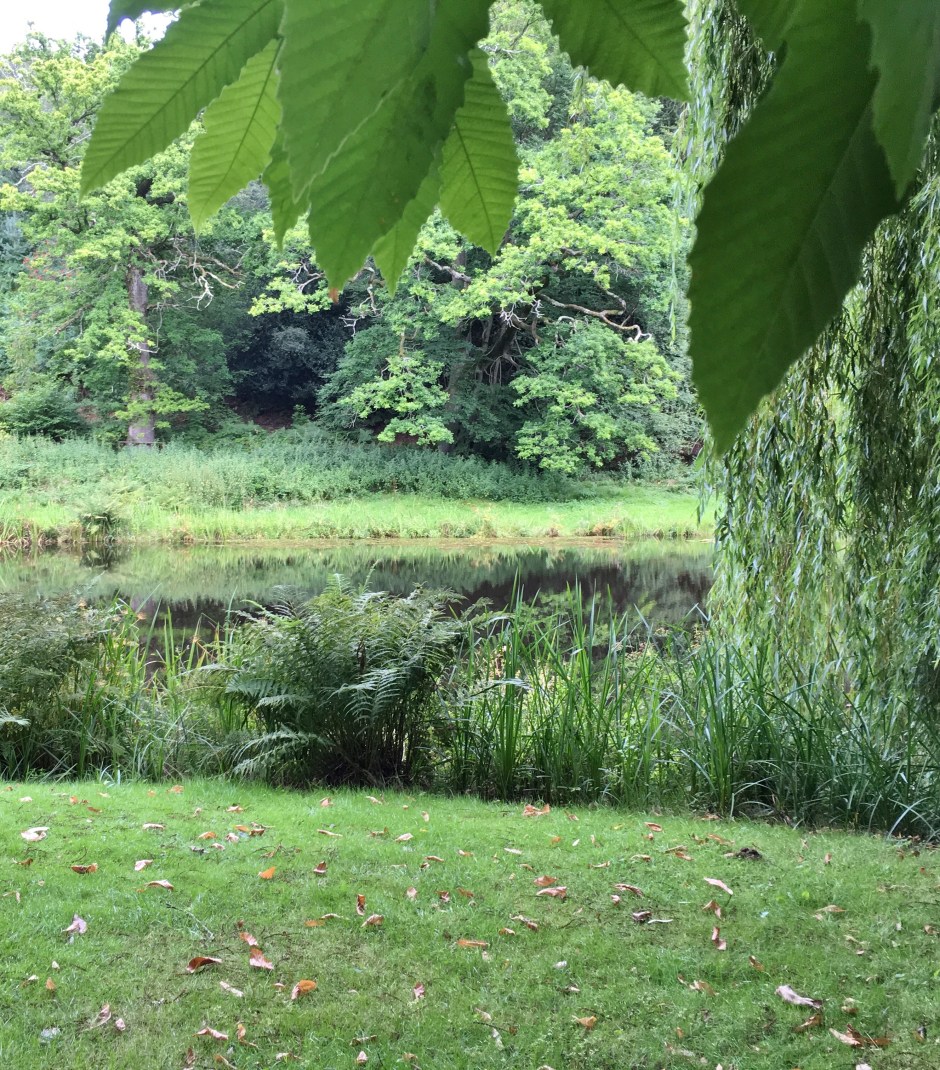
At Little Bognor I sat on the bench under the Chestnut tree beside the top lake and set up my rod. I didn’t miss any rings. I’d glued a new 5lb tapered leader to my fly line. To the end of the leader I tied a 3 foot tippet of 2lb mono. A very delicate approach because the brownies at Little Bognor are spooky.

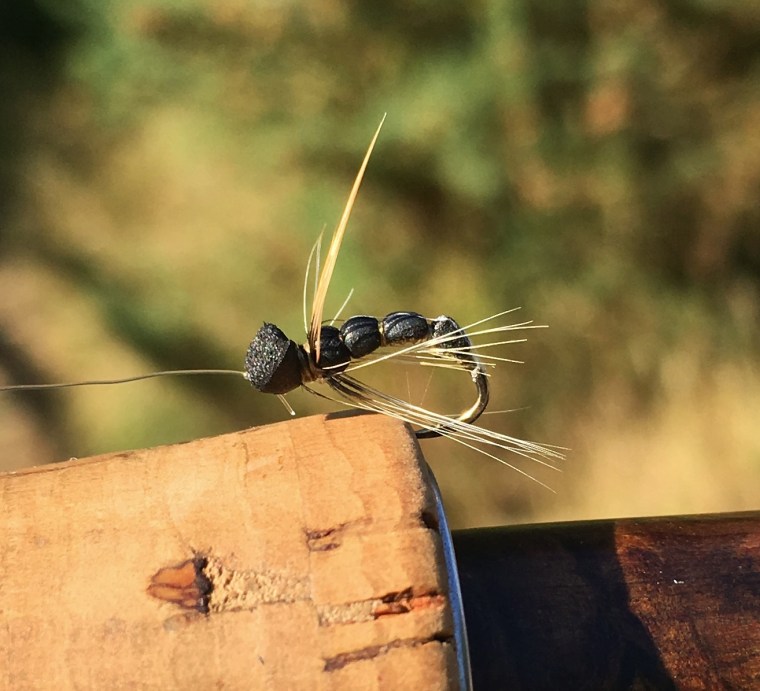
The Trout were feeding very close to the edge of the lake so I crept behind a chest high clump of ferns and flicked a size 14 black buzzer close to the Willow tree. A trout inspected the fly but didn’t like it and moved away.  I changed the fly to a size 14 dry fly with a palmered ginger hackle and a neoprene tag. I trimmed the tag with my snips so that the fly sat low in the surface film. Several inspections later a Trout was fooled and sipped in the fly but it came adrift after a few seconds. Small hooks don’t hold the fish very well, especially when a palmered hackle obscures the gape of the hook.

That part of the lake went quiet, the fish had retreated to the other side of the Willow tree. I moved along the bank and hid behind a tree, casting through a gap in the trees and over the lily bed. I saw a fish rise, flicked the fly into the ripples and had an immediate take. I missed and everything went quiet.

I could see a fish feeding in the far corner of the lake so I crept round and stood behind another huge clump of ferns. The ferns are great for hiding behind but they reach out and knot my fly line. The fish was feeding in the roots of the fern. I lowered the dry fly over the top and dapped it as close to the bank as I could. It was impossible to see the fly. I heard a splash, gently lifted the rod and connected. I was as surprised as the Trout which put up a spirited fight, it was about 1lb 4ozs.

I had spooked the fish in every part of the lake so I wandered around the lower lake for a few casts and then drove home. It had been demanding fishing but not impossible.

trout

31 July – Great Springs

There wasn’t much rain over the weekend but the level of the river had risen a lot then fallen a little. I crossed the North River at Billingshurst and saw that it was quite coloured. The Rother would be unfishable. I stopped at Riverhill to look over the Rother valley, the rain had knocked a lot of the wheat over. I visited the river at Taylors Bridge to walk Beat B and to take some photos. A new cow drink and some access points were being dug out. The landscape looked fresh and colourful. I didn’t see any signs of fish, the water needed to clear. Heavy rain is forecast for Wednesday and the river will probably not be fishable until next week.

IMG_5107

I went to Great Springs and had a leisurely cup of tea. The lakes looked very inviting and a few fish were splashing on the surface. I was puzzled about the poor catch returns, how hard can it be? The water temperature was 20 degrees, still a bit warm. I waited until 5:00pm before settling down on the oak bench. I had the soft warm southerly wind behind me which would help turn over a long leader. As the water around me was clear of weed I tied on about ten feet of 2lb tippet and a size 16 black buzzer. Second cast the leader twitched and I lifted into a small roach. A few minutes later I caught another slightly bigger roach. The shoal moved away and I started to experiment with different depths and flies. I caught another roach on a trimmed down Coachman. I swapped to a lightly weighted GRHE nymph and allowed it to sink. At 6:00pm the leader slid away and I gently lifted the rod. Nothing. I could tell from the movement of the leader that it was a trout, I should have given it a bit more time.

IMG_5114

I walked around Little Springs and on the south bank a huge bow wave approached me. I saw the fish turn, it was the monster Brownie that I had seen earlier in the season. It was nice to know it had survived the heat wave. I had a few casts but the water was too murky so I returned to the top lake. Fish were starting to show around the point but the wind was against me. I sat on the bench again and persevered with a deep nymph. At about 7:00pm the line paused in it’s drift across the ripples and I lifted very slowly. The Trout didn’t know it was hooked. It was about 1lb 4ozs. It had taken the nymph about four feet down, the water temperature was a bit lower at that depth. I had proved to myself that Trout could be caught with the right tactics. Next time I might try and repeat the experiment at Luffs. The sun was low over the river valley as I left, I should have started later and fished into dusk.

trout

27 July – Beat E

The morning was damp and chilly, the south westerly wind and grey skies were ideal for fishing. It seemed as if Autumn had arrived in July. There was no point in waiting for the evening and the light to fade, the sky was dull enough at 9:00am. I arrived at Rotherbridge at 11:00am and decided to fish downstream, Beat E, but on the North bank. I had never fished that stretch from the Rotherbridge Farm side and it would be like fishing a new river.

I started by the bridge, got snagged in the trees a few times and decided to explore as far downstream as possible. I fished the shallow stretch below the bridge, working the nymph between the numerous clumps of rushes and streamer weed. I saw a couple of fish splash but had no takes. The fish were splashing and leaping, they weren’t feeding. I walked down to the first bend but there was no sign of Trout under the trees. I found a crystal clear spring with a good flow of water. It was a miniature chalk stream full of shrimps.

IMG_5043

I went further downstream and worked a few likely looking pools but the sun had broken through the clouds and the fish had gone deep into the tree roots. I fished a few pools on the way back to the bridge but I had lost confidence in the Beat and my concentration. I hid beside the bushes near the bridge and looked for Trout, one was rising under the trees but it was an impossible cast. I hooked the trees a couple of times and decided to have a short break back at the Land Rover. After a bottle of Lucozade and a toffee I reorganised my pockets and went upstream.

I hid behind the rushes and carefully presented a nymph but the downstream wind was getting stronger. After twenty minutes I found a more sheltered pool and methodically searched it with a GRHE nymph. No response. Black clouds loomed over the horizon and I had to shelter under the trees at the edge of the field. While waiting for the rain to stop I tied on a representation of a freshwater shrimp. First cast by the landing stage a wild trout followed the shrimp but veered away at the critical moment.

riffle01

I walked up to the New Riffle and thoroughly covered it with a large black fly. I had a couple of heart stopping moments but it was streamer weed I’d hooked not a monster Trout. On my way back to the bridge I stopped on the bend and cast my fly alongside a bush on the opposite bank. A very large Trout followed the fly but rolled away back into deeper water. It had probably been caught before and saw through the deception. The wind speed had increased and it was very difficult to control my #3 weight line so I decided to leave and save my energy for the Orvis event the following day.

trout

25 July – Rotherbridge

Five days ago the river had risen dramatically and was coloured by the run-off from the  newly tilled fields. The soil in the river valley is very sandy. The rain came at the wrong time for both harvesting the wheat and planting winter greens. Yesterday the water level was high and the water was quite coloured. I decided not to fish. Today’s weather forecast was very confusing but I thought the river would be in good condition and the trout would be hungry after sheltering from the high water.

weather

Before last week’s rain there were lots of fish around Rotherbridge. The New Riffle is only a short walk from there and I decided to fish Beat D, upstream of the bridge. I arrived about 4:00pm and tackled up beside the Land Rover. As I approached the river I saw several fish rising along the two hundred yard stretch above the bridge. There was also a fish under the bushes beside the bridge.

IMG_5028

I hid behind a tall clump of Himalayan Balsam opposite the farm and cast a size 14 dry fly to a rising fish. It took second cast and charged off downstream. A loop of fly line caught on the reel handle and the Trout escaped as my fly pinged back towards me. How annoying. I moved a few yards upstream to another rising fish. I presented several flies carefully. They were inspected, carefully, before being ignored. Even my Neoprene Nymph was rejected. I rested the fish, had a toffee and started again with a size 14 Pheasant Tail. The fish took the fly even though it had previously been rejected. I returned the trout from the landing net and it dashed off into the weeds.

A much bigger fish was crashing about close to my bank just above the big Alder tree. It was feeding with attitude. I tried all the dry flies in the box but the fish eventually disappeared. It was probably my poor presentation that put it down.

I walked up to the straight below the riffle but I couldn’t find a rising fish. On the way back downstream I saw a fish rise by the small landing stage and spent an hour trying to entice it into accepting various patterns. Then the fish changed position, it was feeding closer to me. It was close enough to drop the fly over it with just the leader outside the tip ring. Through a tangle of balsam flowers I saw the fish take the fly. It screamed downstream close to my bank, across the river and into a clump of streamer weed. I bullied it back across the flow and drew an angry Trout into the landing net. It was a short, thickset fish about 2lb. It gave me a dirty look as I released it. Everything about that fish was aggressive.

I tried to find the Trout by the bridge but two swans had stirred up the weeds and put all the fish down. I left just before 9:00pm. Four takes, four hooked fish. The fish had been hungry as I expected but they were fussy eaters.

trout

17 July – Rotherbridge

The morning brought sunshine and a brisk north easterly wind, a combination more suited to Autumn than Summer. The air was moist but clean and everything looked bright and new. I’d probably missed the best part of the day.

By the time I had checked the lakes and collated all the catch returns it was 2:30pm. It was hot. Very hot. The river level had dropped to 0.02m on the gauge at Halfway Bridge, slightly lower than a week ago and the water was clear-ish. The wind was upstream which was a big advantage as it minimised drag. Earlier, while collecting the catch return at Rotherbridge, I sat and watched the river for thirty minutes. I had seen a mirror carp about 15lb swimming down the margin towards the trees. Several sea trout were splashing about above the bridge and a couple of trout were taking flies amongst the trees below the bridge. With so much activity it seemed sensible to start by the bridge.

I sat in the shade of the bushes expecting a long wait but the fish I had seen earlier were rising all over the pool. I couldn’t decide if it was several fish or one hungry fish dashing around. I tied on a parachute Pheasant Tail with a white foam hackle post and flicked it out gently into midstream. The breeze curled the leader upstream and held the fly in position. The trout inspected my offering and declined. I swapped the fly for a lightly dressed mayfly and that too was rejected. The next fly I tried was a small Walker’s sedge. The trout looked at it for several seconds but refused. I was running out of options. I rested the trout and browsed through my fly box. A black Neoprene nymph with a sparse badger hackle looked good. It would sink very slowly and hide the tippet.

IMG_5003

I cast the fly upstream of the fish, another much bigger trout immediately grabbed the fly and when I lifted the rod, dashed off downstream at high speed. Most of my thirty yard fly line slid off the reel heading towards Coultershaw Bridge. I grabbed the landing net and walked downstream, winding in the line as I went. When I got to the weedbed where the fish was hiding I splashed the net on the weeds and the trout dived into midstream. It looked big. This procedure was repeated several times until the fish was exhausted and I guided it through a gap in the weeds into the net.

IMG_4997

Unfortunately I couldn’t revive the fish, the warm water and frantic fight were too much. I weighed it and presented it to the farmer’s wife for their dinner. It was 2lb 4ozs but looked 3lb. It’s tail was huge, a slightly curled dorsal fin meant that it was not a wild fish.

I was hot and exhausted. Too tired for the pub.

trout