River Rother – 28 June

After a week of decorating during a heat wave, I deserved some down time beside the river. I swapped a paint brush for a rod and the thirty degree heat for the air conditioning of the car. I got to the river late in the afternoon. My arm ached and I stumbled around on the uneven ground beside the weir pool trying to ignore the pain in my back. The pain killers kicked in and all was well.

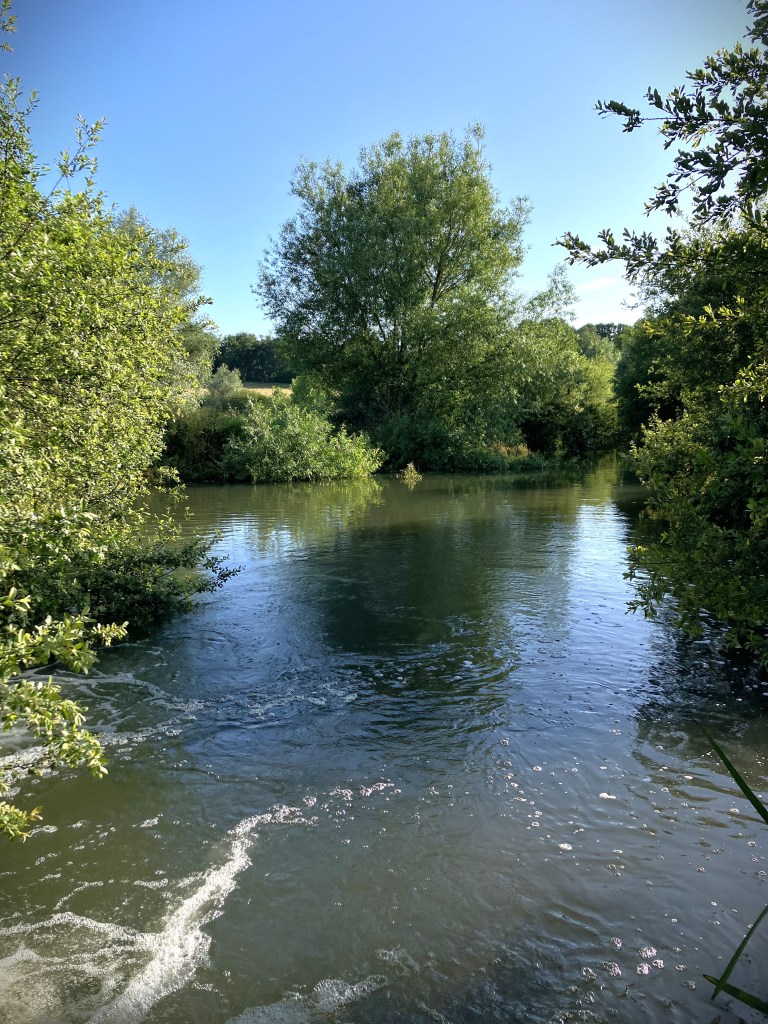
The water was deep and coloured. Dark olive with a hint of sediment, courtesy of the weir. I was confident that the pool held fish and worked a deep sunk nymph through the eddies and close to the overhanging bushes. The narrow slots between the bushes and the gusty wind required accurate casting, no flies were lost ! I eventually hooked a small trout in the bubbles just below the weir but it jumped and flicked the hook from its mouth.

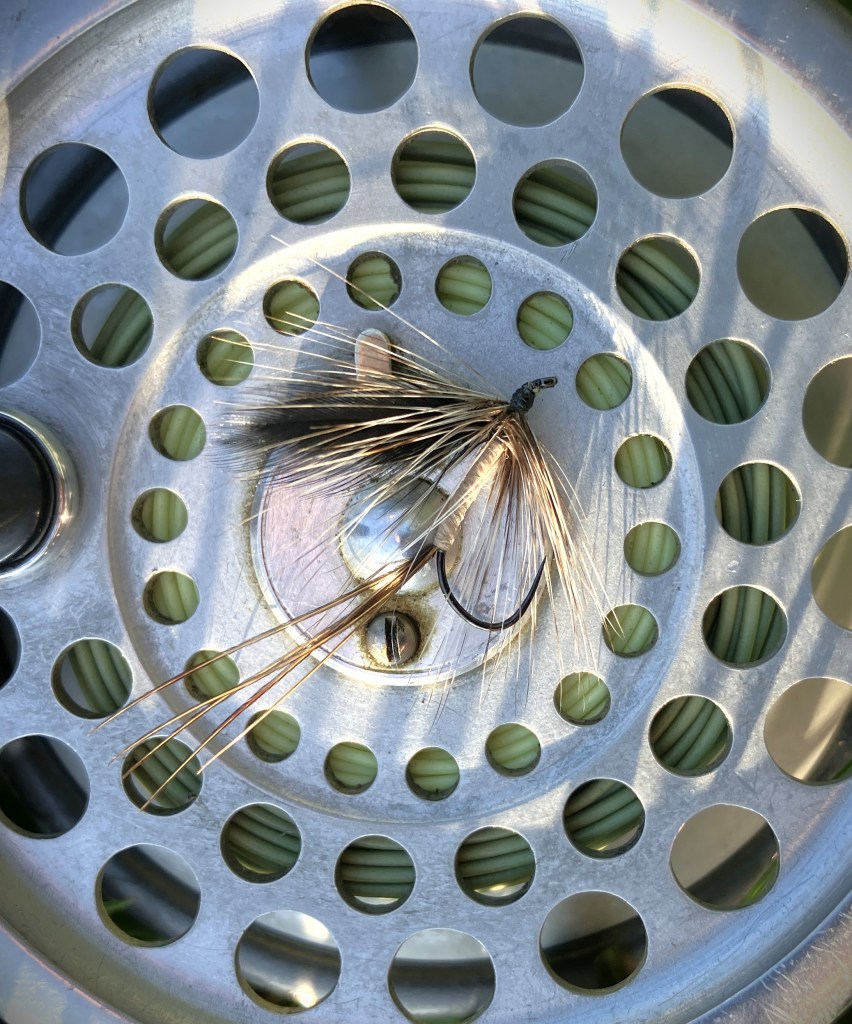
I drove to another beat and was happy to have the river to myself. I had an appointment with a fussy trout that had evaded capture on my last two visits. The fish swirled as I was approaching the shallow water in the shade of an alder tree. It was taunting me but I had a cunning plan, don’t put the fish down by casting a weighted nymph, start with a dry fly. What could possibly go wrong ? I chose a heavily dressed, mayfly spinner pattern and flicked it into the slack water just above a clump of streamer weed. The fish swirled and retreated into the weeds.

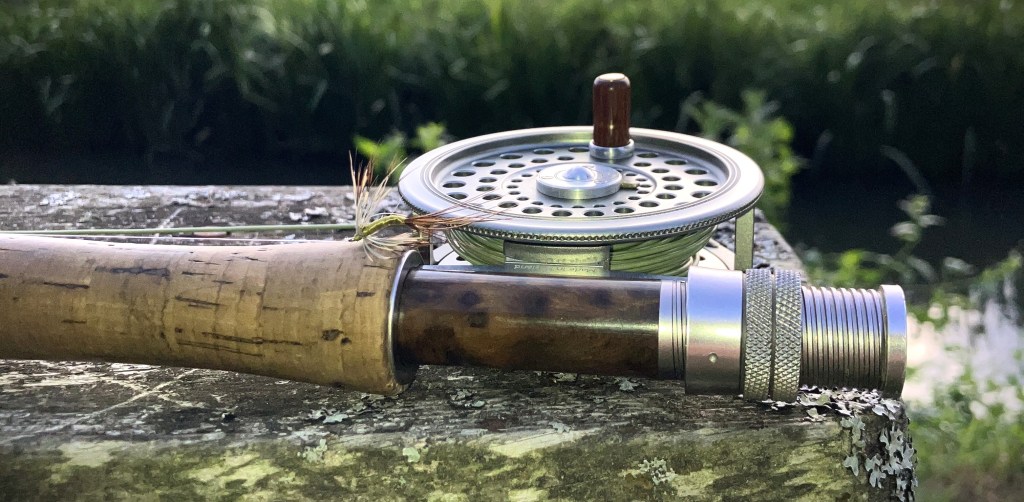
I walked downstream to another alder tree with a patch of streamer weed in its shadow, where a second fish had rejected my flies last weekend. Two swans were uprooting weed and I retraced my steps. I swapped the soggy spinner pattern for a small, very lightly dressed mayfly and as I tightened the knot, the fussy trout rose slightly upstream. I roll cast the fly from my hand and it landed nicely a couple of feet above the fish. The trout grabbed the fly without hesitation and went on a long run. It fought like a four pounder and I had to use the full curve of the long rod to lever it away from the bankside weeds. Short rods are no good for snaggy margins.

I was particularly pleased to have caught the trout. I had learnt about it’s habits on my previous visits. It was not easy to deceive and I was happy to see it swim away. It will be under the weeds next time but I will leave it in peace.

. . . – – – . . .

Summer Solstice Weekend

It was six years since I’d fished for trout on the 21 June. That day, the weather had been kind and I’d caught a couple of fish. Now, with England in the midst of a thirty degree heatwave, the trout in the Western Rother would be hiding in the weeds, deep in the shade and would be difficult to catch. The south easterly breeze from the continent did nothing to moderate the blistering heat. There was no point in visiting the river until the evening. I waited impatiently until the temperature dropped before setting off for Petworth.

The plan was simple. Keep in the shade. Alder trees along the north bank cast dense shadows along an east-west section of the river. As the sun dropped, the shadows lengthened. Perfect. Mayfly hatched regularly from the shallow water, a steady trickle of green drakes fluttered into the trees behind me. A few swallows flew up and down the river like little missiles, snatching the occasional fly but most of the duns made it safely to a resting place. I warmed up my right arm by casting a nymph into an overhanging tree.

Casting upstream under an alder tree, I hooked a small fish which leapt into the air and threw the hook. It could have been a sea trout smolt. Further downstream, I crept into place and explored a shaded patch of water with a mayfly nymph. A trout rose to my right, so I swapped the nymph for a French Partridge Mayfly and flicked it downstream. A few casts later the trout took the fly and battle commenced. I treated the fish gently at first and it stayed in mid-stream. I had to hoop the rod over as the fish approached the landing net but everything held and a two pound plus trout rested in the mesh.

I was content, the plan had worked. I wandered downstream passing the exposed stretches of river, seeking shade for both myself and the trout. I felt that I had caught sufficient. Just one more cast. I found a rising fish in the main flow and presented the fly without drag. The fish obliged but came adrift after a few minutes. I walked to the riffle where several fish were rising. I missed a take, I was hot, tired and dehydrated. Time to return to the car for a drink. On the drive home I thought about the following day, would the same tactics work on a different stretch of river ?

The tactics were the same but a 20mph blustery wind meant that presentation was difficult and the two rising fish that I found, sheered away from the skating flies.

. . . ._ _ _ . . .

Tavy Walk – 14 June

The River Tavy dropped to a fishable level on Monday so I took the Sage for a walk along my favourite beat. The peat stained water from the weekend downpour rushed past and I knew that it would be a waste of time using a nymph, I needed something with a flash. I’ve never caught a trout on a Peter Ross or any other traditional wet fly. My fly boxes are full of Butchers, Dunkelds and Invictas, flies lovingly made fifty years ago, that have never been used.

I dragged a small Peter Ross around in the water at my feet and admired the way the barred teal slicked back to imitate a tiny fish. I lacked confidence in the fly but at least the trout would see it easily. Sea trout had been caught lower down the river and after a fruitless thirty minutes exploring the first pool, I wondered if a couple of large sea trout had taken up residence and scared the little brownies away.

I paddled on the gravel beside a long, wide riffle and worked the fly down and across. An above average size brownie seized the fly, jumped and threw the barbless hook. I walked downstream and chatted to another member who had caught a sea trout about two pounds and lost another about four pounds. His success tended to confirm my theory that big sea trout push the small trout out of the best pools. I got home just before the rain. I moved some traditional flies from my presentation fly box into the box in my jacket pocket.

On Saturday the river was settling down after another spate. I walked to the bottom of a beat further down the river and admired the foam flecked water as it poured over the top of the weir. Salmon and sea trout would have no difficulty in swimming upstream. I watched the water for a few minutes hoping to see a fish but they were probably long gone, I turned back and walked to the top of the beat. The humidity was high and the air was thick with midges. The river was too high and my rod remained in its bag. It will be perfect on Sunday if there is no more rain.

. . . – – – . . .

Leconfield – 10 and 11 May

On Friday afternoon I wandered around the farm and found myself watching carp feeding in the margins of the pond. The temptation was too much. I returned to the house, set up a rod and walked back across the fields to find even more carp rooting around in the marginal silt. I tried a black spider which they ignored and a bloodworm imitation, which was also ignored. It was tricky casting in the blustery wind, good practice for the weekend trout fishing.

On Saturday morning, I started at Little Springs, the trout were rising to mayfly all over the lake. I tried dry, emerger and mayfly nymphs but the fish were shy and turned away at the last moment. I caught a very nice roach on a nymph before switching tactics.

At Great Springs I sat on the bench and allowed a deep sunk GRHE nymph to drift into the shade of a willow tree. I had a take and landed a good rainbow about two and a half pounds. An hour later another trout fought long and hard before slipping over the rim of the landing net.

In 1935 Pezon et Michel hired Charles Ritz as a technical consultant. The first split cane fly rods, with Ritz parabolic tapers, were sold in 1938. France declared war against Germany on 3 September 1939 and was invaded on 10 May 1940. Eighty five years later it seemed appropriate to use my restored Pezon et Michel fly rod to catch a trout from the river.

I drove to the river at Rotherbridge. The water had a pronounced green tint, an algal bloom caused by agricultural run-off. It was very hot and bright. I started fishing at Keepers Bridge where there is shade and plenty of alder trees rooted in the river banks providing refuge for the trout. Mayfly and alder flies were hatching but there was no sign of fish.

I walked upstream casting to all the fish holding spots. The old cane rod slowed down my casting arm and the casts became more accurate. I walked as far as the Old Riffle before fatigue and dehydration drove me back to the car.

We met at mid-day on Sunday, a meeting long delayed by Covid, work, family commitments etc. It was extremely hot and dusty. Seeds from the alder trees covered the surface of the water and clung to the tippet knot. I lost a couple of flies targeting a sunken tree trunk before moving slowly downstream.

After a four hours of concentration I slumped on the grass in the shade. A trout rose a few feet from me, a splashy feeding rise. I tried everything I knew to tempt the fish but without a response. I sat and watched mayfly spinners rising and falling in the breeze. I left the river earlier than I had planned but was glad to hear that my companion had caught a few during the evening rise.

. . . – – – . . .

Tavy, Walkham and Plym

I had an idea. I would fish the rivers included in the club’s name, the Tavy Walkham and Plym, in that order.

River Tavy

I went to the Tavy late in the afternoon when the shadow thrown by the trees on the west bank, extended right across the river.

I experimented with a very long, fine leader and worked the first pool carefully with a black dry fly. There were only a few upwing flies hatching and no trout rising so I switched to a nymph and started again at the top of the pool. I had a little nip on the fly but failed to connect.

Further downstream I flicked the nymph across the main current to land just behind a boulder. As the fly swung round, through the slack water, there was another nip at the fly. I missed again.

I paddled along a spit of small rocks and let the fly swing slowly round in the glide near the far bank. The line felt heavy and I brought a plump little trout to hand. It flicked itself off the hook as I reached down to release it, job done.

River Walkham

The weather had changed, temperatures in the high twenties were forecast. The sky was devoid of clouds. The deep valley and tall trees along the Walkham would provide shade and the pristine woodland, behind locked gates, was enough to justify my walk with a rod.

At lunchtime it was very hot, nearly thirty degrees. A buzzard mewed until it saw me through the tree canopy, then it floated away. A cuckoo called from high up on the valley side. Clouds of midges buzzed just above the surface of the water. The tall trees provided shade and the downstream breeze helped cool me down. It rippled the water, hiding me from the trout. The trees shed leaf bud scale everywhere which formed orange mats covering the marginal rocks.

Upstream of the weir, in the slack, crystal clear water, trout were rising consistently. I started with a nymph through the deep water beside the rock wall. Upstream, I crawled under the tree canopy and drifted a dry fly along a glide under the far bank. The trout stopped rising.

As I walked downstream, beside the shallow leat, several trout dashed into cover. Very spooky fish, they saw me from twenty yards away. I climbed over fallen trees and weaved the long rod through low hanging branches until the rock face barred my way. The deep pool inspired confidence but there was no response from the trout. It was a long hot walk back to the gate. The padlock-which-doesn’t-work tested my patience. I must put a bottle of SWW emergency water in the Defender.

River Plym

It was bank holiday weekend and the weather was good, not the best conditions for fishing. I started early in the morning, too early for dog walkers. I decided to keep away from the tourist hotspots and to visit a beat that I had never fished. I heard the river crashing through the rocks long before I saw the white water. The level was slightly above normal and the water was crystal clear. The sandy bottom and pebbles shone in the shafts of light piercing the tree canopy. No excuses.

Trout were rising for midges and I chose a small, pale Tups to start with. I flicked it upstream into a glide and after a few casts, a small trout took the fly and escaped before I could get the slack line under control. I worked my way upstream and missed a couple of splashy takes.

I sat in a drainage ditch above a big rock and searched the deep scour with a nymph. A very positive take took me by surprise, the trout took line off the reel and battled in the deep, fast water. I released the fish and it dived back under the rock. We will meet again if it stays put.

I walked upstream until the path was blocked by a fallen tree, deep water and a rock wall. I was tired, hot and dehydrated. Time to wander back to the Defender. The fishing had been challenging. The beauty of dappled sunlight on the water, a nice trout and partial success with a dry fly warranted a celebration cup of tea and a big chunk of fruit cake.

. . . – – – . . .