Although the season on the Devon rivers started weeks ago, my tackle had been marooned in lockdown at the other end of the country. Finally able to travel, I zoomed up the motorway to be reunited with precious cane and gently purring reels.
The following day was glorious, the sun shone and a gentle, warm southerly breeze wafted through the trees. I was anxious not to be late for a very special meeting and allowed an extra hour for travel gremlins. Google maps refused to talk to me but silently guided me through road closures and diversions until I reached my destination under the South Downs just five minutes early.
I had given up hope of buying the unique, custom built Southwell fly rod that came to light a year ago. I had pleaded my case but it was in vain. Then, out of the blue, I was offered the rod and we arranged to meet. The rules allowed us to chat in the garden with tea and an exquisite collection of rare expensive split cane. The custom made Southwell rods and highly desirable cane fettled by Edward Barder sent my head spinning. The quality of the rods was stunning.
When I grasped the brown cotton rod bag I could tell that it’s contents were special. The rod felt light, even dainty. I examined the nodes and checked the seams before fitting the rod sections together. It came alive with that tell tale steely feeling of Bob Southwell’s rods. It had been ordered from the shop in Station Road, Croydon as a custom build. The Pezon et Michel fittings were not standard but suited the 9′ of lithe cane. The rod had no signature but the provenance was exceptional, without the back story this rod would not attract much attention.
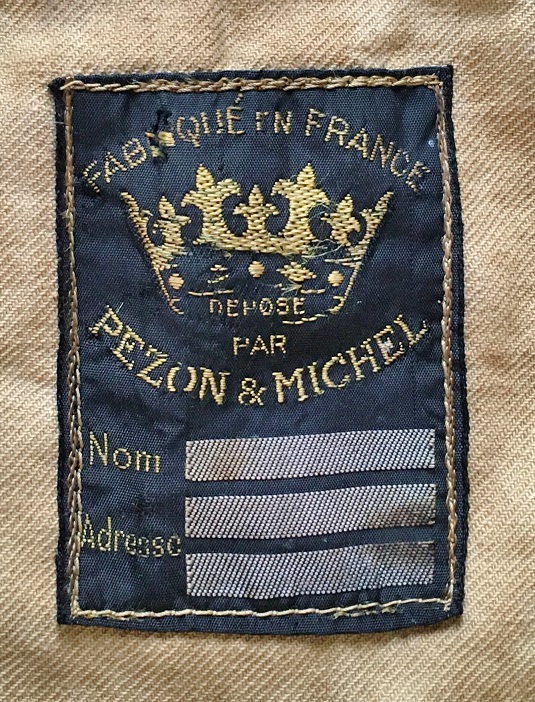
The glorious afternoon continued, much chatting was interrupted by a surprise. The gift of another rod. I was too overcome to show my gratitude. The ancient rod bag label said Pezon & Michel, a strange coincidence. I had been curious about the French rods since reading Charles Ritz’s book and waggling a guest’s Parabolic beside the Rother. The rod was a restoration project that would keep me busy for many months.
Two rods acquired during one glorious Spring afternoon! I drove home the long way round, relaxed and smiling. I took Southwell IV to the lakes the following day but serial incompetence meant that although I hooked a few Trout they all escaped. The rod behaved impeccably but I was very rusty.
It appears that restrictions on our freedom will be gradually lifted in time for the start of the Trout fishing season, just like last year. I have over a month to prepare. Lockdown caught me in the latter stages of moving house. I left all my rods and reels behind, 250 miles away, safe and secure while furniture was delivered and much decorating took place. Although the season opens on 15 March it will be early April before I can retrieve my gear and flick a nymph about.
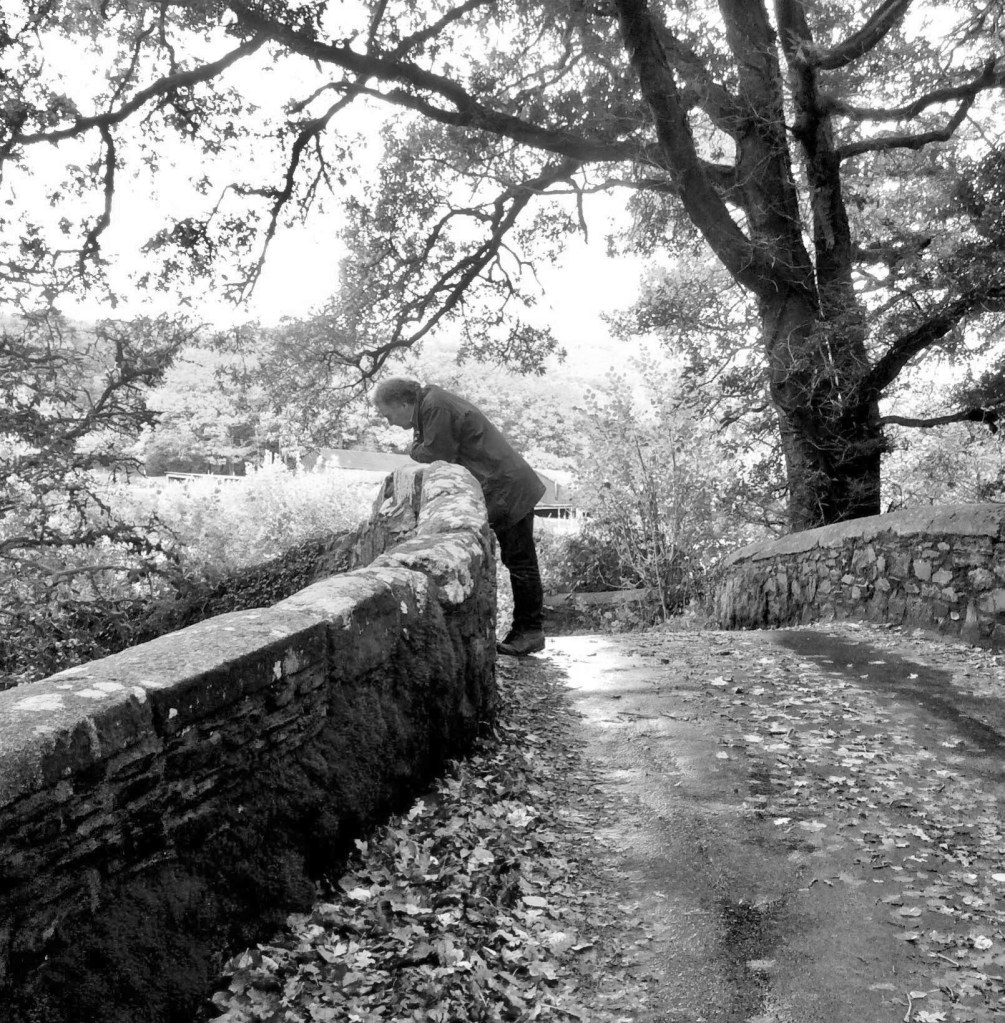
The weather is distinctly warmer and I feel that a short Spring will merge seamlessly into a long hot Summer. In Devon the Winter has been wet and mild, the rivers are full and Dartmoor is saturated. Most days I look over the parapet of the 13th century bridge into the crystal clear water but there are no little fish darting about. Where do they hide during the spates? There is no gravel under the old bridge, the bedrock is exposed and the weeds have all been ripped out by the January spates. Perhaps the little Trout have all been washed downstream into the estuary.
A walk beside the river is almost as good as fishing. In fact, sometimes it’s nicer without the distraction of choosing a fly and trying to flick it into an impossible gap under the overhanging branches. Yesterday I walked slowly along the banks of the River Walkham, my local river. The spates had left lines of driftwood on the short, green grass. The river had been cleaned out. The gravel and rocks had been polished and some of the pockets had become pools. It was quiet, even the birds were silent. The trees in the valley were not in bud and the Spring flowers were hiding under the bracken debris.
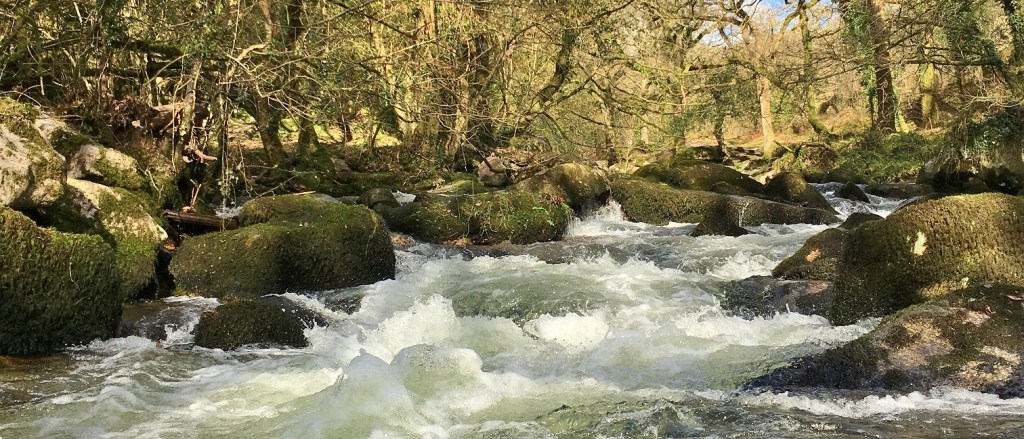
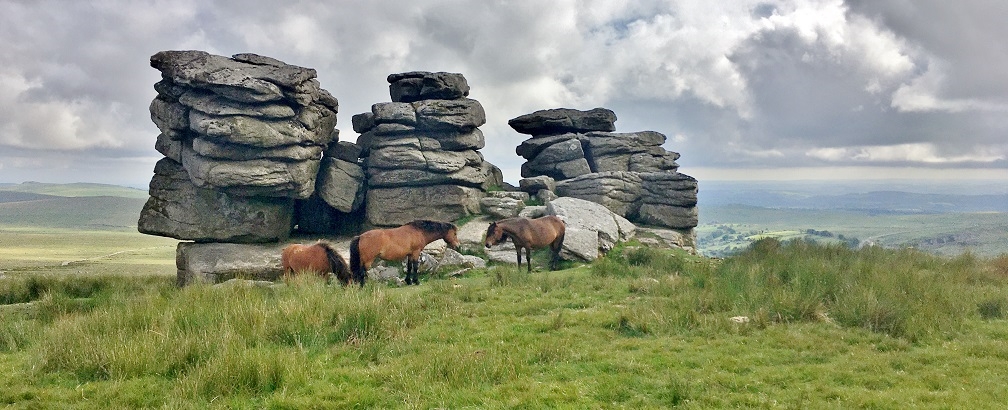
Today I chose to explore the River Meavy. I have walked the Beat many times but never with a rod. The scenery is stunning and it is a privilege to walk up the valley between primeval Oaks dripping with lichen and ferns. Huge granite slabs the size of cars are scattered around the Dewerstone side of valley amongst the trees. Little springs emerge from the peat and trickle down a hundred feet into the river. The sunlight slanting through the trees catches the white water in the riffles and illuminates the crystal clear water. There’s so much to see. A few small upwing flies hatch and midges buzz around the swampy patches of waterlogged peat.
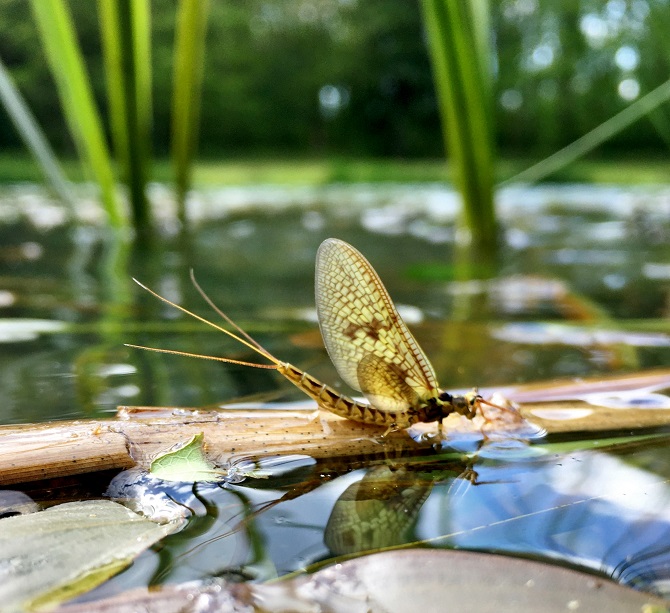
This year I plan to use my fishing time carefully. I intend to keep in touch with both the waters in Sussex and Devon, a tricky balancing act. The Mayfly season on the Rother in Sussex is not to be missed. To watch a 3lb brownie appear under the fly and gently sip it down is a rare thing, memories are made that way. I will visit Little Bognor and celebrate Elgar Day on 15 June. The Trout in the moorland streams won’t become active until the water warms up in May. I’ll need to start training for the long hike across the moor, lockdown pounds must be lost.
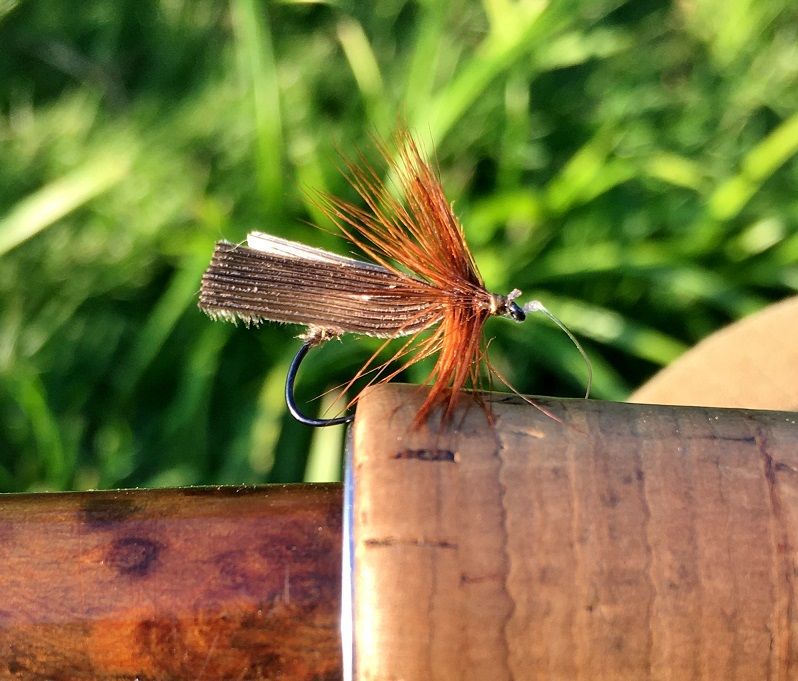
I haven’t tied any flies or bought a supply of leaders and my only spool of tippet material is half empty. My reel needs cleaning and the silk line ought to have a dressing of Red Mucilin. I must get organised.
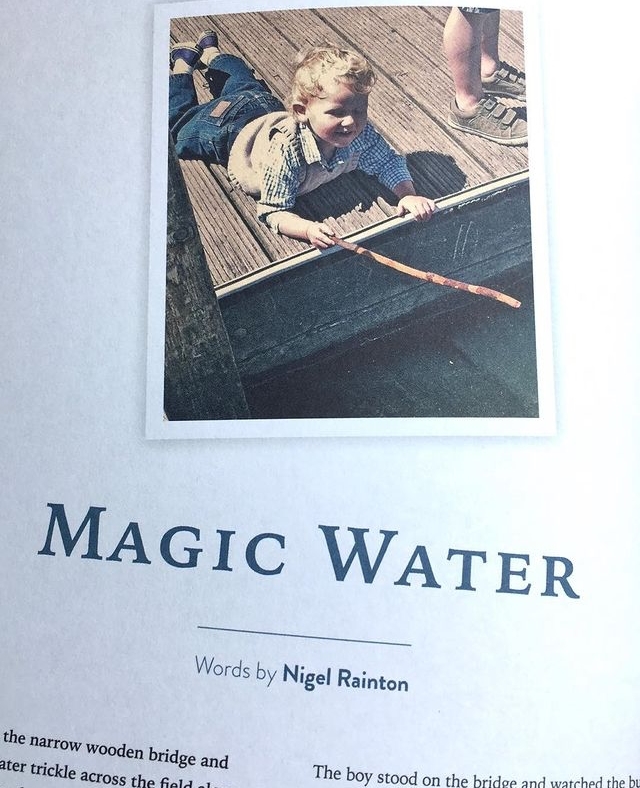
The toddler knelt on the narrow wooden bridge and watched the magic water trickle across the field along a seam between the sandstone and clay. The cool water felt good on his podgy little hand. It was comforting and connected him to another world. He watched the droplets fall from his fingers to re-join the young river on its journey to the sea. He stretched out his arm and tried to catch the little silver fish but they were too quick for him.
His mother gently pulled him away from the stream where, two thousand years earlier, a roman legionnaire had drunk before continuing his march north. The stream had grown up over two million years. It had provided the farms and hilltop villages of the High Weald with drinking water. Further down the valley it had fed the ponds and mill leats that drove the furnaces, bellows and hammers of the iron works. The stream was the giver of life and the villagers were its guardians. The little boy knew nothing about history and The Old Ways, he was too young for such things but he remembered the cool water and the fish.
The boy stood on the bridge and watched the bus grind through the gears up the hill towards the village. He looked over the red brick parapet and watched a trout sheltering beside a clump of watercress. He’d bunked off school to catch a trout. It was not the first time he had swapped double-physics for fishing. Hidden in the bushes, he threaded the line up the cane rod, fixed the float and examined his tin of worms. He crept along the hedgerow on all fours, under the hazel and alder bushes, until he reached the weir pool.
The garden of the Waterfall Tea Room was busy with bored housewives but he slid down the high bank unnoticed and sat, hidden from view, at the water’s edge. He’d heard tales of enormous trout being fed on cake and sandwiches. The roar of the waterfall dropping four feet into the pool blotted out the gentle laughter and the chink of bone china. He chose a worm and cast upstream into the foaming water. The float shot under, the reel screeched and a monster trout jumped several times. The old lady proprietor heard the commotion, saw the boy and shouted threats of “poacher” and “police” at him from the opposite side of the weir pool. He grabbed the beautiful fish and waded downstream, the cold water above his waist, until he reached the arch of the bridge where he hid waiting for the bus home. He knew they wouldn’t follow him, they were scared of the water. His heart was thumping and he was shivering with cold but he felt safe beside the river, sheltered under the red brickwork. The trout, a two-pounder, was admired by the family and cooked for tea. The boy was worried about the old lady’s threats. He didn’t fancy being arrested for poaching. He stayed well away from the little river and the tea room.
~
The seaside town grew thirsty for water. A new water treatment works with large steam driven pumps and a pipeline six miles long, delivered millions of gallons of drinking water every day and the river shrunk. Downstream on the flood plain, barges could only deliver coal at high tide. A lock was built, the flood plain was drained and after only thirty years, the river was shallow and silted up.
The man parked the shiny new BMW in the layby and walked towards the bridge. Revisiting childhood haunts brought back memories but sometimes those memories were best remembered not relived. The Waterfall Tea Room had been demolished and the weir pool filled with the rubble. The lottery funded village tennis court had replaced the tea garden and a secondhand car lot covered the weir pool. The old bridge had been widened with concrete and steel, the red brick had gone. So had most of the water.
The river downstream was covered in thick weed, only the centre channel was clear. The man fixed the expensive reel to the even more expensive high-tech carbon fibre fly rod. He was not a member of the club but it was not really poaching. Nobody would see him. He worked his way downstream, pausing to drop his nymph into every run devoid of weed. Eventually he saw a movement in the water about fifty yards away and detoured into the field to avoid being seen. He knelt beside the river and cast towards the deeper water on the outside of the bend. There was an explosion in the water and a giant black cormorant took to the air. He shouldered his rod, swung it to lead the rapidly departing bird and squeezed the imaginary trigger. Twice. He missed with both barrels. The black-death circled around the valley in search of another stretch of river. He cursed the bird, withdrew to the pub and consoled himself over a pint. He was angry with the bird but was glad to have reconnected with the river. He smiled as he remembered the monster trout and the old lady from the tea room.
~
The Water Authority had few responsibilities and lots of cash. The river was dredged and forced into uniform channels running in nice straight lines across the fields. High bunds were formed to prevent the river escaping onto the flood plain. Each winter the river took its revenge, washing fence posts, wheely bins and even cars into the estuary. Each summer the river shrunk and the farmers were forced to irrigate their potatoes with water from boreholes. The seaside-townies complained about the hosepipe bans and the queues for bottled water.
The old man stood on the bridge, hunched over the steel railing, buffeted by the wash from the articulated lorries hurtling towards the cross-channel ferry terminal. He squinted through the tangle of blackthorn hoping for a glimpse of sparkling water. Upstream, the riverbed was stained orange by the outflow from the village’s new sewage works. The air was musty and the trout had long gone, banished by many years of abstraction and pollution. The tennis court had been reclaimed by nature; the rusty fencing enclosed a strangely rectangular collection of saplings and blackberry bushes. The skeleton of a vandalized Ford sat in the middle of the abandoned car lot. Downstream looked more promising. He shuffled along the riverside footpath, pausing to look through small gaps in the hedgerow, hoping to see the glint of sunlight on water and signs of life. He was too old to fish but he loved to be close to the water.
He stood and looked around the river valley, soon to disappear under thousands of acres of water. The tidal barrier had been built and in a couple of years, the new reservoir would provide drinking water for the seaside town. Around a bend he saw a small boy peering into the trickle of water. The woman shouted at her young son to come away from the river. “You’ll catch something if you touch that water”, she grabbed his arm and yanked him back onto the footpath. As she dragged him away the old man saw the boy look back over his shoulder. The youngster smiled at him, he’d seen the magic.
This is a true story. It was published in the Autumn edition of Fly Culture Magazine 2020.
In late 2019 I decided to broaden my fly fishing horizons. I took a Rod on the River Itchen and joined the Tavy Walkham and Plym Fishing Club. I renewed my longstanding membership of the Leconfield Fly Fishing Club and therefore had three venues stretched across the width of the South of England. Across two hundred and fifty five miles to be precise from Sussex, through Hampshire to West Devon.
Lockdown looked like a barrier to my widespread and expensive plans. However, we were released just as the Trout season got underway and the impact on my travels was minimal. My summer revolved around regular visits to the Itchen, fitting in other fishing trips according to the weather. For once rain was not a problem. If the Rother was coloured, the spate rivers on Dartmoor were filled with hungry Trout.
I didn’t visit the River Rother as much as I had in previous seasons, mainly because I was in a different County. The water level varied a lot and good river conditions never seemed to align with my availability. The lack of flying insects and water coloured by run-off, resulted in deep feeding fish. The deep sunk nymph accounted for more Trout than the dry fly. It was scary to get a big thump on the rod as a 2-3lb brownie seized the fly unseen. I didn’t see any Sea Trout smolts and only a couple of adults were caught by club members. Global warming, pollution and abstraction seem to have effected this lowland river more than most.
The River Itchen was very kind to me, both the fishing and the scenery were spectacular. I’d fished there once before, late in the 2019 season, when I had the entire fishery to myself and caught several good fish. I repeated my initial success on a couple of occasions in 2020. There were many heart-stopping moments as big Trout rose to the dry fly only to turn away.
As the season progressed the Trout became very wary and I had to raise my game to get any interest in the various fly patterns I presented. After each trip I felt that I’d cracked the secret but the next visit always knocked me back. In the deep swirling pools I learnt to distinguish between brownies and Sea Trout. I also came to recognise the difference between giant Chub and small Salmon which saved many a frustrating hour. The Itchen Trout were easy to find but difficult to catch.
Dartmoor memories from the early ’70s came flooding back during my first visits to the high moor. The landscape was both beautiful and dangerous. I had to abandon a couple of visits because of fog and faulty map reading.
Each time I ventured into the deep valleys on the western edge of Dartmoor I was in awe of the power of the rivers and the primeval forests. It looked like the Alaskan wilderness and I found myself spending more time admiring the scenery than fishing. It was a privilege to be allowed access to such an unspoilt environment. The Dartmoor Trout were hard to find but easy to catch.
It was a good season, the fishing was demanding, often hard work. If I had to sum up the season in one word, it would be ‘varied’. I’ve never driven as many fishing miles or fished so many miles of river. Will I do the same again next season? Probably not, the travelling was too much, I’ll adopt a more relaxed approach in 2021.
In the autumn of 2020 I bought a 300 year old farm cottage on the edge of the Dartmoor National Park, not far from the River Walkham, which will ensure a much more relaxed lifestyle.
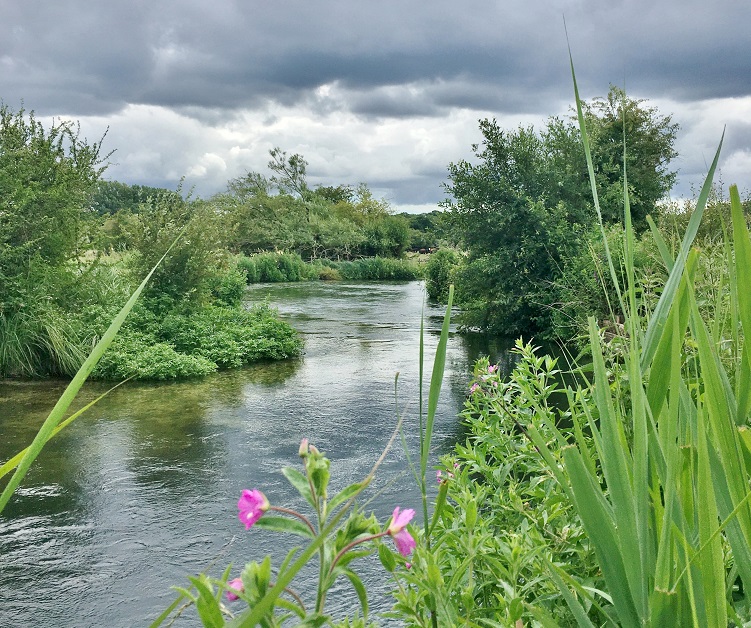
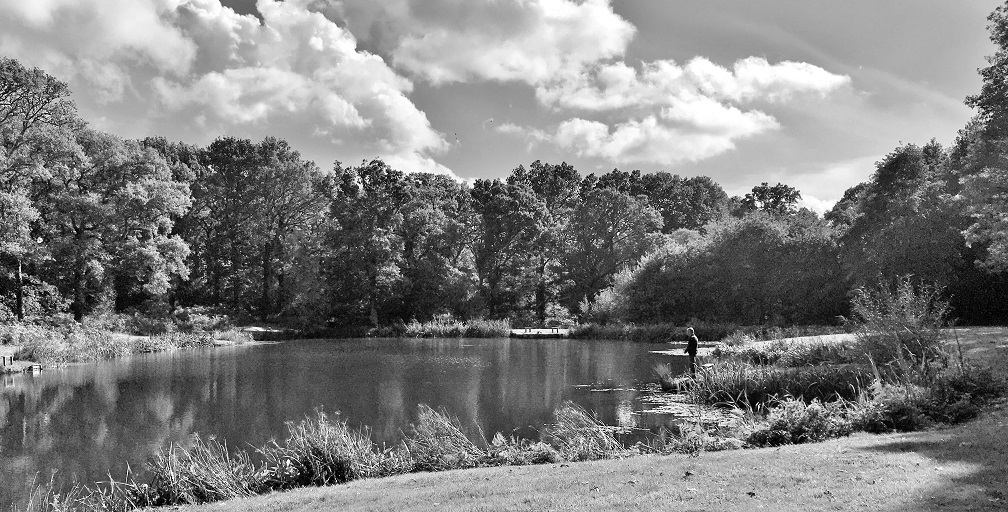
It was a miserable, drizzly morning but by lunch time the weather had changed and a bright, warm afternoon with a gentle breeze summoned me to Petworth. I sat beside the lake, chatted for a couple of hours and saw a few fish but they were not feeding. Petworth was deserted but the river was not. By 3:00pm several members had already visited Rotherbridge. I stood in the middle of the bridge and watched the water flowing gently over the sand. I saw three good Trout under a Willow tree just above the bridge. They were cruising, feeding fish and I decided to focus on them.
I sat on the long, warm dry grass about twenty yards above the bridge and methodically worked the near margin, then explored midstream around the clumps of weed. I was surprised not to get a take and changed the fly to a leaded size 14 GRHE nymph. I extended the line to cover the far bank run anticipating immediate success. Nothing. I assumed that I had spooked the fish and moved upstream resolving to return later.
I flicked the fly under the far bank trees and bushes, letting the leader swing round so that the fly searched under the branches. I became a little frustrated at the lack of response but remained calm, confident that the rod would slam over sooner or later.
As I worked the fly under the far bank there was a big splash about fifty yards downstream. I thought it was a Sea Trout and walked downstream to check it out. I sat behind the rushes and watched as the big fish launched itself into the air twice. It was only twenty feet away and although I was sure it was a Sea Trout, I flicked the nymph into the ripples. On the second cast the fish swirled as I lifted the fly off. On the third cast the fish thumped into the fly and went on a long run downstream. Throughout the battle the fish seemed to grow in size. It was a struggle to land and I had to nurse it for ten minutes before it swam away. Wow, what a fantastic Trout, 4lbs of angry brownie. I didn’t want to continue fishing but another splashy Trout below the bridge distracted me on the way back to the Defender. Only for a couple of minutes.
I leant on the gate and watched the river, sipping a Red Bull and nibbling chocolate. The Rother season continues into October but I would be in Devon and unlikely to visit Petworth again before the end of the season. It was good to end on a high note.













 Sussex Trout Fishing ... and Devon