24 May – Luffs

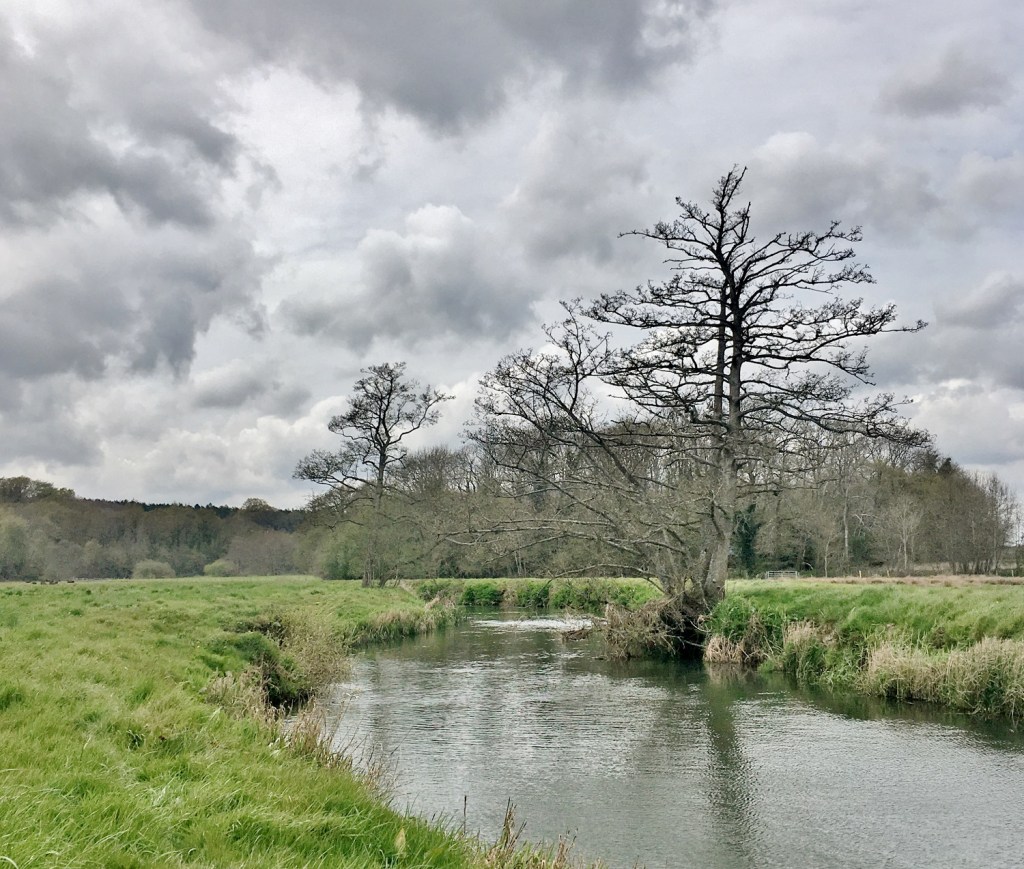
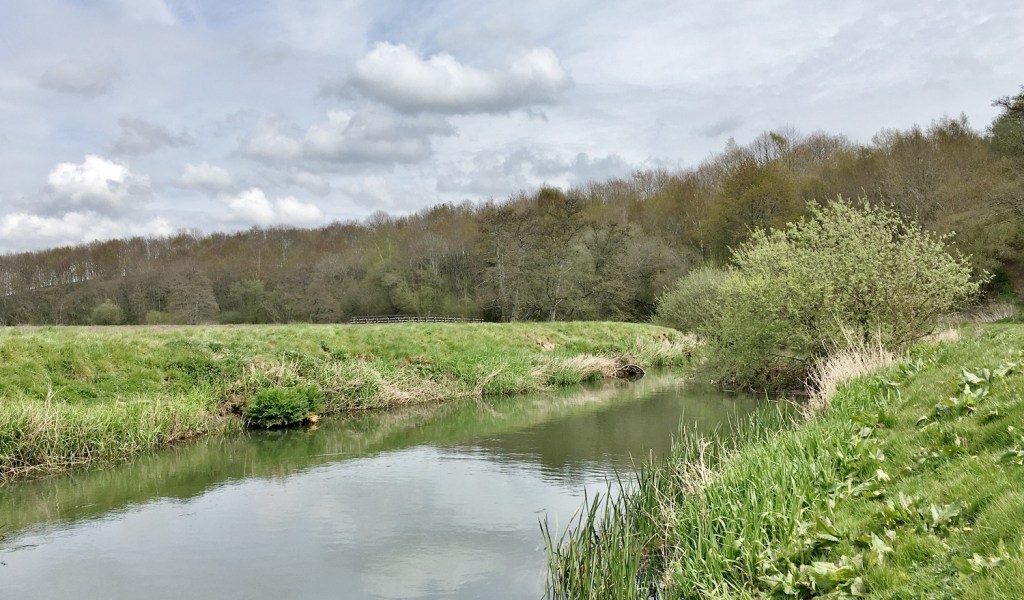
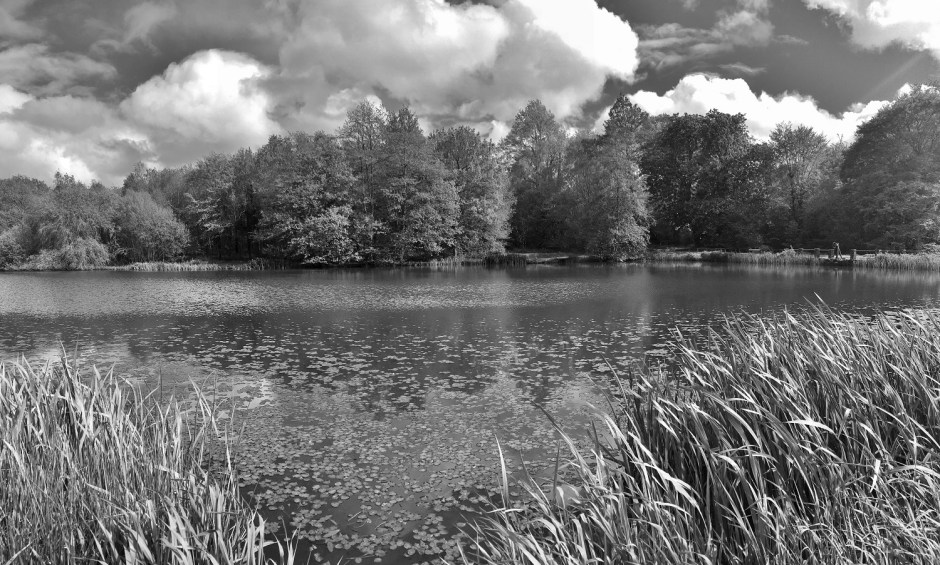
Luffs is an old Estate lake that has been a bit of a challenge for me. I’d lost some monsters there and I’m never confident of catching. Plan B was just a short walk away through the woods but I resolved to persevere with Luffs.

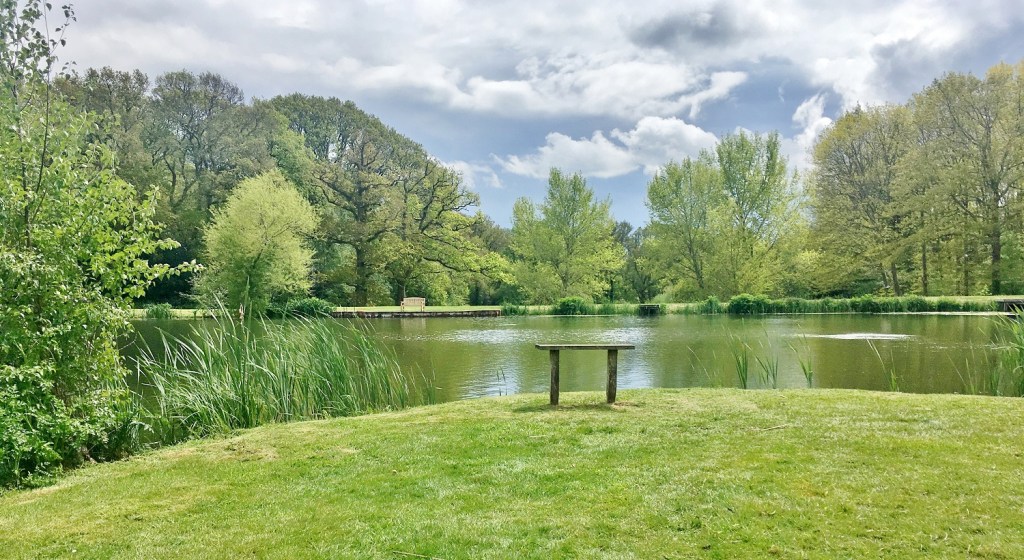
The weather forecast was for showers all afternoon but heavy rain at 7:00pm, it would be another Barbour day. The lake looked lovely, from the north bank I could see fish rising down the centre of the lake and in the margins along the south side. The west wind blew from the dam straight down the lake, easy casting. There were no flies hatching and very few birds feeding which I though was strange. I started with a Mayfly nymph, exploring the deep water along the dam but had no takes. I swapped to a weighted, dark GRHE but although it looked very realistic, I thought it was too dark to be seen easily in the depths. I changed to a paler fly but that was ignored. I could see dark shadows passing about two feet down so I changed to an unweighted fly. Nothing.
The sun broke through the clouds and the wind dropped, suddenly there were fish swirling everywhere but I couldn’t see anything hatching, very odd. I dropped a size 14 Partridge hackled nymph close to a rising fish, there was a tremendous wrench on the rod and the hook straightened. I’d chosen a stronger Stroft GTM tippet but the hook was too fine, I felt that my Luff’s gremlins had struck again. It was a good fish. I walked around the lake and cast to a fish rising close to a Willow tree but it disappeared. I wanted to continue up the lake towards the shallows but the Trout started to rise along the dam so I returned. After several fly changes I connected with a fish and was relieved to see it cross the front of the landing net. It fought hard and took a while to revive, the rising fish had departed.
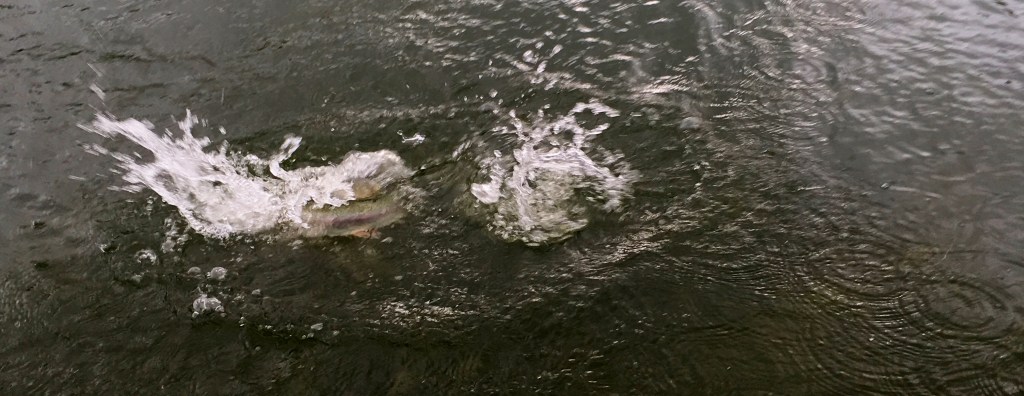
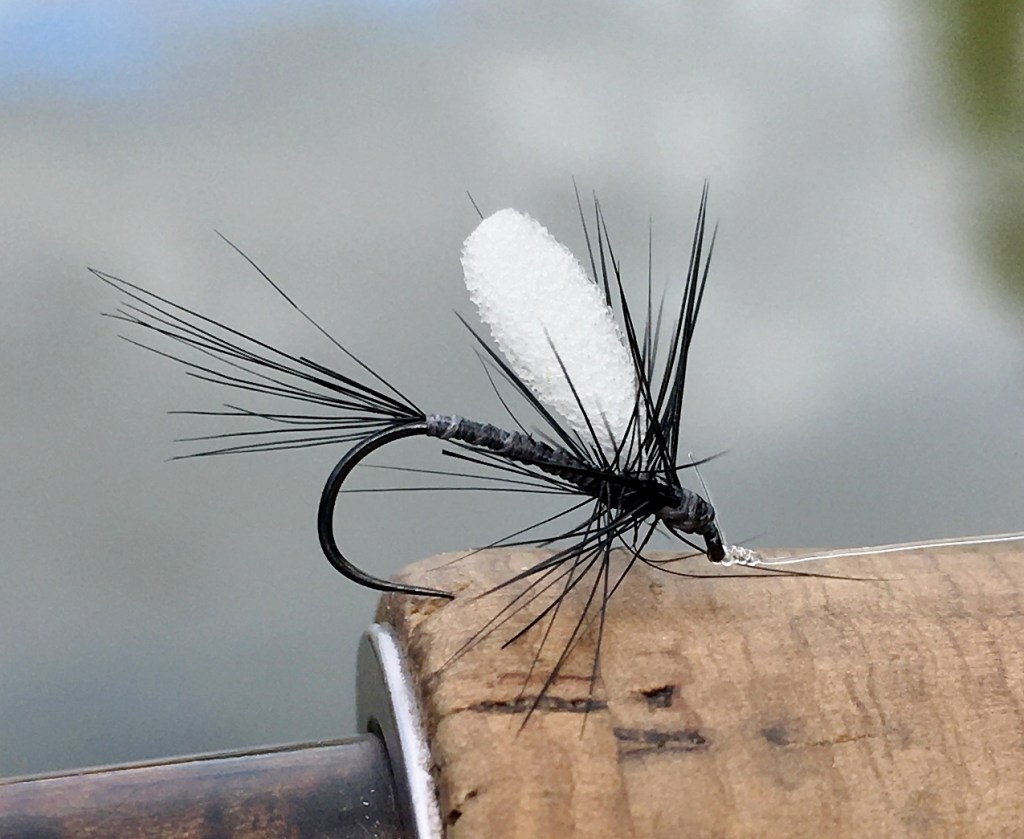
I walked back to the car and was about to leave when the wind died, the sun shone and the Trout started to feed again. I watched the water but I couldn’t see anything on the surface. I thought the fish were probably taking buzzers as they emerged. I tied on a size 14 black fly with a white ethafoam wing which would float for ages. First cast to a rising fish produced a confident head-and-tail take and another fish in the landing net.

A few minutes later I anticipated the rise of a Trout on my left and dropped the fly into undisturbed water. As soon as the fly touched down a fish rose and took with a gulp. My premonition had been rewarded. It might have been experience, sixth sense or water craft. A fish had been rising in that area all afternoon and subconscious recall had kicked in.

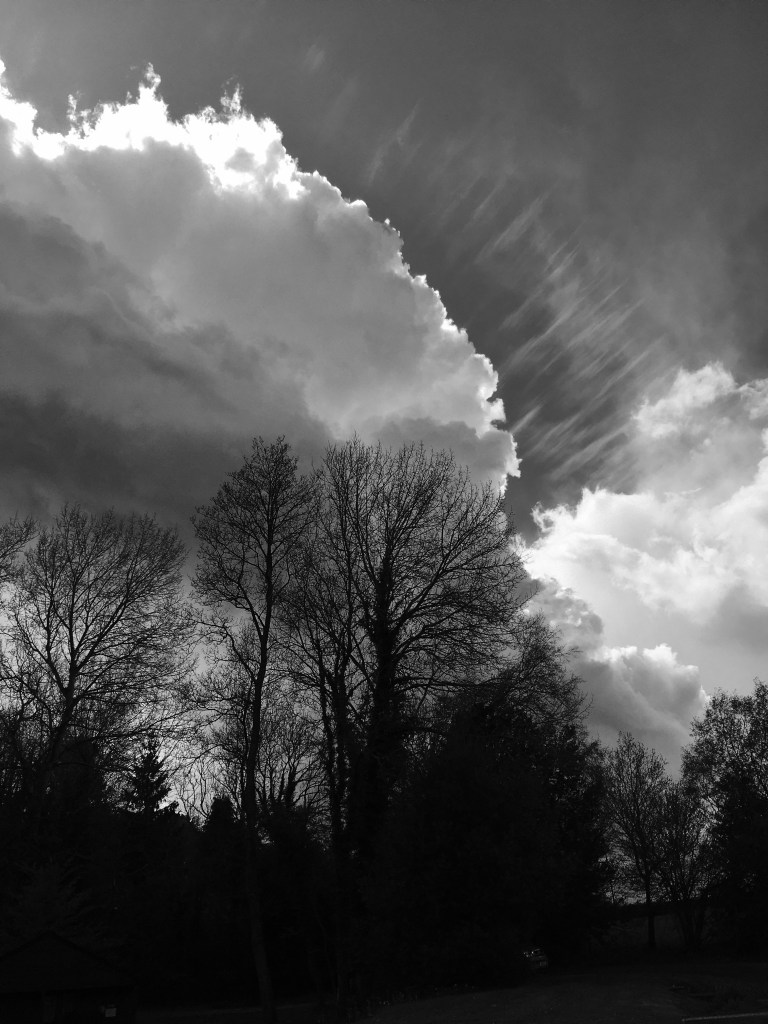
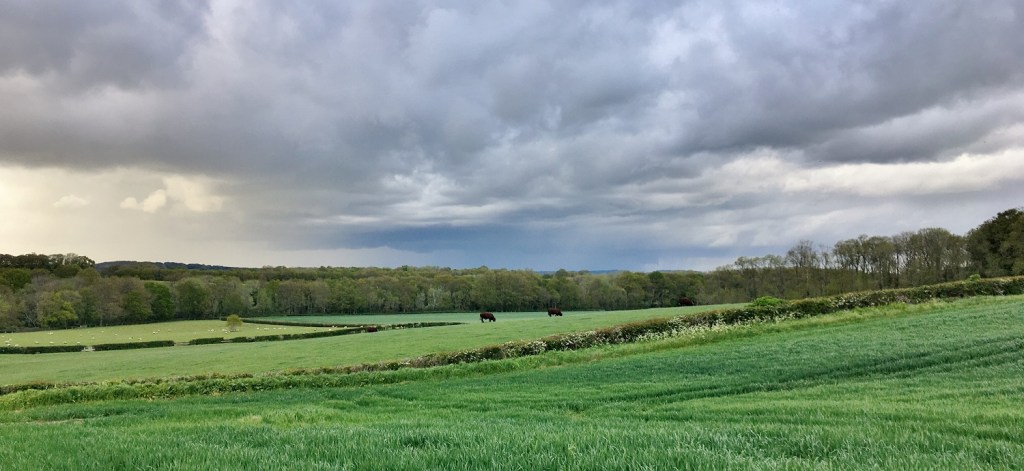
It was 6:30pm and dark clouds were gathering to the west, I could see a violent storm approaching. Great sheets of rain were slanting down several miles away over the Rother valley, it was a good time to leave. I drove home in hail and sleet, very slowly along the country lanes. A generous glass of Lagavulin in a comfy chair was a perfect end to the day. The Luff’s gremlins had been banished.

22 May – Mayfly

Fishing on Friday was a non-starter, gale force winds bent the trees into an alarming angle and it would have been impossible to get a line in the water. I don’t normally fish at weekends but the Mayfly were hatching in clouds and the weather was perfect. I collected the landing net that I’d left at Keepers Bridge weeks earlier, confident I would need it to safely land an angry rainbow or two.

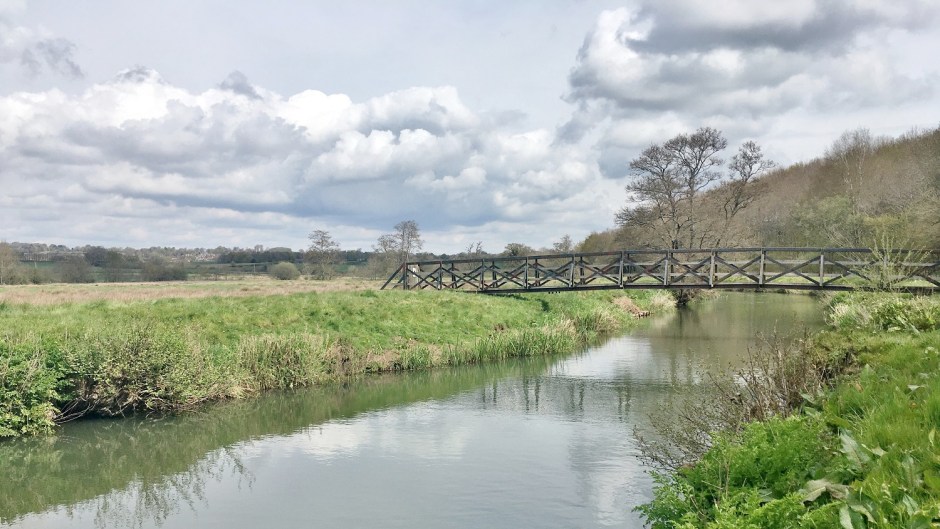
The lakes looked immaculate and the cloudscape completed a perfect picture. The marginal rushes were waist high and a slight breeze ruffled the surface making it easier for the Mayfly to escape the surface tension. Mayfly were blown across the lake by the westerly breeze, Olives hatched occasionally and Alder flies were everywhere. The sky above Great Springs was filled with swallows and wagtails. A swift wooshed past me as I sat on the bench. With a click of its beak it plucked a newly emerged Mayfly from the sky. The Mayfly’s life span had been about ten seconds.

Trout were swirling on the surface all over the lake, not splashy rises for adult flies but sub-surface turns and flashes that indicated a feast of ascending nymphs. I started with a Mayfly Nymph but it sunk too quickly and was ignored. I swapped to an emerger and that got some attention but was rejected. The fly was too big and the tippet too visible. I chose a size 12 Partridge hackled nymph which hung sub-surface concealing the tippet. It was soon grabbed and the initial run of the fish nearly emptied my reel. The fish battled long and hard and was in fin perfect condition. It weighed about 3lbs and I released it from the landing net without handling it.

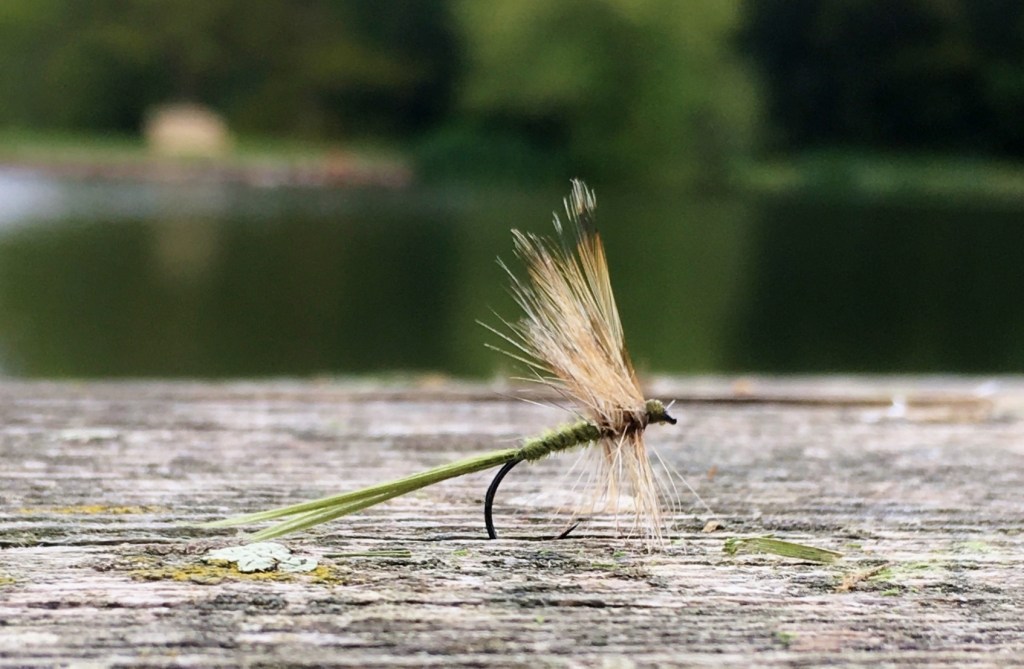
The sun broke through the clouds and the Mayfly stated to hatch from the margins infront of me, the fish were feeding within a couple of rod lengths. I knelt behind the rushes on the soggy grass and flicked the nymph out but the Trout had switched to adult flies. The simple olive green Mayfly, that I had designed last year for the river, was eagerly taken by a cruising Trout which was the twin of my first fish. I was using a 5lb tippet and bent the rod into a circle but it was a long time before the bar of silver slid into the landing net.

A third fish was not so energetic and had probably been caught and released earlier. I have a self imposed limit of four fish which I rarely exceed. After four fish I feel that I have had a good day and that more would be greedy. Besides, I get tired after a couple of hours. My attention wandered as I looked for photo opportunities and although I hooked a couple of fish they soon wriggled free of the barbless hook.

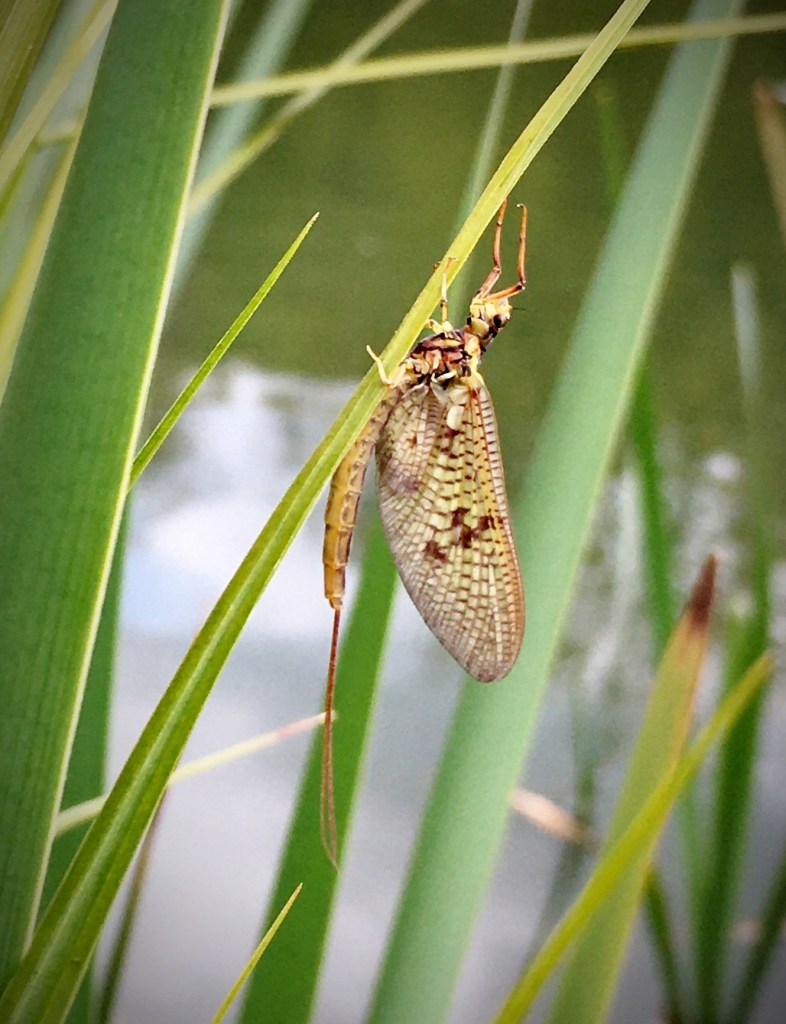
A brief shower was not enough to drive me to the shelter of the hut. I sat on the bench in the rain watching the flies hatching and the birds whizzing about. I found some Mayfly spinners in the marginal weeds and watched as a Mayfly broke free from its shuck and fluttered into the sky.

I could have stayed longer but it had been a perfect afternoon and the Mayfly would still be hatching next week. The weather during May had been wet and windy, not so nice for the two Bank Holidays but ideal for fishing. The water temperature had stayed low and the fish had not suffered, the prospects looked good.

13 May – Photo Shoot

Modelling is not normally part of my fishing trips. Our catwalk would follow the edge of the wood and the backdrop would be the towering pine trees high above the river on the valley sides. The weather would keep dog walkers, stone throwers and the paparazzi away from the Tavy. Heavy rain was forecast for dusk but I could fish and pose for a couple of hours before then. The soft drizzle wafted down from a pale grey overcast, perfect for fishing but tricky for the photographer. I was ready to go long before our appointed meeting, full of enthusiasm and confidence.

Several days earlier the Defender had rumbled along the minor roads westward and squeezed into its new home, my garage behind the cottage in Devon. I chose a low gear and let the old truck find its own way down the steep, rocky track to the valley floor, it looked at home among the primeval woodland. I was confident that we could climb back up the track. If the Land Rover electrickery behaved itself.

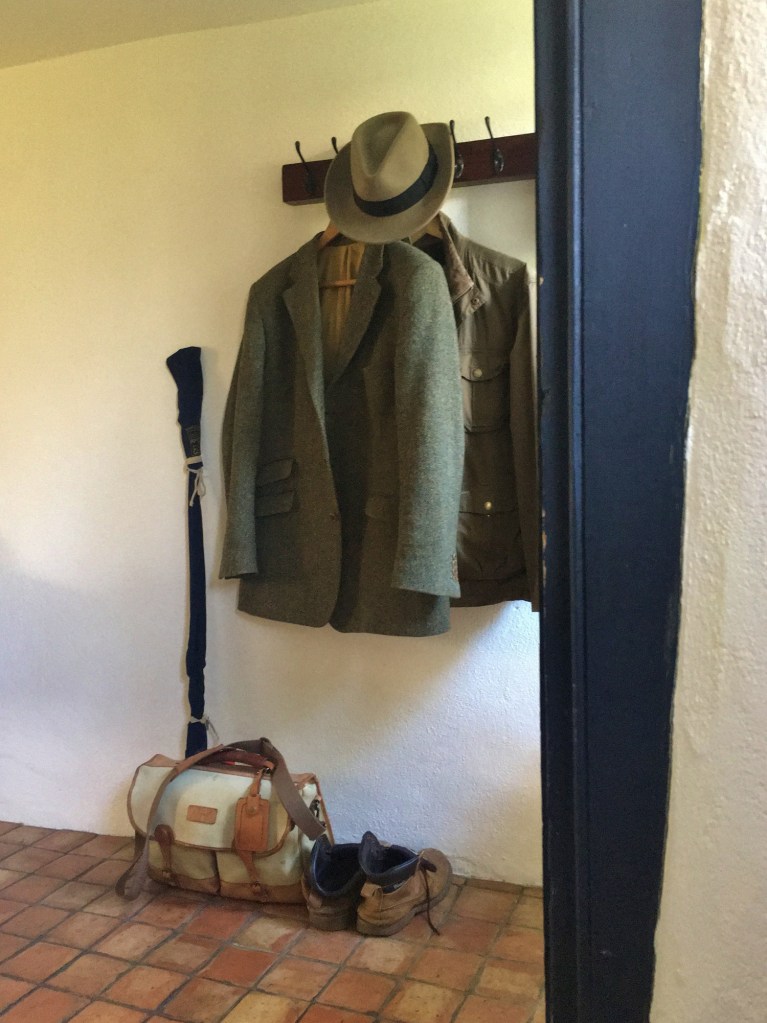
The scenery was stunning. We both felt privileged to be in such an unspoilt environment. The deep sides of the valley and the tall trees sheltered us from the gentle breeze. It was silent, warm and overcast, perfect. The soft rain was barely noticeable but I wore my lucky hat anyway. I also found a few toffees in the bottom of my bag, it was a sign from Izaac that everything was well.

The river was dropping after heavy rain. The crests of the broken water were pale cream and the deep water, the colour of Fuller’s London Pride. The river rushed past ferociously but there were plenty of slacks and back eddies to explore.

The fast coloured water was not the place for a nymph. I chose a traditional fly, the Teal, Blue and Silver tied on a small, long-shank hook. I started near the top of the Beat and swung the fly through the slack water behind a big rock. My first cast produced a heavy take and the rod bucked as a green plastic bag fought to escape. Great rod bending material for the camera. I’d underestimated the current, down and across lasted about five seconds. I moved upstream to a wide riffle that looked like a kayak slalom course. After a few casts I moved downstream and found a long deep run under the near bank. I got into a rhythm; cast, mend, hang and take a step. I was hopeful of a take and enjoyed searching a seam only a couple of rod lengths out. I was oblivious of the long lens recording events.

I had saved the best pool until dusk, the light was failing as I crept out to the end of a rock pier. I had a hundred yards of deep, slow moving water with the main current running along the far bank. I rolled the fly into the current and let the line stream out. I retrieved the fly slowly allowing it to sink into the slack. Every cast I extended the line and worked the fly further into the pool.

A good take made me laugh nervously. I’d hooked a fish for the camera, excellent. I preyed the fish would stick and cautioned against premature celebrations. Inevitably as the Trout came to hand it got smaller. It was a beautiful fish which showed signs of migration, the lack of colour and dark fins suggested a Sea Trout smolt. It was a plump fish which was keen to get back on it’s journey to Plymouth Sound. It was a good time to leave, we were both in good spirits having achieved our respective goals and the Defender fired up at the first turn of the key.

5 May – Great Springs

The river level had risen after the Bank Holiday rain and I wanted to see if the Mayfly were hatching at Little Springs. I hoped to have the lakes to myself but I was surprised at the number of members around the fishing hut. A rod was bending and spirits were high, surely I could christen Southwell IV with a Trout on a Mayfly. I checked the long grass between the lakes but I couldn’t see any sign of life except a solitary crane fly. The trees were not in leaf, the buds were very small. A number of Trout were rising but it was not clear why.

I felt very confident that I would catch a few fish and loaded Southwell IV with the little Hardy Marquis and the new Rio line. Long distance casting would not be necessary, a stealthy approach was needed. The wind was blustery and constantly changing direction. I sat on the bench on the point at Great Springs which gave me an all round view of the rises and helped casting. The wind was generally from the north west and it was cold. The plan was to drift a weighted nymph across the wind and watch the tip of the line. Arthur Cove style.

After twenty minutes intense concentration the line dragged and I lifted carefully into a fish that didn’t realise it was hooked. The Trout woke up and went on a near thirty yard slanting run across the lake. I knew it was close to thirty yards because there was only a couple of turns of fly line left on the reel. It was a blue Trout and fought hard but the hook pinged out as it approached the net. Probably foul hooked, hence the angled run. Nevermind, there were plenty of fish rising.

I changed the GRHE for a longer pattern which looked more like a Mayfly nymph. As the line blew into a gentle curve on my left, I thought something looked odd and lifted the rod slowly. The fish flashed, tightened the line and was gone. I was pleased that the tactics were working but the Southwell jinx nagged me.

I moved to the main bank but the rain drove me back to the hut. The rain eased and I started casting a dry Mayfly, with an extended body, at rising fish. A Trout gulped the fly down and I missed. I lifted too soon. I searched the west side of the lake but grew cold and as the rain got heavier, I decided to call it a day.

Although I hadn’t landed a Trout I had spent an enjoyable afternoon chasing Mayfly and taking their portrait. Actually, I’d spent the majority of the time paddling in the margins and laying flat over the water. The cover image of the female dun made the trip a success.

3 May – Keepers Bridge

Gales and torrential rain were forecast for Bank Holiday Monday evening and the river would be unfishable for the rest of the week. I planned to fish before the bad weather arrived. I’d rescued the Defender from storage in the barn but it was full of precious things ready for the journey West and therefore remained at home. I knew where to fish, the pools from Keeper’s Bridge to the New Riffle would give me a chance of a Trout whatever the wind direction.

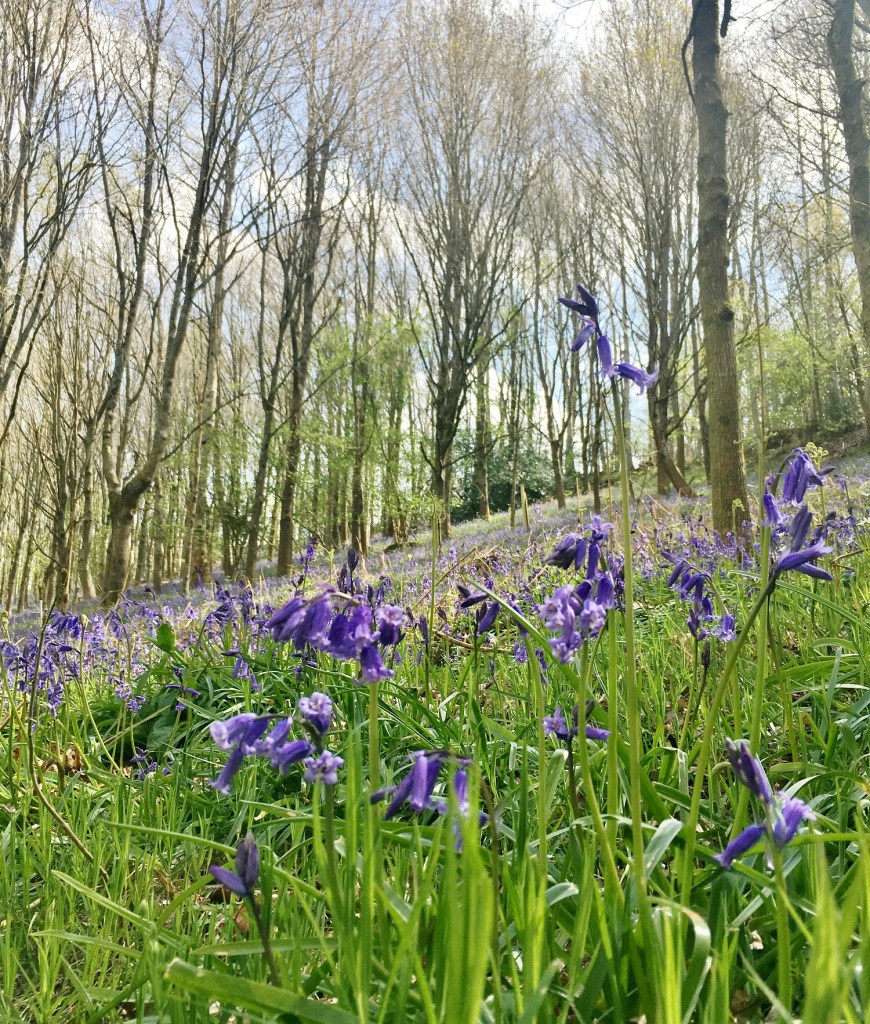
The bluebells in the wood beside the river were past their best but the white buds of the wild garlic were just starting to open and soon the whole valley would smell like an Italian kitchen. At Keeper’s Bridge the breeze was downstream. An Alder tree had fallen across the river and provided excellent cover for the fish. The bright sunshine was behind me and I crawled into place on the damp grass. Southwell IV and the Rio Small Stream line were a perfect match. The main body of the line suited the width of the river and the long rod enabled a roll cast to the far bank. I fished hard for twenty minutes with a weighted nymph, anticipating a thump on the split cane at any moment. I was surprised and slightly puzzled not to get a take and moved a few yards downstream.

The streamer weed waved in the current a couple of feet under the surface and I flicked the nymph into the end of the fronds. A golden flash deep down resulted in a brief contact, I had lifted the rod too quickly and messed up the first take. Again. I wondered if the rod was jinxed.

The wind got stronger as I worked my way downstream. The river had been purged by the winter floods but some of the old fish holding features were still there. The New Riffle looked perfect but the fast water and downstream wind whipped the fly round too quickly.

I had a few casts in each pool on the way back upstream but the wind made it difficult to get a line out. In the shelter of the old railway embankment and tall trees, I settled down beside the First Pool to explore the long weedbed along the near bank. After a few minutes a fish rose under the nymph and as it took, I lifted the rod. Too soon. Again. I was a bit miffed. Moreover, I had run out of toffees.

Dark clouds and gale force, blustery winds signalled the end of fishing. I pondered on my amateurish attempts to catch a fish all the way home. I had been too keen to christen my new rod and rusty at the start of a long season. Things would improve.