Autumn

Monday 22 September

The wet and windy weather ended only a few days before the close of the Devon trout season. I planned to fish most days of the final week. The autumn equinox dawned with a frost and a bright clear sky. I was drawn to the River Tavy and by chance, it was my day on the rota for the Middle Beat.

I left the cottage at lunch time and was relieved to see that the water level was up only a couple of inches. There were a few leaves tumbling downstream, not enough to cause problems, just the occasional false alarm as the rod began to bend.

I started at the top of the beat and planned to fish the seams between the back eddies and the main current. I swapped a small nymph, then an unweighted fry imitation, for a heavy copper bodied nymph. I covered the deep runs and gaps between the rocks with no response. The next pool down usually produces a trout and true to form, as the fly drifted deep into the slack behind a boulder, the line tightened and a good fish splashed into the fast water. It splashed itself off the hook.

I walked downstream past Dawson’s rock, to a stretch of river I had never fished. The river looked beautiful, like an enormous, empty fish tank. I wandered back up the side of the valley, stopping frequently to rest and admire the view, disturbing recently released pheasants.

Tuesday 23 September

It was another typical autumn morning. I decided to fish the River Plym, jungle fishing at its best, a stark contrast to the Tavy. The long rod helped me roll cast from the hand and bow-and-arrow cast when the branches were really low. Only a couple of pools allowed an overhead cast. Rays of sunlight penetrated the tree cover, highlighting the deep pots and fissures in the bedrock. The water was clean and flowing swiftly. Each step bought back memories of trout hooked and lost. I was keen to fish from the drainage ditch above a boulder where I had caught a nice fish last season. Alas, a holly tree had been felled across the pool and the boulder had been washed downstream twenty yards by the winter spates. It had been another beautiful day beside the river without a trout, the dappled light and the sound of the river were sufficient.

Wednesday 24 September

I wanted to catch a trout to restore my confidence and motivate me for the difficult days on the rivers. Burrator had been kind to me earlier in the season and I hoped that an evening there would be productive. I hooked and landed a very nice trout first cast ! I felt the hook hold jerk, then the line screamed off the reel several times, sure sign of a foul hooked fish. It was about two pounds and hooked in the shoulder. I also caught a nice fish second cast. Pods of fish were cruising parallel to the shore, feeding on buzzers. I stalked them with a dry pheasant tail, the same pattern that I used last time. The fly starts dry, then settles a little to become an emerger and finally sinks. Most fish take within seconds of the fly landing if I position it correctly. I had to change fly after every fish and re-grease the leader. I drove home and celebrated with chocolate cake and tea.

Thursday 25 September

I decided to fish the Abbey Beat on the River Tavy rather than the Tamar. The tree cover on the Abbey Beat would provide shade on a bright sunny morning. The Tamar is quite open and would wait for a cloudy day. The faulty padlock guarding the beat frustrated me but I’d calmed down by the time the Defender clattered to a halt. The complete silence in the woods was spooky, no bird song, no wind in the tree tops, no spaniels or walkers.

The water had a slightly green tint and flowed swiftly over the stony river bed. I clambered down to the waters edge and worked a heavy fly through the nearside run without response. A big pool about the size of a tennis court looked inviting but it also refused to give up a trout. I walked downstream looking for fish but saw nothing except a dipper working under water. I became confused on the walk back and took the wrong track. Hot and tired, I decided to stop at the pub for a pint and lunch.

Friday 26 September

The Tamar was slightly above normal level and the water was cloudy. The descent to the first croy was too dangerous, no phone signal and a near vertical drop were not good odds. The top croy looked good. Trout were rising, snatching water boatman off the surface upstream of the rocks. I rose four, hooked and lost one. I turned to face downstream and ran a copper nymph down the main flow, then across into the back eddy and the slack. Nothing. I stopped at the Blacksmiths Arms at Lamerton for a pint and a pie, post fishing lunch could become a habit.

Monday 29 September

I couldn’t resist another visit to Burrator. I felt a bit guilty about fishing there, not on one of the rivers, because I can continue to fish at the reservoir until the end of December. Not guilty enough to stop me going. I started at tea time, the gentle breeze from the south west helped me drift a dry fly towards rising fish but it was awkward casting over my left shoulder.

My first fish was about 2lb, it was foul hooked, a repeat of my last visit, spooky. I caught a second trout a few minutes later, the fight was long and hard in the deep water. I wandered down the sandy beach keeping pace with the drifting line. The wind dropped and midges hatched, the rise lasted about thirty minutes. Numerous fish inspected my flies but didn’t take, I needed a buzzer imitation but I’d left that box of flies at home. When leaving the sandy beach, I fell over the old stone retaining wall and landed on rocks but a glass of wine at the cottage soothed the pain.

The sunset was spectacular, a fitting end to my Devon season.

Sussex in September

It had been a dry summer, four heatwaves, each nearing thirty degrees, the hottest summer on record. During August I had waited in vain for rain to freshen the Dartmoor rivers. During my five hour drive to Sussex, it rained all the way. Typically bad timing. The heavy rain caused flash floods which devastated Mousehole and Rame. The farm lake had been dug and puddles of water lay on the clay but it would take many months to fill.

I arrived at Rotherbridge in time for a few hours fishing before the forecast heavy rain at 4:00pm. The water was coloured grey-green by road run-off and that part of the beat had already been heavily fished so I walked briskly to Keepers Bridge and fished a couple of places that I knew would hold trout. The near gale force, downstream, blustery wind made casting difficult. I was rewarded with one nip and a swirl. Eventually, the rain drove me back downstream and I had a few casts near the bridge before retreating to the car. More rain was forecast overnight.

The following day I got to the beat early. The river level hadn’t risen and the wind was manageable. I started with a black spider which was followed a couple of times but the fish swerved away at the last moment. I changed to a heavy copper pattern which resembles a minnow and immediately contacted a nice trout. It was about 2lbs and keen to get out of the landing net. I moved downstream a few yards and retrieved the fly faster than I usually do. The second trout grabbed the fly and headed for the bridge, it nearly got there, I only had a couple of feet of fly line left on the reel. No backing. It was over 2lbs and in good condition. I found another, slightly smaller fish on a sandy bottom near an overhanging alder. The wind got up and rain threatened, three trout was sufficient. I made a short visit to Little Bognor but I couldn’t concentrate and left after an hour.

It rained heavily all week and by Friday the puddles in the new lake at the farm had linked up enough to show the lakes eventual shape. Three boys called on Friday and asked if I would take them carp fishing. My cup of tea was immediately abandoned. Strong tackle and a suitable landing net were quickly assembled. We talked about monsters as we walked across the field. The red tipped float soon slid away and the fish put an alarming bend in the Chapman 500. It was a good fish, line was given. Two more carp, one for each junior member of the gang, were landed before it was tea time. It was an uplifting result. The boys were happy, memories had been made.

The lakes looked beautiful but the water temperature was nearly twenty degrees, too hot for trout. The river was high and muddy, Little Bognor was the obvious choice, the springs cool the water and the mature trees provide shelter from the wind. Fish were cruising around, sipping down buzzers trapped in the surface film. I tied on a tatty parachute pheasant tail which several fish rightly rejected. Hooking a tree required a new fly, a pristine, unused example which should have been my first choice. I crept along the bank, under the tree canopy and flicked the fly ten feet from the bank. It was immediately gulped down and after landing a few waterlogged branches, it was the turn of the trout.

I moved to open water and cast to fish moving down the centre of the lake. I was distracted, my instincts nagged me to cast to the left, no fish rose but a sixth sense told me there was a trout on my left. Eventually, I followed my instincts, the fly was taken within seconds of landing. How does that happen ? Did I register a sign subconsciously ? Was it a fluke ? Experience ? I don’t know but that magical moment was a sign to stop fishing and have some chocolate.

. . . – – – . . .

.

August – A Dry Month

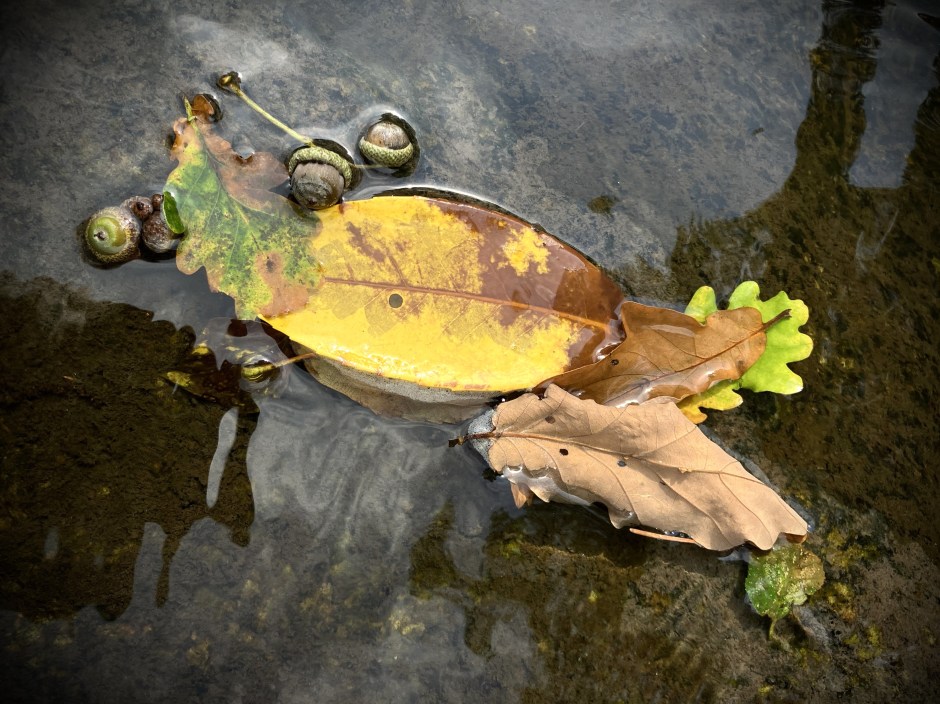
The grass hadn’t grown, the trees were stressed and were shedding leaves. It felt like early autumn. In the full glare of the morning sun it was warm, a cool north east wind ruffled the surface of the river. Nothing hatched. The crystal clear water and bright sunshine revealed every stone and crevice in the bed rock even in the deepest pools. The trout had nowhere to hide. There were acorns the size of garden peas trapped in the back eddies.

A king fisher whizzed upstream followed by a young dipper. Pairs of wagtails flitted from rock to rock and buzzards circled over the tree tops like vultures. As I searched the beach for a rock to sit on, a heron saw me and disappeared around a bend in the river.

I set up my rod away from the waters edge, all the time looking for a rise. As usual the plan was to explore the deep water with a weighted nymph. I spent nearly an hour concentrating on my wind assisted casts, using the long rod to mend the line and hold the fly in midstream. I mapped the pools features as I moved slowly downstream. At the tail of the pool I turned over a few rocks looking for bugs, there were none.

I walked downstream, scattering recently released pheasant poults, wondering if prospecting with a nymph was the right method, if I should have waited until dusk and if the trout had all been eaten by cormorants.

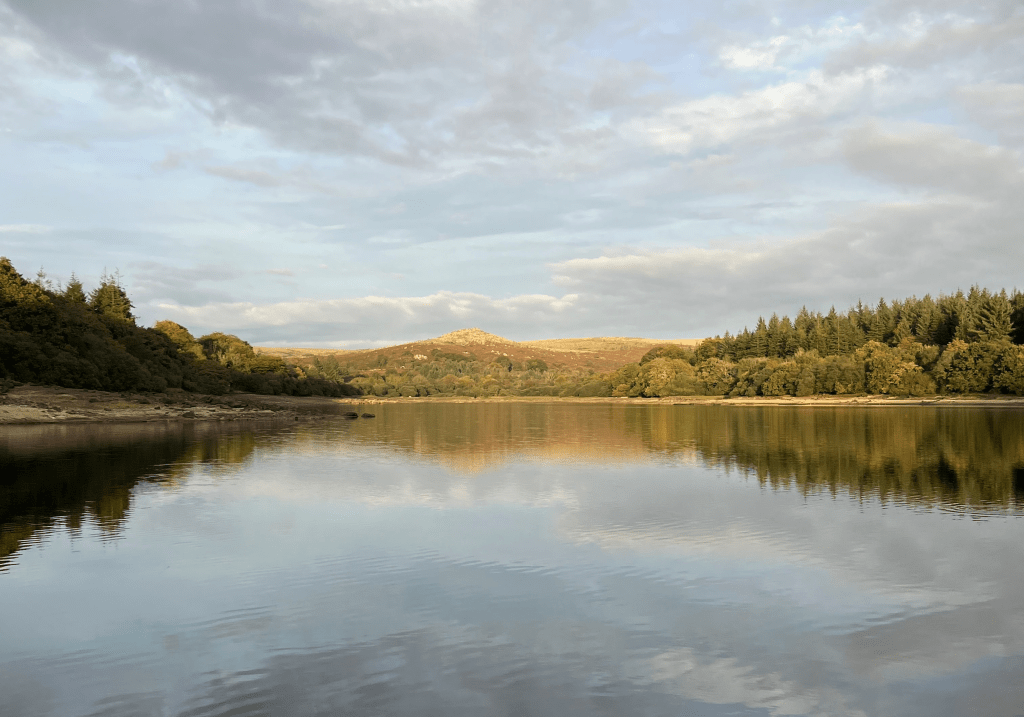
After several trips to the rivers on Dartmoor without catching a trout, I needed a boost in confidence. Burrator reservoir was low and my favourite stretch of bank would be accessible. I was surprised at how low the water level had dropped.

I stood back from the water line and covered the deep drop-off with a weighted nymph. The take took me by surprise, the line twitched and started to slide away. I lifted into a trout which put up a spirited fight and I eventually slipped the barbless hook from it’s top lip without touching the fish. Success. Relief.

The wind eased and the trout began to rise. I switched to a dry fly, a parachute pheasant tail sat nicely on the surface and was soon taken. I was looking elsewhere. I concentrated and landed two more trout. The fish were cruising just under the surface, moving in straight lines, sipping down buzzers, the bay was full of empty shucks. I swapped the fly for a Quality Street sedge and waited for a trout to come into range.

Stalking passing trout, landing the fly a couple of yards along their path, produced three more fish, one of which revealed the curly section of the fly line near the reel arbour.

I was very satisfied with six fish in three hours and celebrated with a pint and a bowl of chips at the pub. Confidence had been restored.

. . . – – – . . .

River Tavy

It rained throughout the drive back to Devon. It was wet enough to discourage the mid-week drivers but not enough to fill the rivers. Dartmoor soaked up every drop of rain.

After five years of ownership I still hadn’t figured out how to tune the Volvo radio and I couldn’t be bothered to change the CD. I lapsed into zombie-driving mode. My mind wandered. Which river should I fish, which beat ? The lower beat on the Tavy was calling and the rota assigned it to me the following day. I took that as a sign.

I left the cottage after lunch, the old Defender started on the first attempt and on the way to the river, a young girl smiled and pointed it out to her Dad. I returned her smile. The beat was deserted and the river looked perfect. I was quietly confident that I would catch a trout or two.

After flicking a nymph into a tree I settled into a rhythm and from the top of the beat, I worked all the usual pools and riffles downstream. The prolonged hot weather had stressed the trees which were shedding leaves. The river had just enough ash and hazel leaves tumbling around to make life difficult. The back eddies and slacks were unfishable, it’s amazing how easy it is to hook a leaf !

A few small trout were rising for midges but none were interested in my dry fly. It was a pleasant walk and the scenery was beautiful. We need prolonged heavy rain.

. . . – – – . . .

Leconfield Weekends – Late July

Three prolonged, thirty-degree heat waves had prevented me from fishing the Devon rivers for over a month. The water temperature had crept up and the water levels had fallen. I walked beside the Tavy which looked beautiful but after twenty minutes the intense heat drove me back to the Defender.

I drove to the farm on Friday, crawling east along the A303 towards Surrey where, according to the Met Office, torrential rain and flash floods were waiting. I passed caravans fleeing from the school summer holiday migration westwards. It rained gently all night, there was no thunder. Rain on Dartmoor flushes through the spate rivers in hours and enhances the fishing but the lowland rivers in the south east, carrying silt and agricultural run-off, overflow into the water meadows and the river levels are slow to fall.

Saturday 19 July – As I approached Petworth I was undecided about where to fish. The North River at Billingshurst had not risen and it was likely that the Rother would be fishable. On impulse, I took a left turn through River Hill and the Magic Woods to Little Bognor. Spring water flowed under the little bridge keeping the water cool. Trout were rising. Rolling over, head and tail rises for buzzers.

The fish were cruising about a foot below the surface picking off buzzers as they ascended and struggled in the surface film. The lake was flat calm and the leaf debris remained stationary. I targeted feeding fish. A new leader, a light tippet and a black neoprene buzzer produced a trout second cast. I saw the white flash of its mouth before slowly lifting the rod. A couple of trout inspected the buzzer but rejected it, time for a change of fly.

I swapped to a dry fly, a black gnat, which hung in the surface film for a few minutes before a passing fish gulped the fly down. I paused before connecting with a slightly better trout. The third fish took a parachute pheasant tail confidently and I delayed tightening the line. Three takes, three fish hooked and three landed. Well above my average success rate. I flicked a fly at a fish cruising beside a lily bed on the upper lake but after a very close inspection, it sunk back into the dark water, unimpressed.

Sunday 20 July – It rained during the night and the North River was up. I spent a couple of hours flicking flies at carp but they were not interested.

Saturday 26 July – Occasional heavy showers during the week caused the Rother to rise a few inches but by Saturday the level had dropped. I hadn’t fished the top beat for a while and I thought there might be a chance of a monster hiding in the streamer weed. It was hot and humid. Thunder clouds rolled slowly over the South Downs and threatened a soaking. I was surprised by the growth of the trees and bankside plants, it was more of a jungle than I remembered.

I waited on the bridge, watching for a rising fish. A small fish rose twice but I had bigger trout in mind. I wandered downstream, casting into difficult pools between trees, dropping a nymph alongside the streamer weeds. I came to a long pool with easy access and sat down close to the waters edge. I cast across the flow, worked the nymph under the bushes and allowed it to drift towards the near bank. Eventually, I felt a tap and wriggle on the rod but I was too busy watching a buzzard and missed the take. After about an hour exploring downstream I returned to the pool but I couldn’t find the trout.

I drove to Keeper’s Bridge and saw a trout rising in the usual place, below an alder tree and just above a clump of streamer weed. It took a parachute pheasant tail second cast. I walked upstream to the sandy pool and saw a fish rise on the top bend. The same fly also tempted that trout. Two small trout were not what I had planned but it had been an enjoyable evening.

Sunday 27 July – It was windy and much cooler than Saturday. I cut through the woods at Fittleworth and anticipated good sport at Little Bognor. Unfortunately there were members already fishing. Never mind, plan B saw me hiding behind the shoulder high ferns beside the willow tree beside the top lake. I was distracted by a rising fish on my left and when my gaze returned to my dry fly, it had disappeared amidst a swirl. I waited in vain for the leader to move. Several changes of fly later, I hooked a small fish close to a weed bed and managed to ease it into the net. When I returned to the car I was pleased to see that the bottom lake was deserted and that the trout were rising. I hooked and landed a good fish. A series of amateurish casts and hooked trees signalled the end of a pleasant day.

. . . – – – . . .