
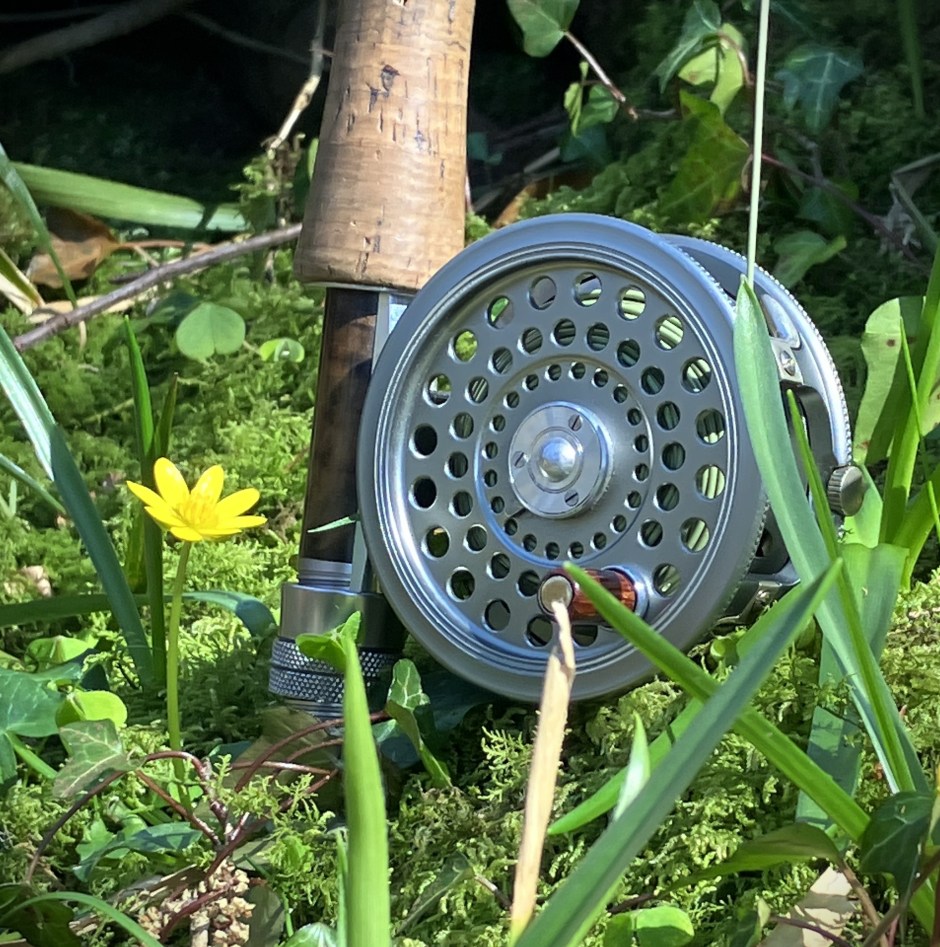
I wanted to visit my favourite beats to admire the Spring scenery and to checkout the changes made to the rivers by the winter spates, a trout would be a bonus.
The Tavy, the Plym and the Walkham are magnificent at this time of year but the water is cold and the trout are not very active. I took a rod with me as justification for my river walks.
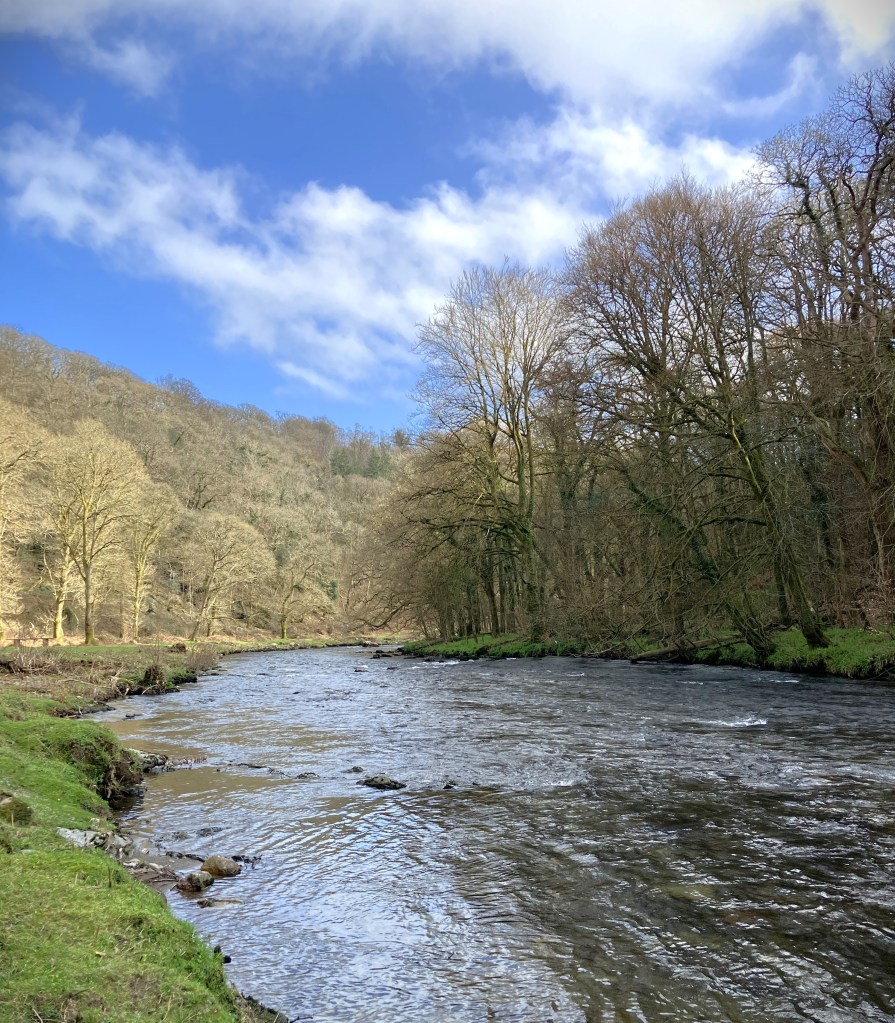
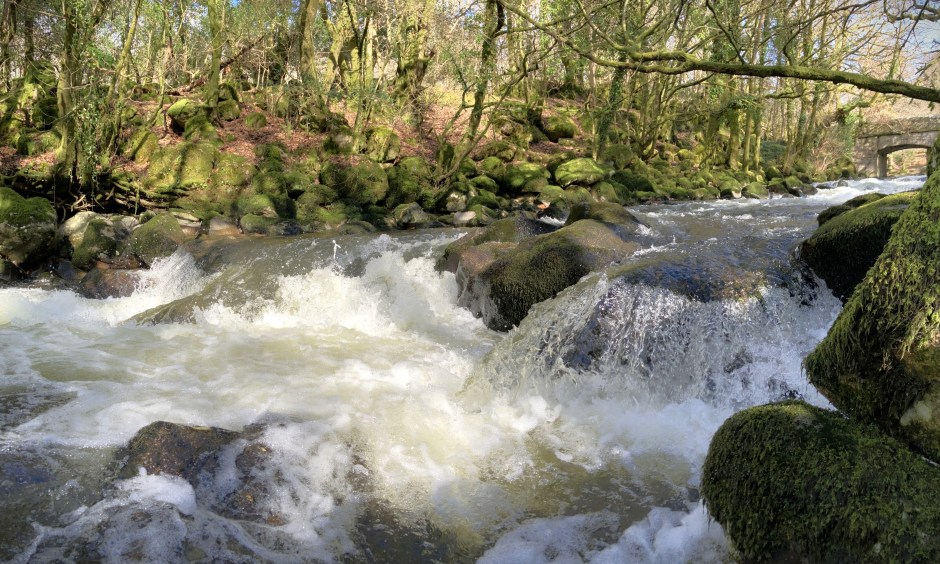
Tuesday – the Tavy Middle Beat looked spectacular and I sat in the sunshine on a rock at the top of the Beat watching the water hurry past. The level was dropping and it was fishable. I ignored my usual box of GRHE nymphs and tied on a small Sweeney Todd left over from reservoir fishing in the mid 1970s.
I worked the pool down and caught a sea trout smolt from the bottom of the pool where the tail water squeezed through a gap. It had an old peck mark on its flank which had healed nicely and I released it, without handling, to continue on its way to Plymouth Sound. I walked downstream and fished a couple of runs but nothing was interested and I spent most of the time taking photos.
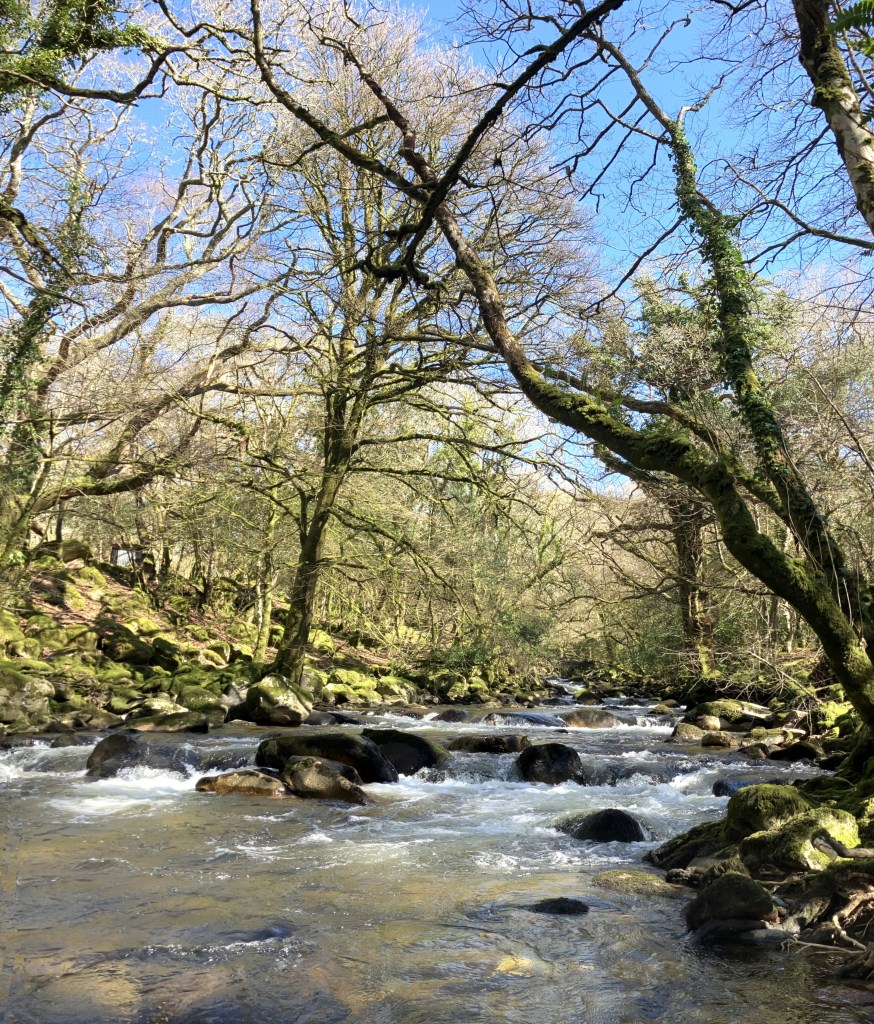
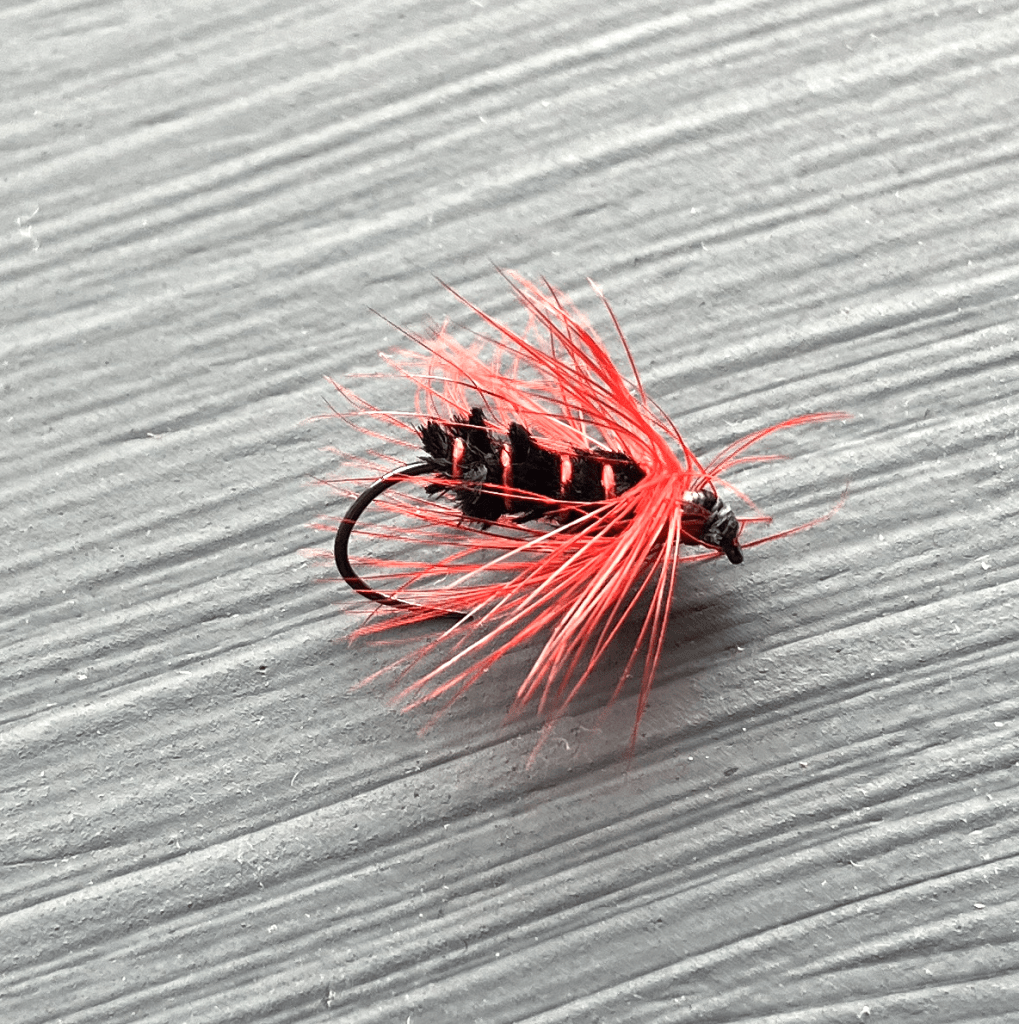
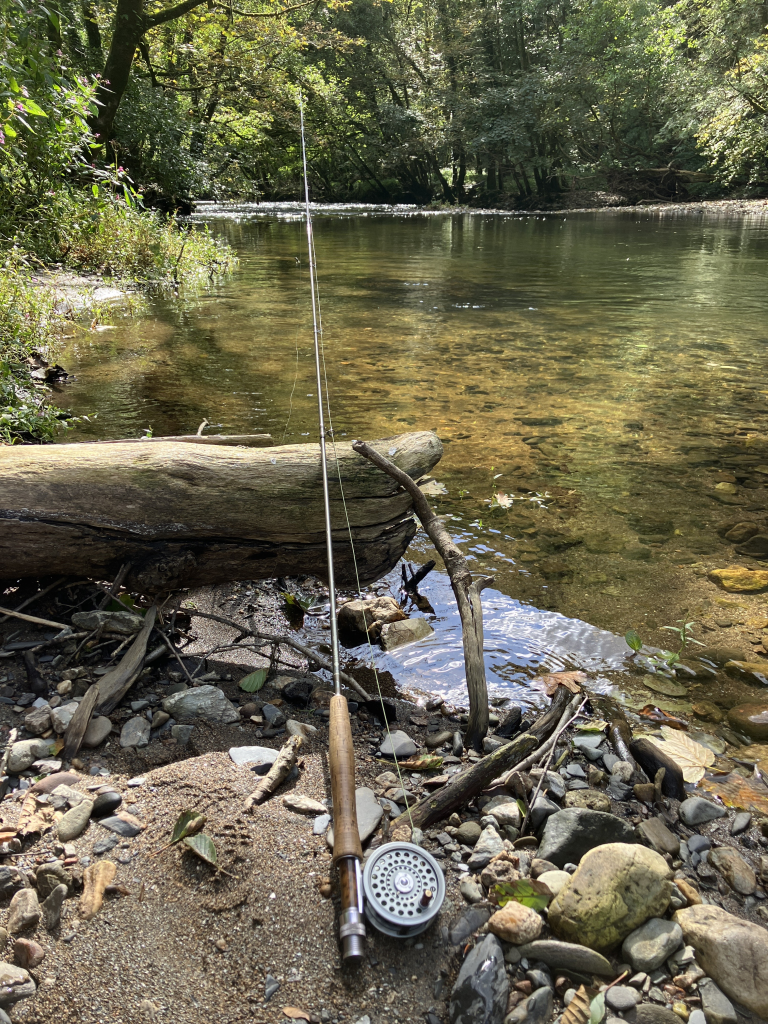
Wednesday – The Plym looked equally magnificent and the sandbanks were pristine, no footprints or paw marks, the Beat had not been visited since the end of last season. It was warm and bright. The water was a bit too high but the riffles were deeper and longer which gave me confidence. I worked a black and red spider through the deep pool under the bridge and was surprised not to get a take. I made my way slowly downstream mesmerised by the water occasionally dipping a nymph into the slack water. I ended my walk without a fish but I was happy to spend half an hour sitting on a rock beside the river watching for signs.
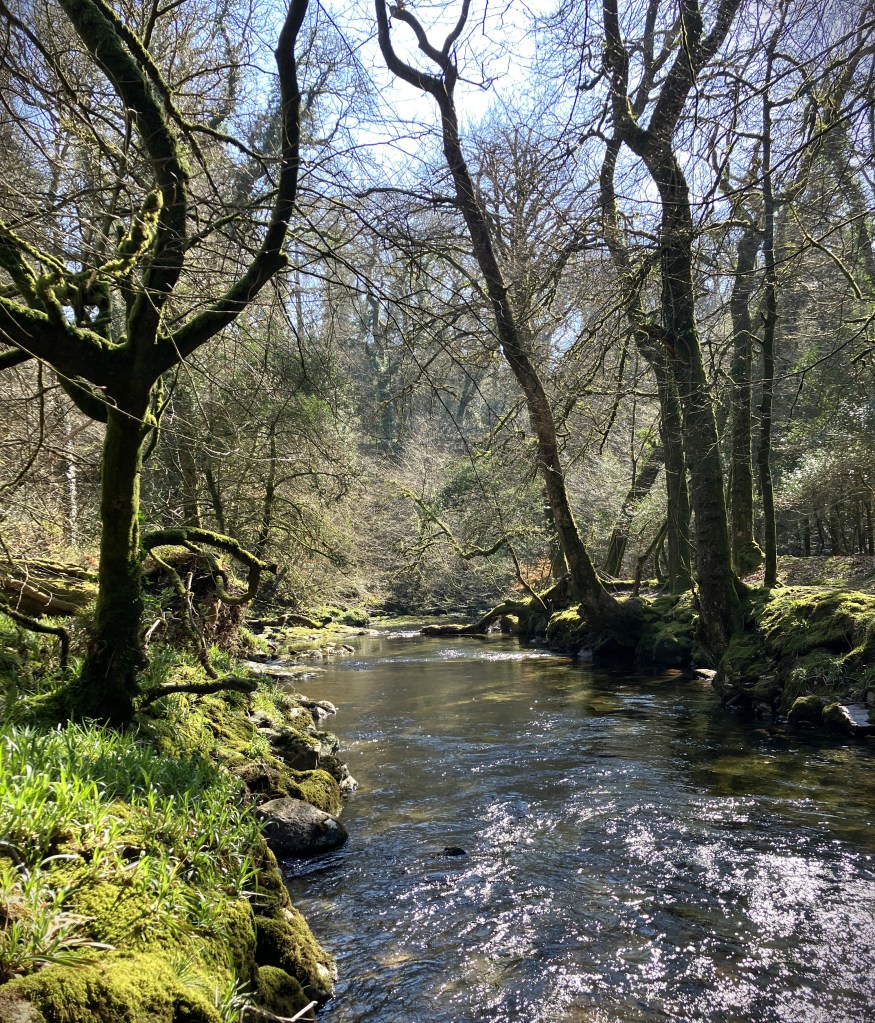
Thursday – The broken gate had been repaired and the padlock was new. The track down to the river had no tyre tracks and all was quiet. The Walkham was in perfect condition. One more day without rain had allowed the water level to drop and the breeze ruffled the surface of the bigger pools. No excuses.
I dropped a nymph over the stone wall where a trout usually hides but the leader failed to straighten. The long wide pool above the weir also failed to surrender a trout. I saw several trout in the leat which was running fast and clear but they saw me first.
I found a seat among the roots of an old oak tree and watched the water glide over the bedrock. Downstream the sun shone through the tree canopy unfiltered by leaves and cast rays of light on the pool. It seemed a shame to mar the view with a rod and fly line but I had a few casts anyway. I fought my way through the wood and sat beside a tree looking upstream at the rock wall and the pool beside it. I was tired. The climb out of the valley was tough going, I didn’t need to wear two shirts, a jumper and a Barbour jacket. It had been the hottest day of the year.
Friday – I attended Robin Armstrong’s funeral and chatted to many of his friends, I’m sure Robin would have wanted me to go fishing after the wake but the beer and endless supply of pasties made me sleepy.
. . . – – – . . .






 Sussex Trout Fishing ... and Devon