
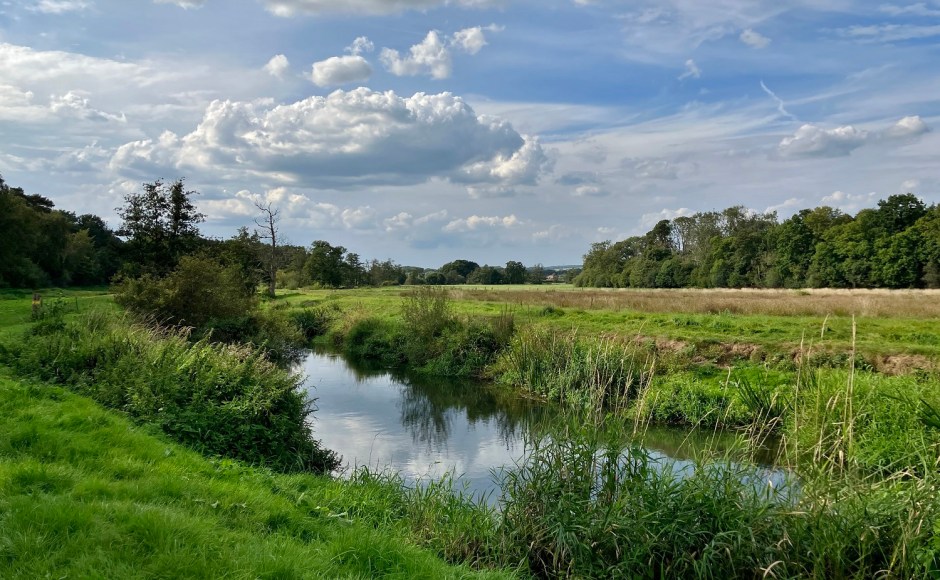
16 September – It was more than two months since my last visit to the River Rother. The weather and chores had conspired against me. All morning the weather was extreme. Clear air, bright sunshine, 29 degrees and high humidity. I waited impatiently until late afternoon before heading south. I walked around the lakes and had a sandwich before exploring the river Beats.
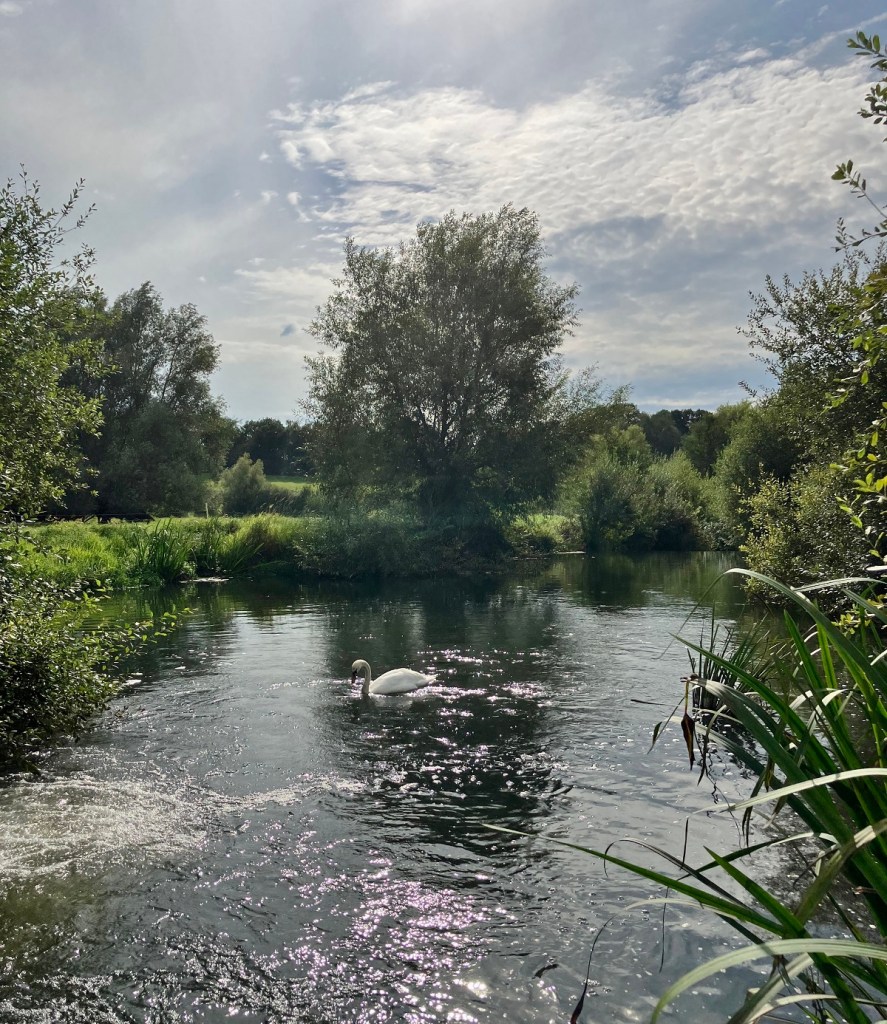
The Fish Pass looked inviting, the shallows at Rotherbridge looked barren. A cormorant flew over. There were two members fishing at Keepers Bridge and after a brief chat, I drove up the old railway line and walked to Ladymead. I saw a couple of small chub rising to buzzers but no trout.

Back at Keepers Bridge, the river looked in perfect condition. The water had a green tint, was a cool fifteen degrees and the beds of streamer weed swayed in the current. No excuses. I waited until 6:00pm before setting up my rod and walking downstream. I warmed up my casting arm exploring the pool with the fallen alder tree, working a nymph under the branches and alongside the marginal weeds. I lost a couple of nymphs and moved on.
A trout rose below the bridge in a tricky position close to a bush and above a bed of streamer weed. I chose a bulky crane fly imitation with an extended body, knotted mono legs and hackle point wings. The fish liked the fly but the stiff, bushy dressing shielded the hook point. I missed. Twice. The trout went down, puzzled that such a tasty morsel had been dragged from it’s grasp. It didn’t rise again. I found another fish rising under the far bank, on a bend opposite an overhanging tree. I lost another fly on a botched attempt to cover the fish which also disappeared. It was good to be back on the river bank but I was rusty, out of practice.
17 September – Heavy rain at lunch time was welcome. By mid afternoon the east wind had cooled the air and the sky was overcast. I needed a thin jacket. Given the favourable conditions, I reasoned that the trout would rise earlier than yesterday. The two fish that I had found would have recovered from my amateurish attempts. For trout number one I started with a nymph. It skated in the current so I swapped it for a heavier pattern. After three or four casts to the far bank the line tightened and the fish battled all the way to the landing net.
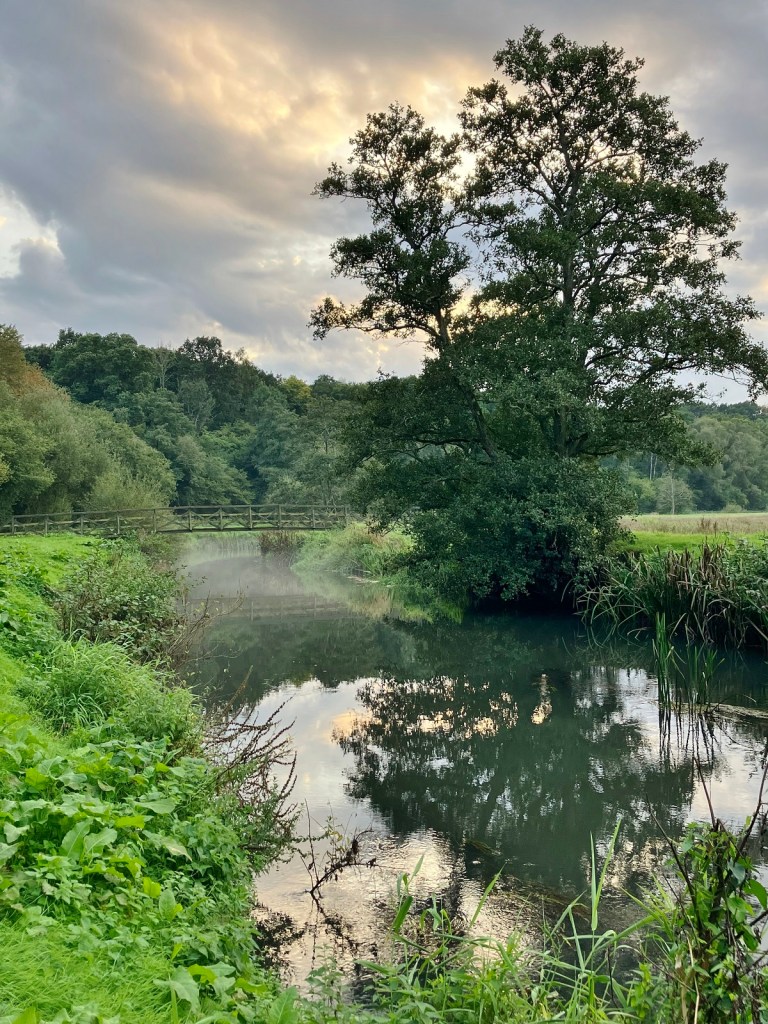
Full of confidence I walked downstream seeking trout number two. I found a good position and put the landing net close to hand. I prepared the line and flicked the nymph across the pool to the far bank. Although I had prepared, I was surprised by the rapid response. A heavy thump on the line and the fish was gone. I was a bit annoyed as it felt like a good fish.

I walked the rest of the Beat, prospecting the likely holding places under trees and beside weedbeds, without a reaction. The New Riffle would surely hold a feeding fish. As I worked the riffle I noticed that the water level was rising and that the water had become dark grey, a sure sign that the earlier heavy rain had run-off the roads in Midhurst.

I left the river as mist started to rise from the water meadows. I was happy that I had connected with the two trout and that I had become reacquainted with the Rother. During the night thunderstorms raged for an hour and the river rose a couple of feet. I hope that it returns to its normal level soon.

 Sussex Trout Fishing ... and Devon