

I had been waiting all day for the car to be fixed. The new brake discs and pads cost almost as much as a Sage LL but I was finally free to fish the evening rise. A relaxing walk by the river was in order. I took Southwell IV and left the carbon fibre in the cottage. The pristine rod, about 60 years old, would ensure that I fished slowly and didn’t fire any fast, low shots at rising fish. Carefully taking the rod from its canvas bag cheered me up.
As I approached the river a buzzard dropped from the bough of an ancient oak and flapped away upstream, I also disturbed a goosander. The water temperature was 15 degrees and the level was perfect. A dipper whizzed downstream and wagtails perched on most of the mid-stream rocks snapping up olives and midges. The air was thick with flies. A lone mayfly fluttered into the beak of a wagtail, it’s adult life span had been about ten seconds. A yellow may made it past the birds into the trees. Spinners dipped into the water to lay eggs, occasionally crash landing.
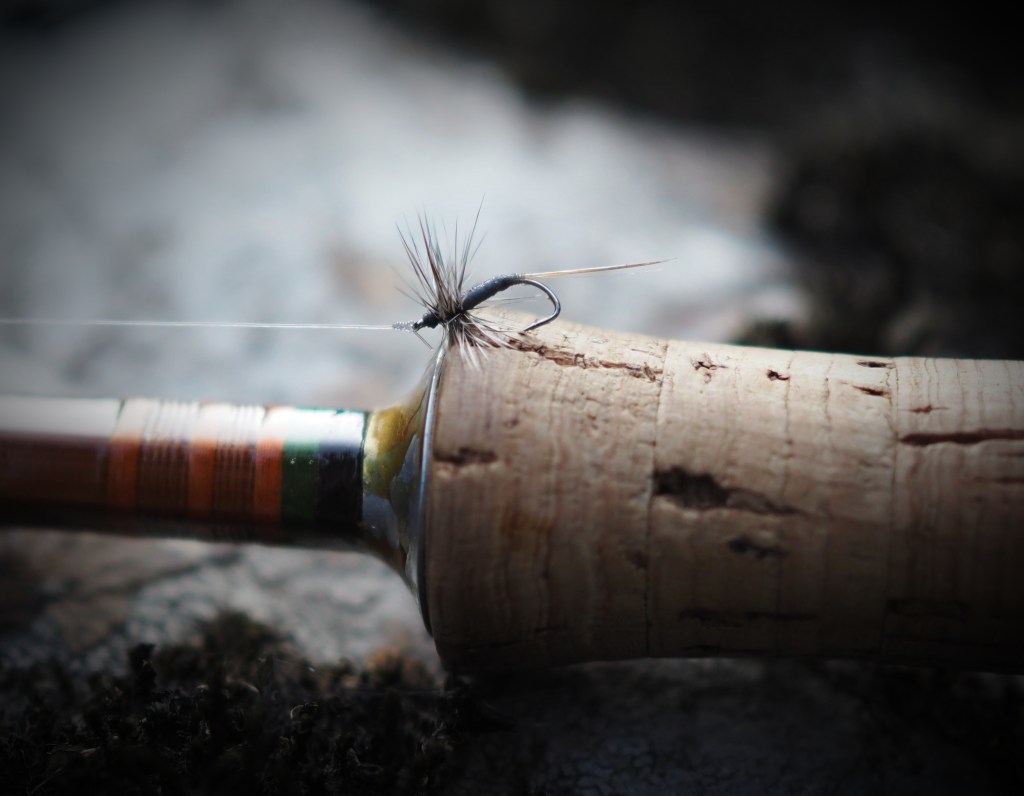
I walked to the top of the Beat and concentrated on running a GRHE nymph down the bubble line and across into the near bank shallows. With each cast I was convinced that I would get a take. Starting with a nymph had become a habit, a ritual. There was no logic involved, it just felt right despite all the rising trout.
The fish continually rising in the flat water at the tail of the pool finally convinced me to change tactics. I chose a size 16 imitation of a midge and after several casts, just before drag set in, the trout rolled over the dry fly. Hooked, jumped and lost. It looked like a sea trout. I wished it well on its journey upstream and decided to stick with the dry fly for the rest of the evening.
I ignored the fast water and moved downstream looking for glides and flats with rising fish. I found a nice glide with several fish rising near the far bank below a rock. They were dashing about in the bubble line competing for emergers, a sure sign of an easy take. I missed the first take, rested the fish for a few minutes and missed the second.
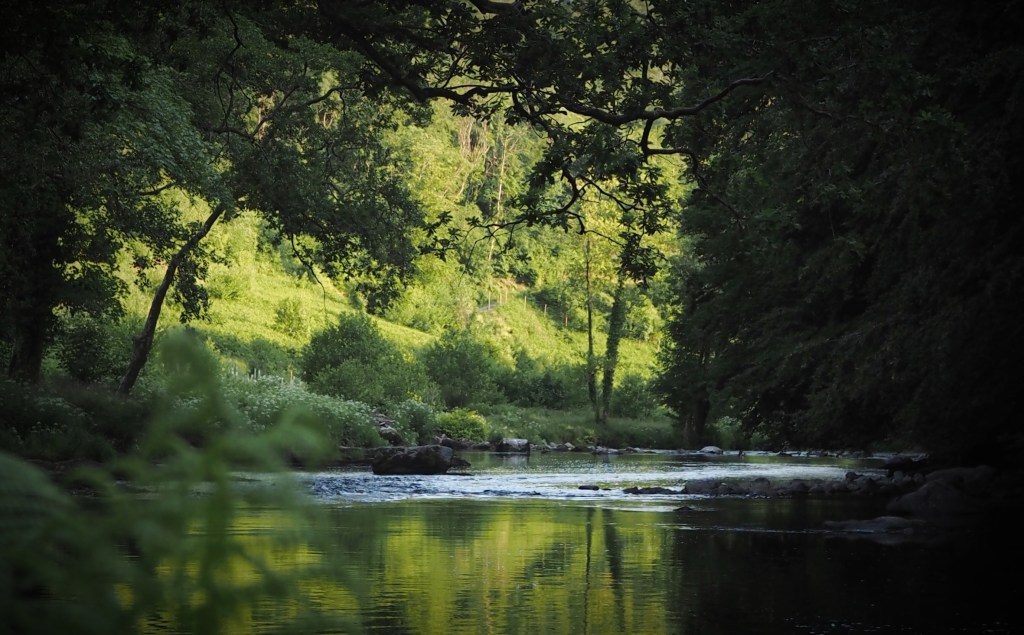
I walked slowly down to the big pool under the oak tree and sat on a pier of rock waiting for signs of rising trout. All the rocks were daubed with white guano, a sign that the fish had been eaten by goosanders. I rose another trout in the glide below the rock but didn’t connect.
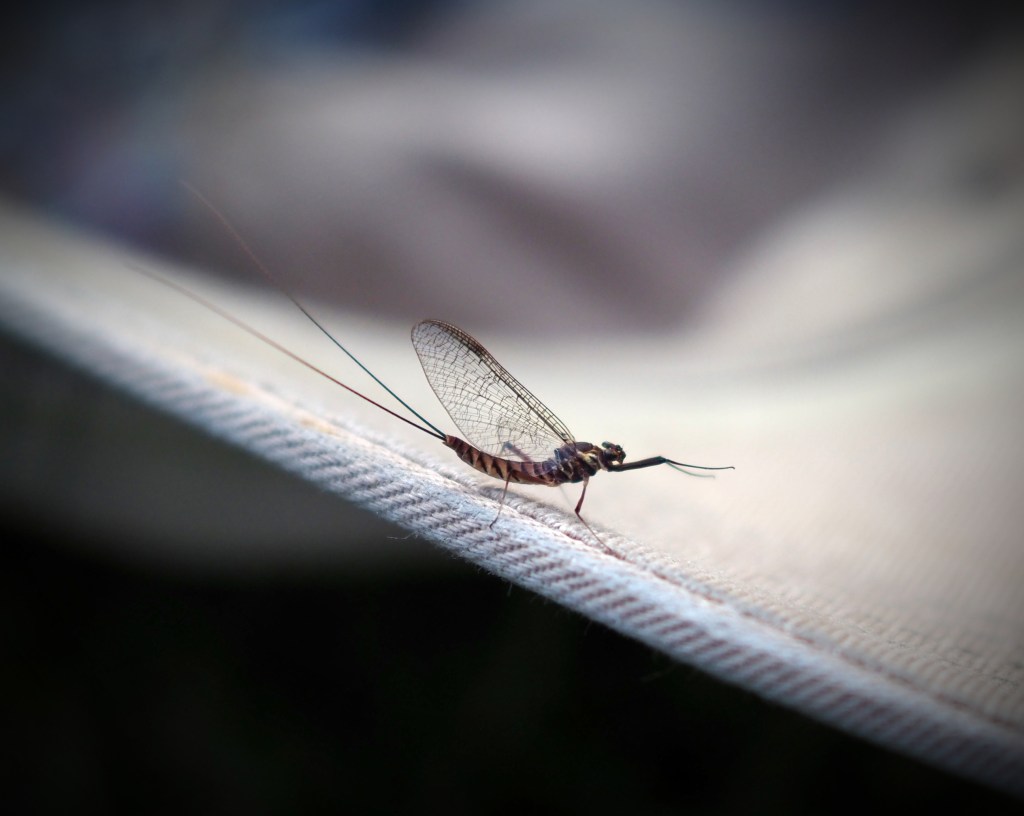
During my walk back upstream an olive spinner landed on my insect repellant soaked hat and waited for me to adjust the camera. The fumes must have anaesthetised it. The spinner posed nicely and then flew away. Later at the cottage, I tried to identify the species from a reference book but after a couple of glasses of wine they all looked the same.

 Sussex Trout Fishing ... and Devon